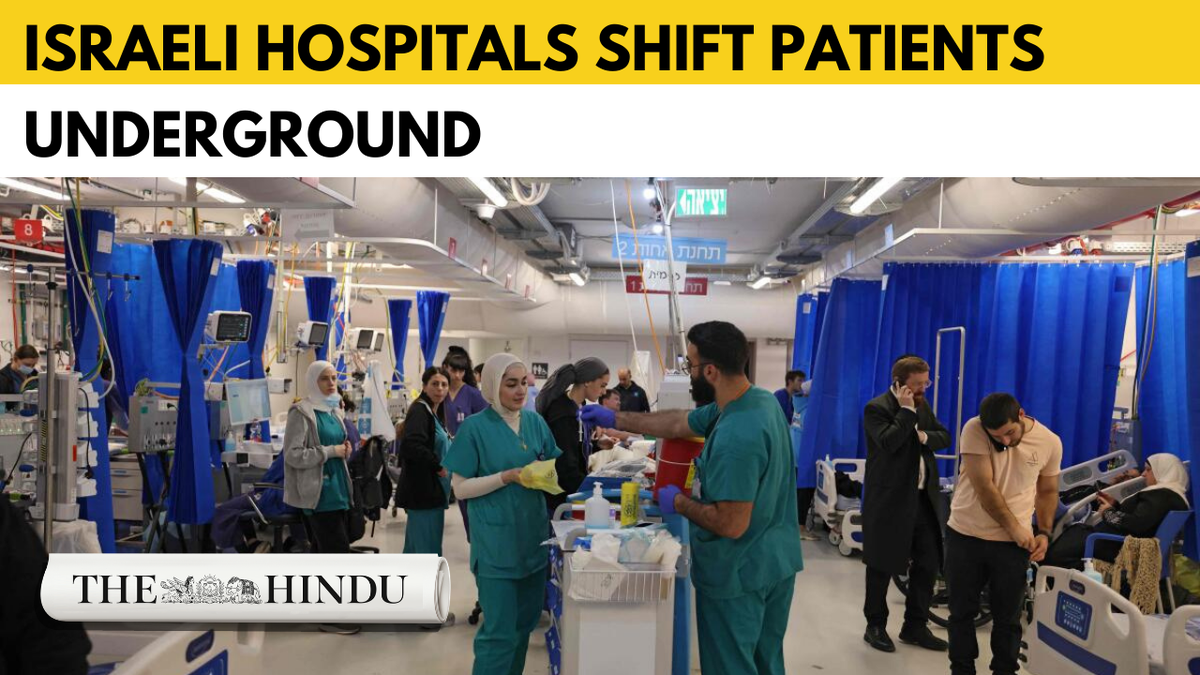
The transition of a tertiary medical center from a surface-level facility to a fortified underground bunker is not merely a logistical maneuver; it is a total conversion of a civilian asset into a hardened node of national defense infrastructure. As regional tensions between Israel and Iran escalate, the rapid migration of patient populations into subterranean wards reveals the specific technical and structural requirements necessary to maintain clinical standards under the threat of ballistic and cruise missile saturation. This shift highlights a critical doctrine in modern civil defense: when the probability of kinetic impact exceeds the reliability of active defense systems like the Iron Dome or Arrow-3, the only viable mitigation strategy is the physical decoupling of the medical delivery system from the surface.
The Triad of Subterranean Medical Viability
Maintaining a functional hospital underground requires solving for three fundamental environmental constraints that do not exist in standard clinical settings. If any of these pillars fail, the facility ceases to be a hospital and becomes a high-density casualty risk.
1. Atmospheric Integrity and CBRN Filtration
Surface-level hospitals rely on standard HVAC systems designed for comfort and basic infection control. A hardened underground facility must operate as a closed-loop system.
- Positive Pressure Regulation: To prevent the infiltration of chemical or biological agents, the internal atmosphere must be maintained at a higher pressure than the external environment. This ensures that any structural breach results in air flowing out rather than contaminants flowing in.
- HEPA and Carbon Sequestration: Filtration systems must be rated for CBRN (Chemical, Biological, Radiological, and Nuclear) threats, requiring high-capacity activated carbon stages that standard medical facilities lack.
- Thermal Load Management: Underground spaces naturally trap heat generated by medical equipment, lighting, and human metabolic output. Without specialized industrial-scale chilling units, ambient temperatures in a packed subterranean ward can reach 35°C within hours, leading to equipment failure and patient heat stroke.
2. Power Redundancy and Energy Isatropy
A subterranean move creates an absolute dependence on artificial life support. On the surface, natural light and passive ventilation provide a slim margin of error. Underground, a power failure is immediately life-threatening.
- Microgrid Independence: These facilities must disconnect from the national grid to avoid being neutralized by cyberattacks or physical strikes on power stations.
- Fuel Storage Logic: The duration of underground operations is capped by the volume of onsite diesel or natural gas. Strategic reserves must support not only medical devices but also the massive energy draw of the aforementioned HVAC systems.
- EM Shielding: Underground bunkers are often encased in Faraday cages to prevent Electromagnetic Pulse (EMP) interference from disrupting sensitive diagnostic tools like MRIs or ventilators during a nearby high-yield detonation.
3. Vertical Logistics and Patient Throughput
Moving hundreds of patients, including those in intensive care and neonatology, creates a massive bottleneck. The physics of vertical transport dictates the speed of the transition.
- The Elevator Paradox: While elevators are the primary mode of transit, they represent a single point of failure. Redundant, high-capacity freight lifts must be supplemented by reinforced ramp systems that allow for the manual movement of gurneys in the event of mechanical or electrical failure.
- Triage Stratification: Patients are not moved alphabetically; they are moved based on "equipment intensity." Neonatal units and surgical suites are prioritized due to their sensitivity to environmental shifts, followed by stable acute care patients.
The Strategic Shift from Decentralization to Concentration
For decades, urban planning favored the decentralization of medical services to avoid creating a "single point of failure." However, the precision and volume of modern missile salvos have inverted this logic. Modern Israeli medical strategy now favors "Hardened Concentration." By centralizing critical care in a massive, multi-level underground complex—such as the Rambam Health Care Campus in Haifa or similar facilities in central Israel—the state can focus its most advanced active defenses and limited logistical resources on a single, nearly impenetrable coordinate.
This concentration creates a specific cost-benefit profile:
- Reduced Logistics Tail: Supplying one massive underground site is more efficient than distributing supplies across ten vulnerable surface sites during a total blockade or active bombardment.
- Protection of Human Capital: Specialized surgeons and medical staff are "low-density, high-demand" assets. Their survival is as critical to the state’s long-term resilience as the survival of the patients.
- The Psychosocial Deterrent: A visible, rapid move underground signals to an adversary that the civilian "soft underbelly" has been hardened, potentially altering the adversary’s calculation regarding the effectiveness of a "shock and awe" campaign.
Operational Friction in Subterranean Transition
The friction of moving a hospital is high. It is not a "seamless" transition; it is a controlled disruption of service.
- Equipment Recalibration: High-precision medical instruments are sensitive to changes in humidity, pressure, and vibration. Moving a robotic surgery suite or a linear accelerator for oncology requires hours of recalibration that cannot be performed while a missile alert is active.
- Psychological Compression: The "bunker effect" impacts both staff and patients. The lack of circadian cues (natural light) and the presence of low ceilings and industrial acoustics increase cortisol levels, which can tangibly slow the healing process and degrade the decision-making speed of clinical staff.
- Sterility Maintenance: Underground parking garages, often used as the foundation for these hospitals, are not naturally sterile environments. The process of converting a space designed for internal combustion engines into a surgical-grade theater requires chemical decontamination protocols that must be executed with zero margin for error.
The Quantitative Threshold of Evacuation
A hospital administration uses a specific decision matrix to trigger an underground move. This is rarely based on a single event, but rather a convergence of three metrics:
- Intelligence Confidence Interval: If the probability of a direct strike on a civilian population center exceeds a specific threshold (often cited as 70-80% based on military intelligence feeds), the move is initiated.
- Active Defense Depletion: If the "interception-to-threat" ratio of the Iron Dome begins to drop—signaling that the battery is being overwhelmed by sheer volume—the physical protection of the bunker becomes the primary defense.
- Expected Casualty Volume: If the projected influx of new trauma patients from an impending strike exceeds the surface facility's capacity to protect them, the subterranean wards are opened to create "surge capacity" that is inherently protected.
The move to subterranean facilities represents the physical manifestation of a "Total Defense" posture. It acknowledges that in modern, high-intensity conflict, the distinction between the front line and the home front has been erased. The medical facility is no longer a sanctuary; it is a fortified objective that must be engineered to withstand the highest levels of kinetic stress.
Hospital administrators must now prioritize the "Hardening Ratio"—the percentage of total beds that can be maintained under CBRN-filtered, blast-proof conditions—as the primary metric of institutional success. In the current crisis, the move underground is not a sign of panic, but the execution of a highly technical, pre-planned survival sequence. To maximize the effectiveness of this infrastructure, the next logical step for regional health authorities is the mandatory integration of automated, high-speed patient transit systems (pneumatic or rail) between surface triage and deep-core surgical suites to minimize the "vulnerability window" during active descent.