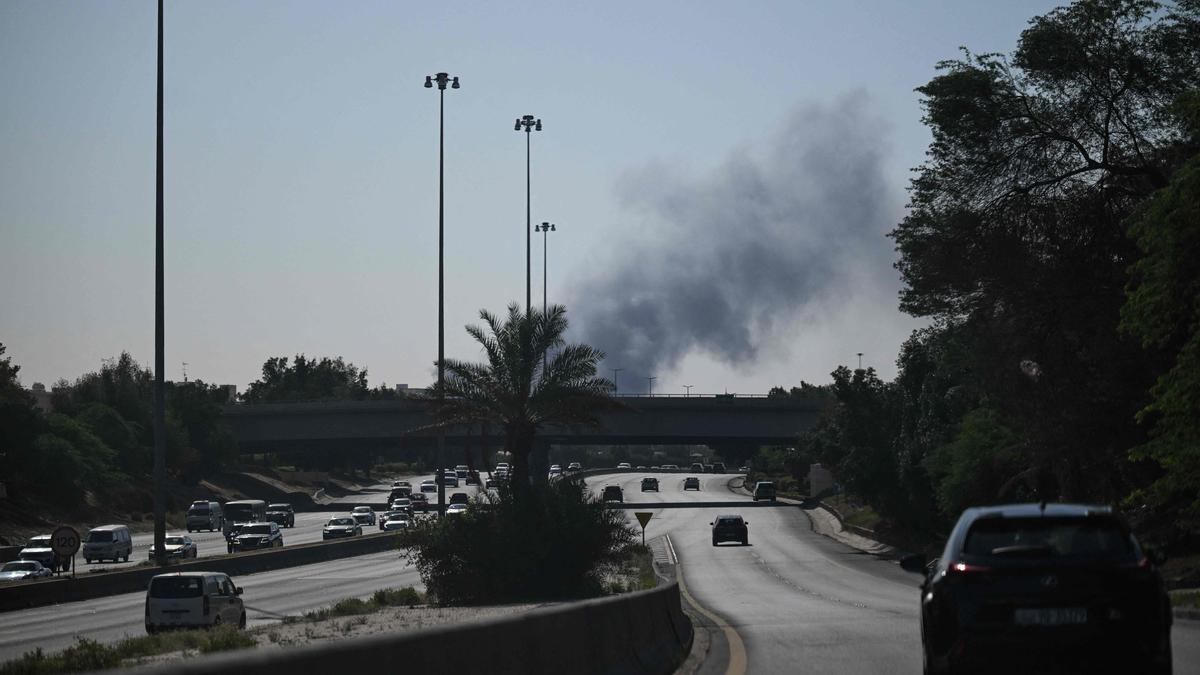
The escalation of hostilities between Israel and Hezbollah has shifted from a state of managed friction to a high-velocity attrition cycle where the primary metric of success is no longer territorial gain, but the degradation of command-and-control infrastructure and the psychological exhaustion of the civilian base. The recent strikes in Lebanon, resulting in at least 31 fatalities according to the Lebanese Health Ministry, represent a specific phase in this cycle: the transition from reactive defense to proactive systemic disruption. This escalation follows a Hezbollah assault, illustrating a "tit-for-tat" feedback loop that is structurally designed to test the threshold of total war without technically crossing the Rubicon of a ground invasion.
The Logic of Proportionate Escalation
In modern asymmetric warfare, the "proportionate response" is an analytical fallacy. Instead, the strategic objective is asymmetric dominance—the ability to inflict a level of damage that exceeds the adversary's recovery rate while maintaining internal stability. The Israeli strikes on Lebanon function through three primary vectors:
- Targeted Attrition of Leadership Units: By identifying and striking specific nodes in the Hezbollah hierarchy, the aim is to create a "vacuum of command." When mid-level commanders are neutralized, the time required to re-establish secure communication lines creates a window of tactical vulnerability.
- Infrastructure Degradation: The focus on southern Lebanon and the Bekaa Valley targets the logistical backbone of the organization. Destroying rocket launchers and storage facilities serves as a physical constraint on Hezbollah’s fire rate (the "volleys per hour" metric).
- Deterrence through High-Cost Signaling: Each strike serves as a signal to both Hezbollah and its regional backers. The cost of engagement is being intentionally raised to a level where the political and social burden on the Lebanese state becomes unsustainable.
Quantifying the Human and Political Toll
The Health Ministry’s report of 31 deaths is a data point that must be disaggregated to understand the strategic impact. In high-density urban or semi-rural conflict zones, the distinction between combatant and non-combatant is often blurred by the "human shield" doctrine—the deliberate placement of military assets within civilian infrastructure. This creates a Collateral Damage Coefficient that Israel must manage to maintain international diplomatic standing, while Hezbollah uses it as a tool for information warfare.
- Medical Surge Capacity: The Lebanese healthcare system, already strained by economic collapse, faces a "saturation point." When mass casualty events occur, the depletion of blood supplies, anesthesia, and surgical staff acts as a hard limit on the state’s ability to manage prolonged conflict.
- Displacement Economics: The movement of thousands of civilians away from the border regions creates an internal refugee crisis. This shift transforms a military problem into a socioeconomic one, as the host communities in the north of Lebanon struggle to provide resources for the displaced.
The Hezbollah-Israel Interaction Model
The current conflict is governed by a Dynamic Equilibrium. Both parties operate under the assumption that the other does not want a full-scale regional war, yet both are compelled to escalate to avoid appearing weak. This paradox is defined by the following variables:
- Intelligence Parity: Israel leverages high-altitude surveillance and signals intelligence (SIGINT) to identify launch sites. Hezbollah counters with tunnel networks and low-tech communication to minimize their electronic footprint.
- The Iron Dome Constraint: For Israel, the cost of defense is high. An interceptor missile costs significantly more than the primitive rocket it destroys. Hezbollah’s strategy relies on "cost-exhaustion," hoping to drain Israel’s interceptor stocks through sheer volume.
- Pre-emptive vs. Reactive Logic: The recent strikes indicate a shift toward pre-emption. By striking before an anticipated Hezbollah volley, Israel attempts to break the "OODA loop" (Observe, Orient, Decide, Act) of its opponent.
The Regional Multiplier Effect
The conflict in Lebanon cannot be viewed in isolation. It is a secondary theater of the broader Gaza-centric conflict, functioning as a "pressure valve." When military pressure increases in the south (Gaza), Hezbollah increases activity in the north (Lebanon) to force a redirection of Israeli Defense Forces (IDF) assets. This Bipolar Front Strategy forces Israel to split its air superiority and ground reserves, preventing a decisive victory in either theater.
The involvement of regional proxies adds a layer of complexity. The supply chain for Hezbollah's advanced weaponry (drones, guided missiles) relies on land corridors through Syria. Israeli strikes often extend into Syrian territory to interrupt this "logistical bridge," turning the Lebanese border into just one segment of a much larger geographic "kill zone."
Structural Barriers to De-escalation
The path to a ceasefire is obstructed by several structural rigidities. First, the Sunk Cost Fallacy—both sides have invested significant political capital and suffered high casualties, making a withdrawal without "clear victory" a threat to domestic regime survival. Second, the Verification Gap. In asymmetric warfare, there is no reliable mechanism to verify that Hezbollah has actually moved its assets north of the Litani River, as demanded by UN Resolution 1701.
Third, the Domestic Political Imperative. In Israel, the pressure to return displaced northern residents to their homes is a primary driver of military aggression. In Lebanon, Hezbollah’s role as a "resistance force" is its primary claim to legitimacy; ceasing fire without an Israeli withdrawal from disputed territories would undermine its core identity.
Tactical Implications of Recent Strikes
The specific geography of the 31 deaths suggests a widening of the target bank. Moving beyond immediate border villages into deeper Lebanese territory indicates a strategy of "Zonal Denial." The IDF is effectively creating a "buffer zone" through fire, making the area south of the Litani River uninhabitable for both civilians and militants. This tactic aims to:
- Remove the "Anti-Tank Guided Missile" (ATGM) threat to Israeli civilian homes.
- Force Hezbollah to relocate its short-range assets, thereby reducing their accuracy and lethality.
- Signal that no area in Lebanon is "off-limits" if it hosts military infrastructure.
The Strategic Play: Transitioning to Low-Intensity Permanence
The most likely outcome is not a definitive peace treaty or a total war, but a transition into Low-Intensity Permanence. This is a state where high-casualty events become periodic but do not trigger a full invasion. To navigate this, the primary strategic play involves three maneuvers:
- Electronic Warfare Dominance: Israel will likely increase its focus on jamming Hezbollah’s GPS-guided munitions, rendering their "smart" arsenal ineffective.
- Diplomatic Encirclement: Utilizing the threat of total destruction in Lebanon to force the Lebanese government to exert pressure on Hezbollah—a "state-within-a-state" friction point.
- Resilience Hardening: Israel will continue to fortify its northern infrastructure to withstand prolonged rocket fire, effectively "normalizing" the conflict to the point where it no longer dictates the national agenda.
The conflict has moved beyond a simple exchange of fire; it is now a competition of systemic endurance. The side that can maintain its internal social fabric while continuing to project lethal force across the border will dictate the terms of the eventual, albeit fragile, stalemate.
The immediate tactical priority for the IDF is the continued mapping and destruction of Hezbollah's subterranean launch sites, even at the cost of high-intensity international scrutiny. For Hezbollah, the priority remains the preservation of its long-range missile inventory, which serves as its only true deterrent against a full-scale Israeli ground incursion into Beirut. The current strike patterns suggest that the "threshold of tolerance" for both sides has been permanently recalibrated to a higher baseline of violence.