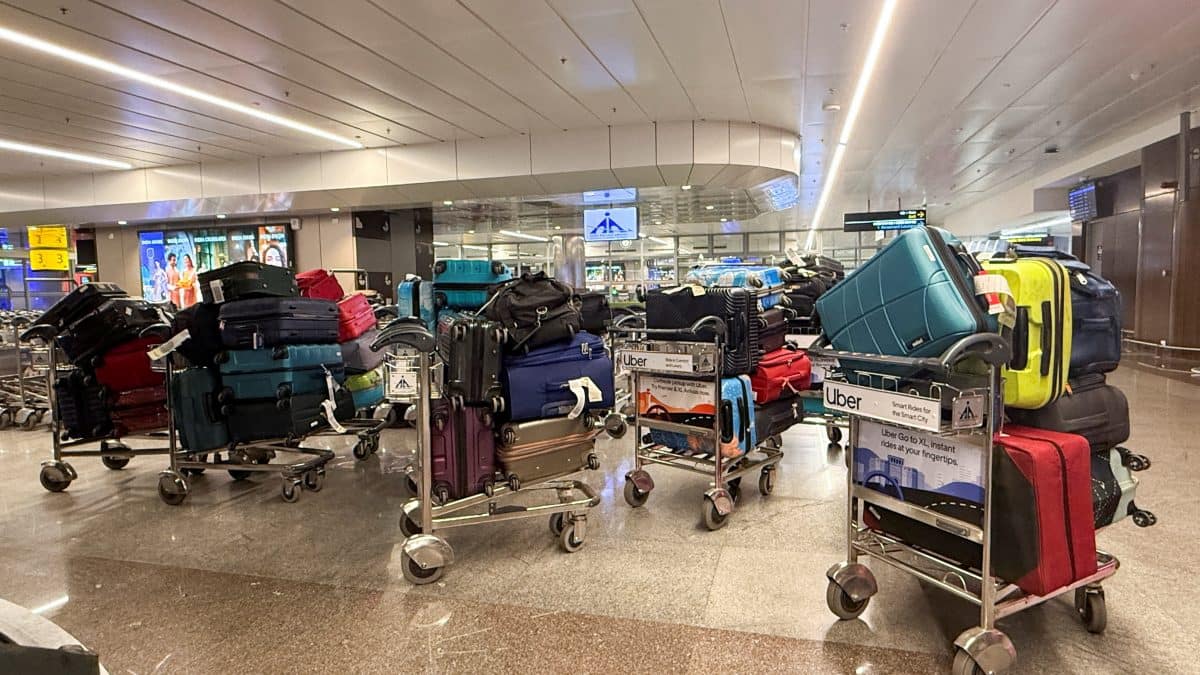
The headlines are dripping with sentimentality. You've seen them. "The UAE opens its heart." "A nation covers the bill for 20,000 stranded travelers." It paints a picture of a benevolent state swooping in to save victims of geopolitical chaos with bottomless buffets and five-star pillows.
It is a beautiful story. It is also a complete misunderstanding of how global aviation hubs actually function. For another perspective, consider: this related article.
What the mainstream media calls "generosity," an industry insider calls operational damage control. When a major conflict—in this case, the escalation involving Iran—shuts down airspace, it doesn't just "strand" people. It threatens to break the mechanical heart of the world’s most expensive transit system.
The UAE isn't paying for hotel rooms because they’re "nice." They’re paying because the alternative—a total collapse of the Dubai and Abu Dhabi hub-and-spoke model—would cost billions more in long-term brand equity and litigation. Further insight on this matter has been shared by MarketWatch.
The Illusion of the Free Lunch
Let’s be clear about the math. Housing 20,000 people in a premium market like Dubai or Abu Dhabi isn't a gesture; it's a massive capital injection into their own domestic economy.
When the government or its state-backed carriers (Emirates and Etihad) "pay" for these rooms, the money doesn't vanish. It flows directly from one pocket of the state-owned apparatus to another: the hospitality sector.
- The Circular Economy: The government pays hotels that are often owned by the same sovereign wealth funds or ruling families.
- The Labor Lock: By keeping these hotels full during a crisis, they prevent staff layoffs and maintain operational readiness for when the airspace reopens.
- The Opportunity Cost: Empty hotel rooms during a regional conflict are a liability. Filling them with "stranded" passengers is a strategic subsidy to the tourism sector under the guise of humanitarian aid.
If you think this is about a sandwich and a bed, you’re missing the forest for the trees. This is about preventing a "Great Exit" where travelers permanently pivot to transit through Istanbul, Doha, or Singapore to avoid the volatility of the Gulf.
Why the "Act of God" Clause is a Lie
In standard aviation law, a war is an Extraordinary Circumstance. Under regulations like EU261 or similar international frameworks, airlines are technically off the hook for compensation. They don't have to give you a five-star suite when a missile enters the airspace.
So why did they?
Because the UAE has spent thirty years building a brand based on frictionless movement. The moment a traveler feels "stuck" in Dubai, the spell is broken. The "Golden Hour" of transit—that period where you spend $400 on duty-free perfume between flights—turns into a nightmare of logistics.
I have seen airlines lose more money in three days of bad PR than they do in a month of fuel price hikes. By footing the bill, the UAE effectively buys the silence and loyalty of 20,000 amateur influencers. They turned a logistical catastrophe into a marketing campaign. It’s brilliant, it’s cold-blooded, and it’s definitely not "charity."
The Hidden Cost of Hub Centralization
We need to talk about the structural weakness this "generosity" hides. The Gulf model relies on a single, terrifyingly fragile variable: stable transit.
When you aggregate the world's traffic through two or three tiny points on a map, any regional tremor becomes a global cardiac arrest. The 20,000 stranded passengers are a symptom of a design flaw.
- Over-Concentration: If 20,000 people are stranded, it means the system has no "release valve."
- Resource Drain: The sheer logistics of moving that many people to hotels in a matter of hours creates a secondary crisis in local transport and security.
- The Precedent Trap: By being "generous" now, the UAE has set a floor. What happens next time? If they don't provide the same level of care during the next regional flare-up, the backlash will be twice as violent.
The "People Also Ask" Fallacy
People are asking: Is it safe to fly through the UAE during the Iran conflict?
The honest, brutal answer is: The safety of the flight isn't the issue. The UAE’s anti-missile defense systems and air traffic controllers are world-class. The real risk is Time Poverty.
You aren't risking your life; you're risking your next three days. The "generosity" of a free hotel room is a poor trade for a missed wedding, a lost contract, or a week of your life spent in a terminal-adjacent Marriott. The industry wants you to focus on the "freebies" so you don't realize how precarious the entire "Super-Hub" concept actually is.
Stop Thanking Them and Start Demanding Resilience
If we want a better aviation industry, we have to stop falling for the PR spin of "crisis hospitality."
The UAE’s response proves they have the liquidity to handle a massive disruption, but it also proves they are terrified of what happens if travelers start looking for routes that don't pass through a geopolitical tinderbox.
True innovation wouldn't be a free hotel room. It would be:
- Decentralized Routing: Automated rerouting through partner carriers outside the conflict zone before the passenger lands.
- Intermodal Flexibility: Pre-arranged sea or land exits that don't rely on the same closed airspace.
- Digital Sovereignty: Giving passengers the immediate cash equivalent of the hotel stay to their digital wallets so they can choose their own path, rather than being herded into state-selected holding pens.
The Downside of My Stance
Admittedly, if you are one of those 20,000 people, my cynicism feels like a cold shower. A bed is a bed when you're tired. But we have to distinguish between "customer service" and "geopolitical positioning."
The UAE did what was necessary to protect the trillion-dollar valuation of its "Global Gateway" status. They didn't do it for you. They did it for the brand.
The next time you see a headline about a government "paying for everything," ask yourself: what is the price of the thing they aren't telling me? In this case, the price is your continued belief that the Gulf is the only way to get from East to West.
It isn't. It's just the one with the best room service.
Stop praising the bandage and start questioning why the system bleeds so easily.