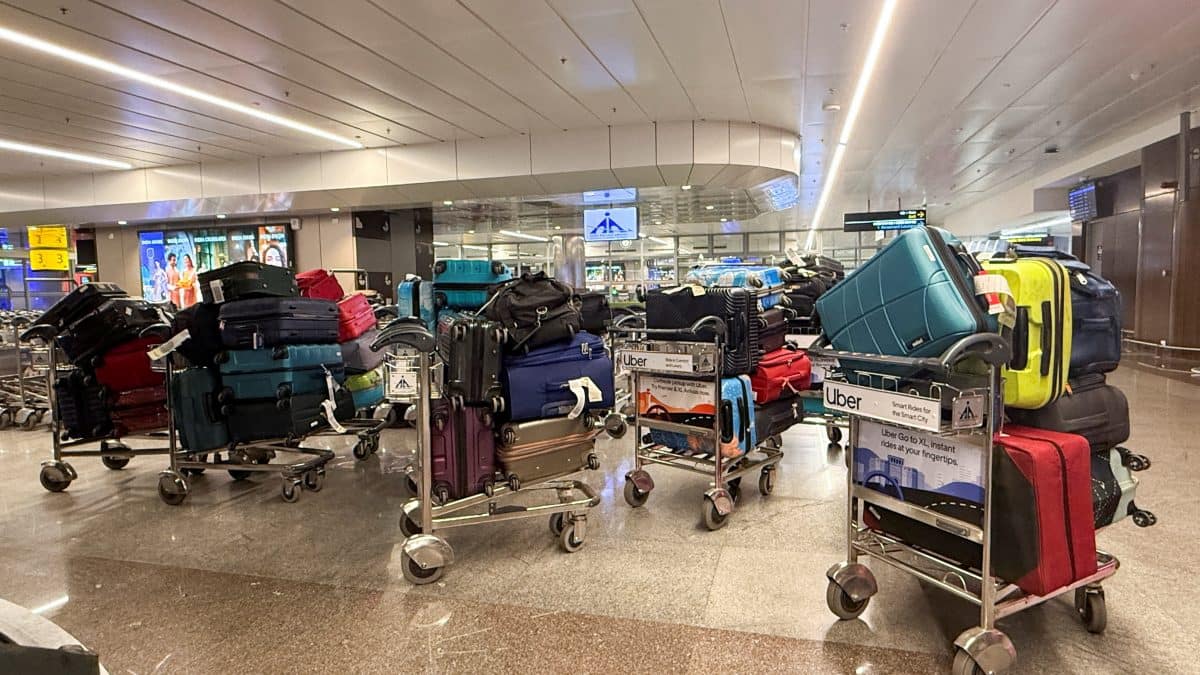
The global shipping map is being redrawn by necessity, and Indian exporters are the ones paying for the new ink. While headlines focus on the geopolitical sparks in West Asia, the cold reality on the ground is a cascading logistics failure that has moved far beyond simple "delays." Indian containers are currently stranded in transshipment hubs, domestic warehouses are overflowing with unsold inventory, and the thin margins of small-scale exporters are being devoured by a three-headed monster of surcharges, equipment shortages, and skyrocketing insurance premiums.
This isn't just a temporary detour around the Cape of Good Hope. It is a fundamental disruption of the lean, "just-in-time" supply chains that India has spent a decade building. The Federation of Indian Export Organisations (FIEO) has sounded the alarm, but the depth of the crisis suggests that a recovery won't happen the moment the missiles stop flying. We are looking at a structural shift in how much it costs to move a box from Mundra to Marseille.
The Invisible Cost of the Long Way Around
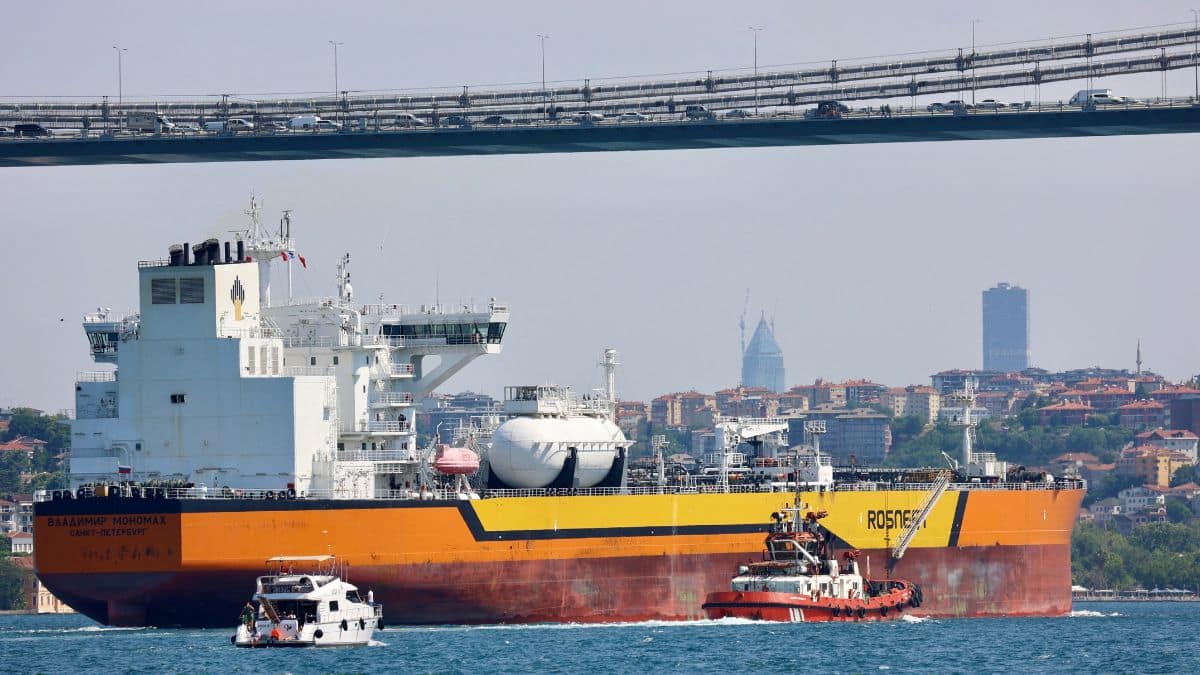
Shipping a container from India’s western ports to Europe used to be a predictable twenty-day affair through the Suez Canal. That predictability is dead. By forcing vessels to circumnavigate the African continent, the industry has added roughly 6,000 nautical miles to the journey.
This adds ten to fifteen days of transit time. On paper, two weeks sounds manageable. In the world of high-velocity commerce, it is a catastrophe.
When a ship takes the long route, it consumes significantly more fuel. It also ties up the vessel for a longer duration, effectively reducing the "global capacity" of the shipping fleet without a single ship being lost. If every ship takes 25% longer to complete a circuit, you effectively have 25% less shipping space available worldwide. This artificial scarcity allows carriers to slap on "Peak Season Surcharges" and "Contingency Adjustment Factors" that have, in some cases, tripled the freight rates compared to the previous year.
For an exporter of low-value, high-volume goods—think textiles from Tirupur or carpets from Bhadohi—these freight hikes are terminal. When the cost of shipping a container jumps from $1,500 to $4,500, and your profit margin on the goods inside is only $3,000, the math simply stops working. You aren't just making less money. You are paying for the privilege of sending your product abroad.
The Container Imbalance Trap
The most overlooked aspect of this crisis is the physical location of the empty boxes. Shipping is a circular economy. To export tea from India, you need an empty container that recently arrived carrying electronic components or machinery.
Because ships are taking longer to return from Europe and the U.S. East Coast, the flow of empty containers back into Indian ports has slowed to a trickle. We are witnessing a localized "equipment famine." Even if an exporter is willing to pay the predatory freight rates, they often find there is no physical box available to pack their goods into.
The Transshipment Logjam
Major hubs like Colombo, Salalah, and Jebel Ali are becoming bottlenecks. As main-line vessels bypass certain high-risk zones, they are dropping off massive amounts of cargo at these "safe" ports, expecting smaller feeder ships to pick up the slack. These ports weren't designed for this sudden surge in volume.
The result? Containers sit on the tarmac for weeks. Perishable goods are rotting. Seasonal fashion intended for spring shelves in London is arriving in summer, leading to massive "chargebacks" and cancellations from international buyers. The Indian exporter is left holding the bag for a delay they didn't cause and cannot control.
Credit Lines and the Liquidity Crunch
This is where the investigative lens uncovers the real danger to the Indian economy. Most exporters operate on credit. They borrow money to buy raw materials, pay labor, and manufacture goods. They only get paid by the international buyer once the goods are delivered and the "Bill of Lading" is processed.
When transit times double, the "cash-to-cash" cycle doubles.
An exporter who expected to be paid in 30 days is now waiting 60 or 90 days. Meanwhile, the interest on their bank loans continues to accrue. The banks, sensing increased risk in the shipping sector, are becoming stingy with credit extensions. We are seeing a quiet epidemic of liquidity crises across India’s manufacturing belts. Small businesses are running out of working capital not because they lack orders, but because their capital is literally floating somewhere off the coast of South Africa.
The Insurance Industry’s Quiet Killing
While freight rates get the headlines, the insurance industry is the silent beneficiary of the West Asia conflict. "War Risk" premiums have surged. In some instances, insurers are charging an additional 1% of the total value of the ship and cargo just to pass through certain zones.
For a vessel carrying $100 million in cargo, that is a $1 million surcharge for a single transit. These costs are never absorbed by the shipping lines. They are passed down the line until they land on the desk of the manufacturer in Ludhiana or Chennai.
There is also the "General Average" risk. Under maritime law, if a ship has to make a sacrifice to save the vessel—like jettisoning cargo or hiring emergency tugs after an attack—all cargo owners on that ship are legally required to contribute to the cost of that loss. This is a terrifying prospect for a small business. One incident in the Red Sea could result in a legal bill that bankrupts an Indian firm that wasn't even directly involved in the mishap.
Government Intervention and the Limits of Policy
The Indian government and bodies like FIEO are pushing for localized solutions. There is talk of a "National Shipping Line" to reduce reliance on foreign giants like Maersk or MSC. There are calls for interest equalization schemes to help with the credit crunch.
However, these are long-term fixes for an immediate hemorrhage. The reality is that India’s export machinery is heavily dependent on a global maritime infrastructure that is currently fragmented. Diversifying trade routes—looking toward the International North-South Transport Corridor (INSTC) via Iran—is often cited as an alternative. But the INSTC lacks the scale, the standardized paperwork, and the physical infrastructure to replace the Suez route. It is a niche solution being marketed as a panacea.
The Shift Toward Nearshoring
The brutal truth is that this prolonged instability is forcing European and American buyers to rethink "Sourcing from India." If the "India-to-Europe" route remains volatile and expensive, buyers will look to "nearshore" their production. They will look to Turkey, Eastern Europe, or North Africa.
This isn't just about losing a few months of revenue. It is about losing market share that took decades to win. Once a buyer retools their supply chain to work with a supplier in Poland because the shipping is more reliable, they rarely come back to an Indian supplier just because the Red Sea eventually clears up.
The Survival Strategy for the Small Exporter
For those currently caught in the gears, the strategy is no longer about growth. It is about preservation.
- Renegotiating Incoterms: Moving from CIF (Cost, Insurance, and Freight) to FOB (Free on Board) to shift the shipping risk and cost to the buyer.
- Air Freight for High-Value Cargo: For electronics or high-end apparel, the price gap between sea and air is narrowing as sea rates climb.
- Inventory Buffers: Moving away from "just-in-time" to "just-in-case," though this requires the very capital that is currently drying up.
The West Asia conflict has stripped away the illusion of cheap, seamless global trade. For the Indian exporter, the "maritime margin" is gone. What remains is a fight for relevance in a world where the distance between two ports is no longer measured in miles, but in the cost of the risk.
Check your current shipping contracts for "Force Majeure" clauses that might be triggered by these reroutings, as many carriers are using these to void previous price agreements.