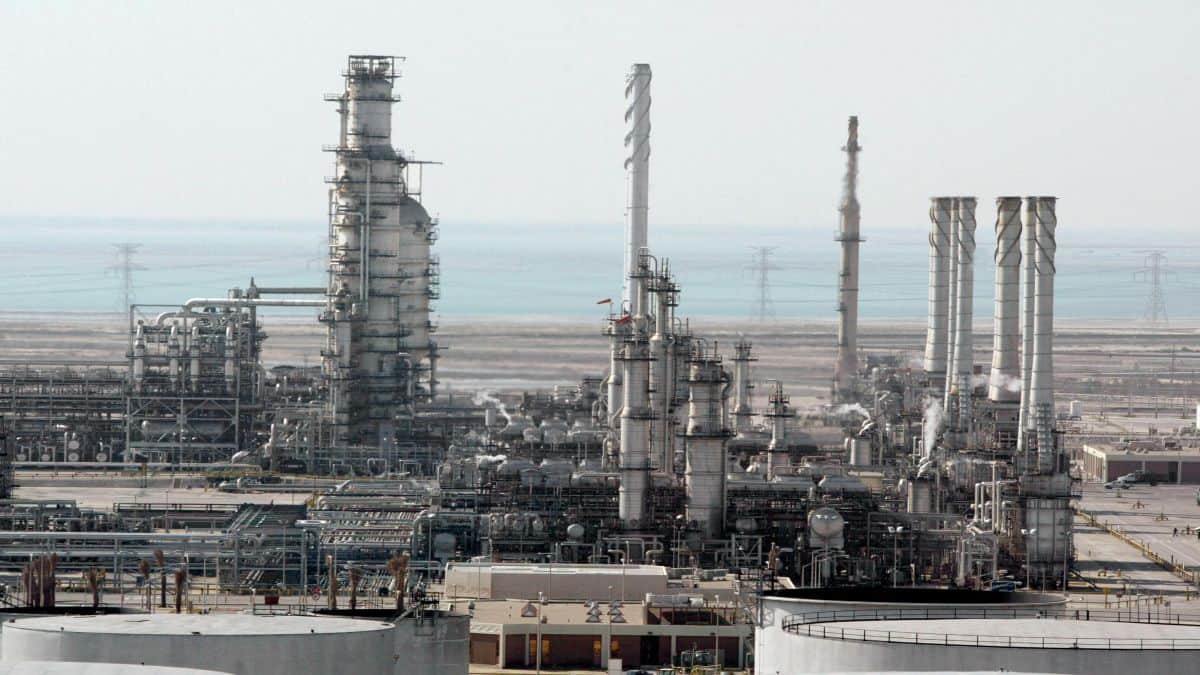
The silence in the control room at Ras Tanura is never truly silent. It is a hum. A vibration in the soles of your work boots that tells you the lungs of the global economy are breathing. For decades, this massive complex on the edge of the Persian Gulf has been the steady heartbeat of energy, processing over 500,000 barrels of crude oil every single day.
Then came the sky.
It started with a sound that didn't belong to the machinery. It was a high-pitched whine, followed by the kind of concussive thud that you feel in your teeth before you hear it with your ears. When the news broke that Saudi Aramco was shuttering the refinery following targeted strikes from Iran, the world looked at flickering green numbers on stock tickers. But for the engineers standing on that scorched sand, the reality was much more visceral.
Fire.
We tend to think of oil as a commodity, something we see as a fluctuating price on a gas station sign or a line item in a geopolitical briefing. We are wrong. Oil is the invisible scaffolding of modern life. When Ras Tanura stops, the scaffolding shakes. This isn't just about a company losing revenue or a kingdom defending its borders. It is about the fragile thread that connects a farmer in Iowa to a shipping container in Shanghai.
The Anatomy of a Shutdown
Closing a refinery of this magnitude isn't as simple as flipping a light switch. It is a mechanical cardiac arrest. You have to manage pressures that could level city blocks. You have to cool down furnaces that have burned for years without pause. The "shuttering" mentioned in news briefs is actually a frantic, precision-engineered race to prevent a total catastrophe.
The strike hit the stabilization strings. These are the specialized units that strip volatile gases from the raw crude so it can be safely shipped across the ocean. Without them, the oil is "sour" and dangerous. It is angry.
Consider a hypothetical worker named Ahmed. He has spent twenty years at Ras Tanura. He knows the specific whistle of every valve. When the alarms sounded, he wasn't thinking about the Brent Crude index. He was thinking about the millions of gallons of pressurized hydrocarbons sitting in pipes that were suddenly losing their thermal balance. If the cooling systems fail because the power grid is compromised, the refinery doesn't just stop. It breathes fire.
The decision to shut down was an act of survival, not just for the facility, but for the global supply chain.
Why the Map Matters
To understand why this specific patch of dirt in Saudi Arabia dictates the rhythm of your life, you have to look at the geography of energy. The Persian Gulf is a bottleneck. Ras Tanura is the cork.
When Iran-backed drones and missiles find their mark, they aren't just hitting steel tanks. They are signaling that the world’s most critical energy artery is vulnerable to low-cost, high-impact technology. A million-dollar missile can be intercepted. A swarm of fifty-thousand-dollar drones? That is a different math.
The markets reacted with a predictable spike. Oil jumped. Traders in London and New York scrambled. But the real story is in the "crack spread"—the difference between the price of crude oil and the products refined from it, like gasoline and diesel. Ras Tanura doesn't just pump oil; it crafts it. It turns the sludge of the earth into the fuel that keeps ambulances running and cargo planes in the air.
When the refining capacity vanishes, the price of the raw stuff becomes irrelevant. You can have all the crude in the world, but if you can't cook it, the world goes cold.
The Invisible Stakes
There is a psychological weight to this shutdown that the financial papers miss. For years, the "Saudi Put" was a given. The idea was that no matter what happened in the world, the Kingdom could always turn a dial and flood the market with enough energy to stabilize the chaos.
That myth died in the smoke over Ras Tanura.
We are entering an era of "energy insecurity" that feels more like the 1970s than the 2020s. The strikes proved that physical distance is no longer a shield. If a refinery can be blinded and crippled in a single night, the entire concept of "just-in-time" delivery for global energy is a fantasy.
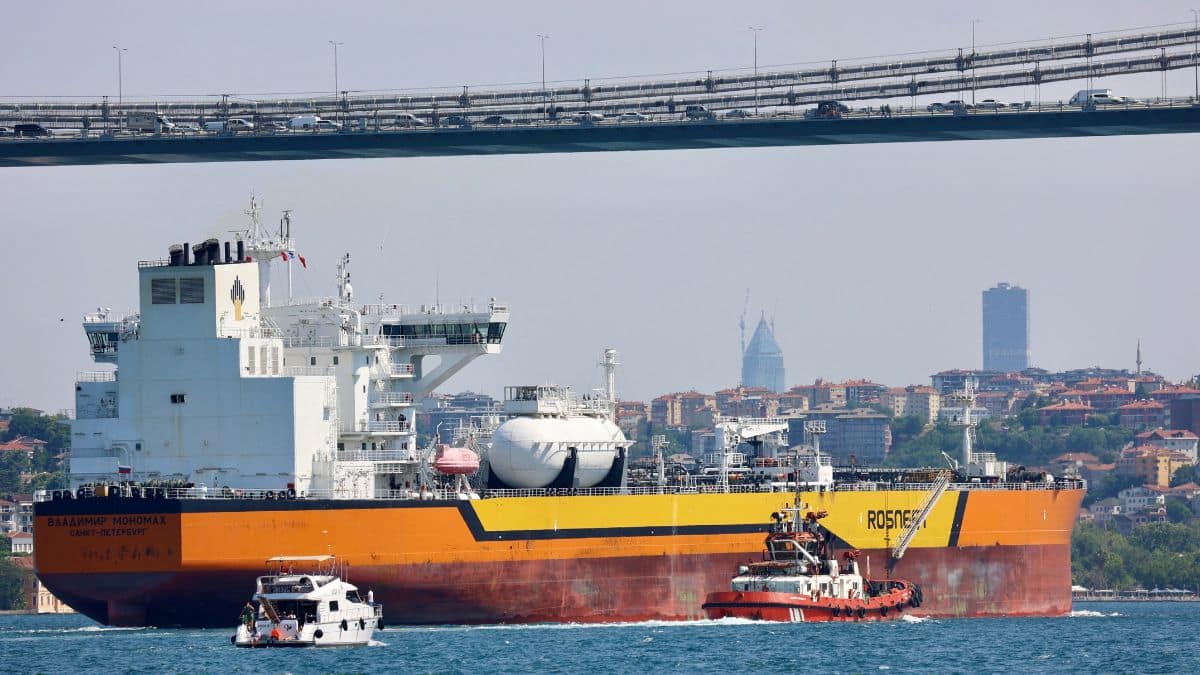
Think about the sheer scale of the logistics. A massive tanker—the size of an aircraft carrier—sits waiting in the Gulf. It costs tens of thousands of dollars an hour just to keep that ship idling. When the refinery goes dark, the tankers wait. When the tankers wait, the refineries in Europe and Asia don't get their feedstock. When they don't get their feedstock, the price of a plastic bottle in a grocery store in Berlin goes up.
Everything is linked.
The Human Cost of a Cold Pipe
The most haunting part of a dormant refinery is the silence. After the fires are out and the emergency crews have retreated, there is a stillness that feels wrong.
In the days following the strike, the focus shifted to "resilience." This is a word that politicians love. They use it to describe the ability to bounce back. But resilience has a human cost. It means men and women working thirty-six-hour shifts in the desert heat to weld pipes that are still hot to the touch. It means divers checking underwater intake valves in the dark.
The technical complexity of restarting a refinery is staggering. You have to re-introduce heat slowly. If you do it too fast, the metal expands and cracks. You have to check every mile of the thousands of miles of tubing for micro-fractures caused by the blast's shockwaves.
It is a grueling, thankless task. And while these workers are covered in grease and sweat, the rest of the world is complaining about the price of a cross-country flight. There is a profound disconnect between the ease with which we consume energy and the violent, difficult reality of producing it.
The New Normal
This wasn't an isolated incident. It was a demonstration.
The strike on Ras Tanura showed that the modern world's energy infrastructure is a glass house, and we are living in a neighborhood where everyone has a pile of stones. The shift from traditional warfare to gray-zone tactics—where deniable strikes can cripple a nation's economy—is the new reality.
We can build better missile defenses. We can diversify our energy sources. We can move toward renewables. But for the foreseeable future, the world's heart still beats in places like Ras Tanura. And right now, that heart is skipping beats.
The concern isn't just about the barrels lost today. It’s about the realization that the system we built to power our lives is far more fragile than we ever dared to admit. We have spent a century perfecting the efficiency of the machine, but we forgot to account for its vulnerability.
The smoke has cleared now. The headlines have moved on to the next crisis. But in the quiet offices of logistics firms and the dark war rooms of global powers, the lesson of Ras Tanura is being whispered.
The hum is back, but the vibration has changed. It is no longer a sound of pure confidence. It is the sound of a system holding its breath, waiting for the next whine in the sky.
The world didn't end when the refinery shut down. It just got a lot more expensive, and a lot less certain. We are all passengers on a ship powered by a furnace we can no longer guarantee will stay lit.
Somewhere in the desert, a flare stack flickers against the stars. It is a lonely light, a reminder that our entire civilization is just a series of controlled explosions, and sometimes, the control is an illusion.