The Middle East just shifted on its axis. We aren't talking about a minor diplomatic spat or a typical exchange of rocket fire across a border. The reports detailing the end of Ali Khamenei mark the culmination of a decade-long shadow war between the Iranian regime, the United States, and Israel. It's a moment that felt impossible until it wasn't. For years, the world watched a high-stakes game of cat and mouse played out through cyberattacks, assassinations of nuclear scientists, and regional proxies. Now, the board has been cleared.
If you’ve been following the news, you know the official narrative is often sanitized. Diplomats use careful language. Military spokespeople offer "no comment." But the reality on the ground in Tehran and Tel Aviv tells a much grittier story. This wasn't a random event. It was the result of a deliberate, multi-layered campaign designed to dismantle the leadership of the Islamic Republic from the inside out. Discover more on a connected topic: this related article.
Years of Precision Strikes
Israel’s intelligence apparatus, Mossad, didn't just wake up one day and decide to target the top. They spent years pruning the hedges. Think back to the assassination of Mohsen Fakhrizadeh in 2020. He was the mastermind of Iran’s nuclear program, taken out by a remote-controlled machine gun. That wasn't just a hit; it was a message. It told the Iranian leadership that their most secure locations were porous.
The United States played its part too, often providing the structural pressure that made these operations possible. While Washington frequently leaned on economic sanctions, the 2020 strike on Qasem Soleimani showed a willingness to use kinetic force against "untouchable" figures. These actions created a blueprint. They proved that the traditional rules of sovereignty were being rewritten in real-time. More reporting by The Guardian delves into comparable views on the subject.
The Intelligence Breach That Changed Everything
You can’t pull off an operation of this magnitude without someone on the inside. That’s the part most analysts are scared to talk about. The Islamic Revolutionary Guard Corps (IRGC) isn't the monolithic entity it pretends to be. Paranoia has been rotting it for years. When your own officers are selling secrets for crypto or foreign passports, your Supreme Leader is never truly safe.
Internal dissent in Iran reached a boiling point long before the final strike. The "Woman, Life, Freedom" protests weren't just a social movement; they were a signal to foreign intelligence that the regime’s popular support was a hollow shell. When the people stop fearing the state, the state’s enemies find it much easier to move through the shadows.
Why the Shadow War Went Hot
For a long time, the strategy was "maximum pressure." The goal was to make the regime so uncomfortable they’d come back to the negotiating table. But something changed in the last twenty-four months. The acceleration of Iran’s breakout time toward a nuclear weapon forced Israel’s hand. They stopped looking for a diplomatic exit and started looking for a decapitation strike.
Israel's security doctrine has always been about "the octopus." Don't just fight the tentacles (Hezbollah, Hamas, the Houthis); go for the head. By the time the final operation against Khamenei was launched, the tentacles were already being severed in Lebanon and Gaza. The regime was isolated, its primary deterrents were failing, and its internal security was a sieve.
The Power Vacuum No One Prepared For
So, what happens now? Honestly, anyone claiming they know exactly what the next month looks like is lying to you. Iran is currently a pressure cooker without a lid. The IRGC is scrambling to maintain order, but they're facing a crisis of legitimacy that money can't fix.
There’s a common misconception that the disappearance of a dictator leads to immediate democracy. History usually says otherwise. We're likely looking at a brutal scramble for power between hardline military factions and perhaps a desperate attempt by the "reformists" to claw back some relevance. But the reformers have no guns. The IRGC has all of them.
Realities of the New Middle East
The US and Israel have fundamentally changed the cost-benefit analysis for authoritarian regimes in the region. If you fund proxies and pursue nuclear weapons, you are no longer safe in your palace. That’s the new standard. It’s brutal, it’s controversial, and it’s effectively ended the era of "strategic patience."
Critics will say this creates more instability. They might be right. But from the perspective of Jerusalem and the Pentagon, the previous "stability" was just a slow-motion slide toward a nuclear-armed Iran. They chose the chaos of a vacuum over the certainty of a mushroom cloud.
Identifying the Next Indicators
If you want to track where this goes, stop looking at the official press releases from the UN. Watch these three things instead:
- The Price of Oil: Markets hate a vacuum. If the IRGC loses control of the Strait of Hormuz or starts sabotaging their own infrastructure to spite the world, energy prices will tell you first.
- Communication Blackouts: Keep an eye on internet traffic coming out of Tehran. When the regime is truly scared, they cut the cables.
- Hezbollah’s Silence: If the primary proxy in Lebanon stops receiving orders and funding, it means the central nervous system in Iran is truly dead.
The shadow war isn't in the shadows anymore. It’s center stage, and the ending was written in blood and high-tech surveillance. The era of Ali Khamenei is over, and with it, the old rules of Middle Eastern diplomacy are buried.
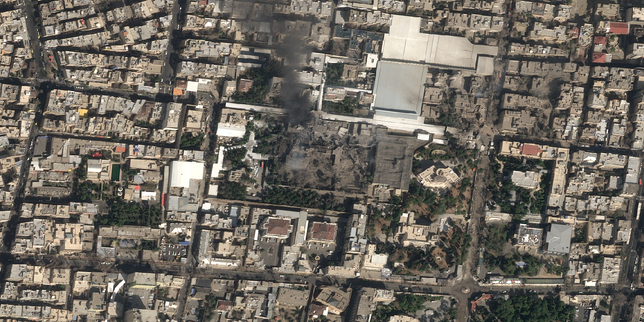
Move your focus to the succession battle. Watch the junior officers in the IRGC. They’re the ones who will decide if Iran tries to rejoin the world or if they double down on the path that led them to this wreckage. Don't expect a peaceful transition. Expect a fight for the soul of a nation that has been suppressed for nearly half a century.