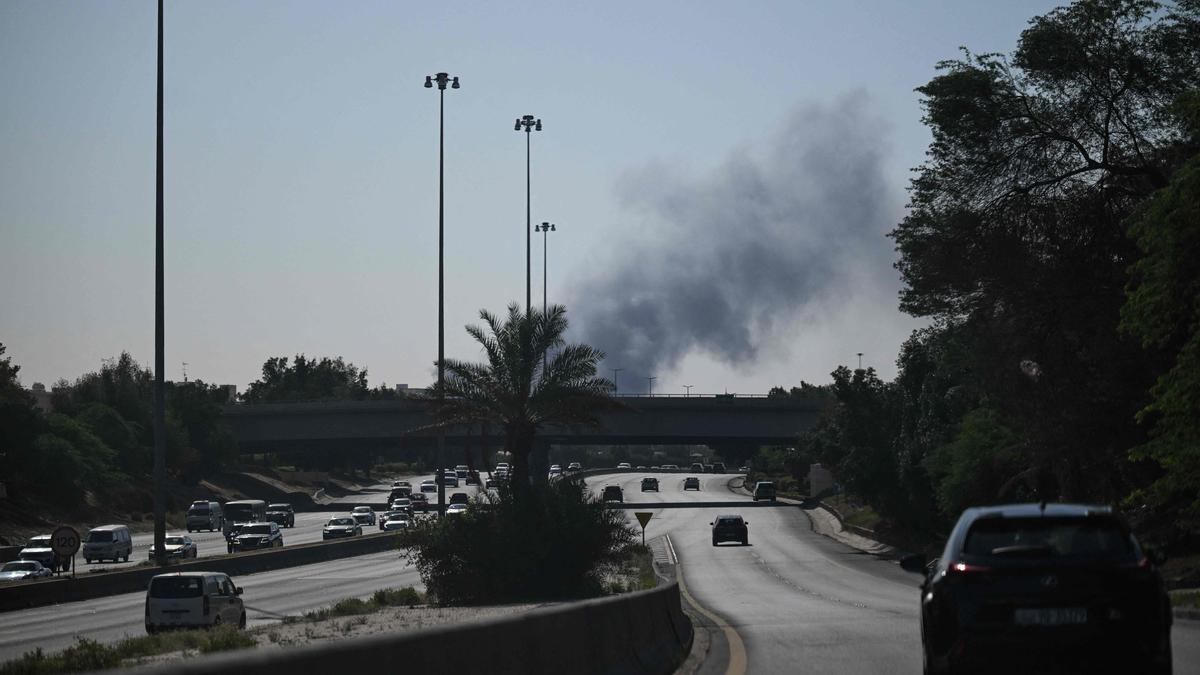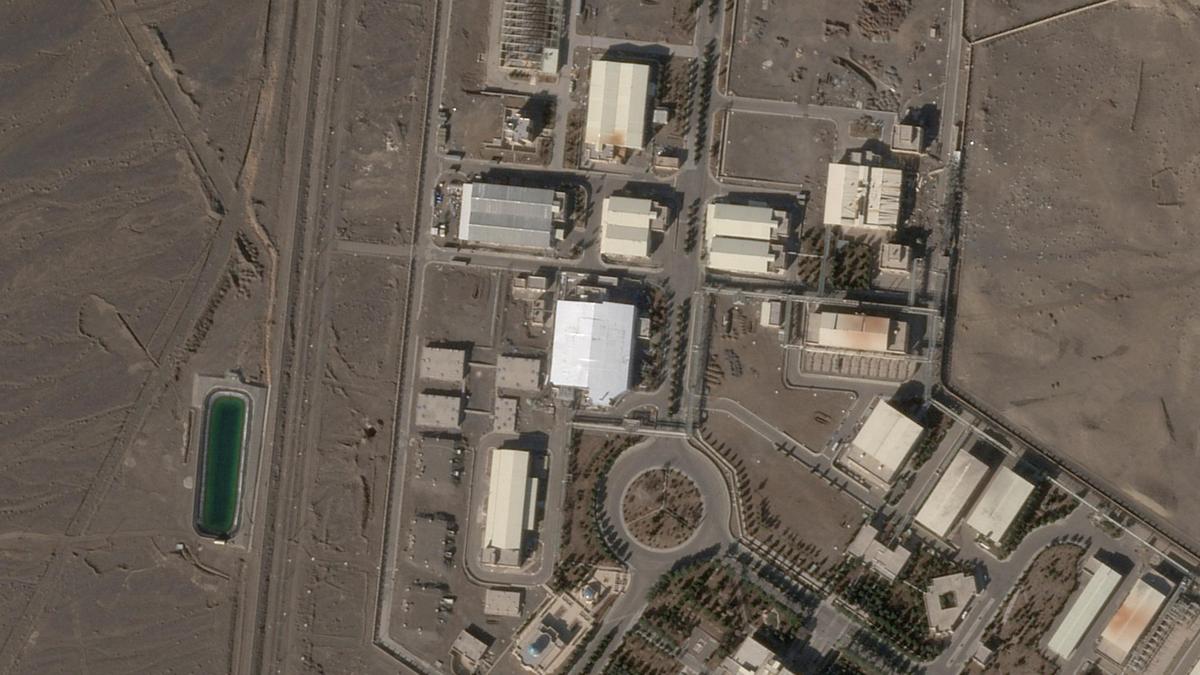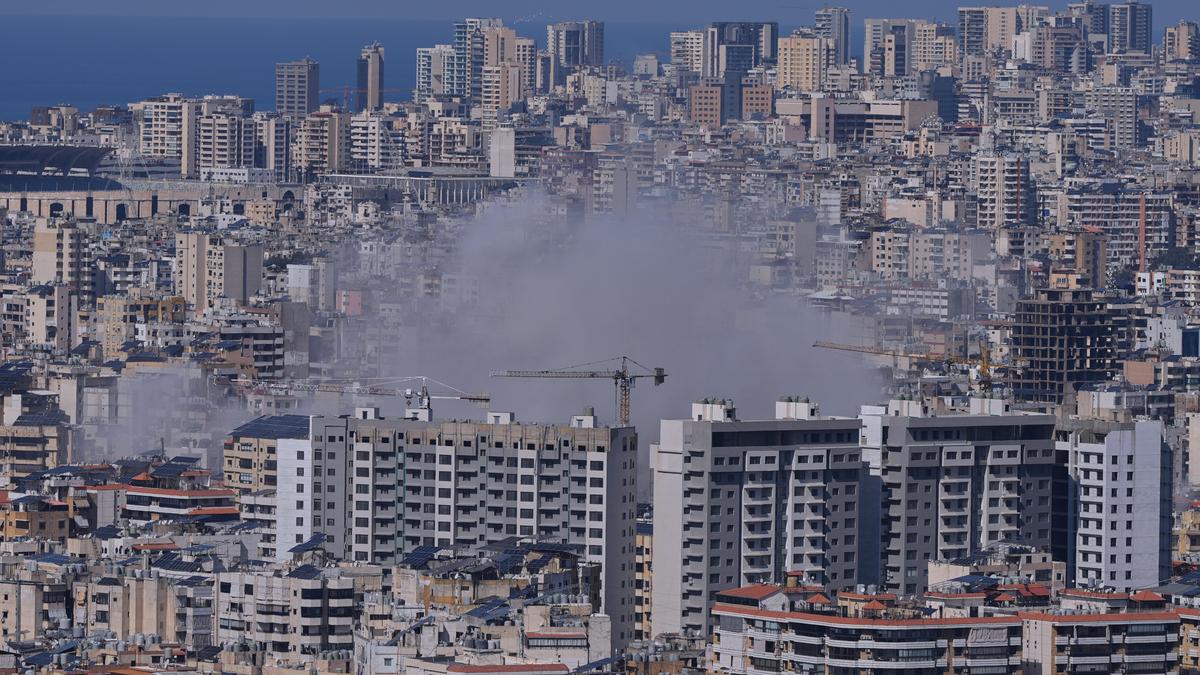
The Israeli Air Force recently executed a targeted strike in the heart of Beirut, aimed at a high-ranking Hezbollah operative. While the Israel Defense Forces (IDF) frame these operations as surgical removals of immediate threats, the reality on the ground suggests a much more volatile calculation. This wasn't just another missile hitting a building; it was a deliberate stress test of the "red lines" that have kept Lebanon from sliding into total regional war. By hitting the Dahiyeh district—a densely populated Hezbollah stronghold—Israel is signaling that no geographic sanctuary remains off-limits, regardless of the potential for civilian casualties or the diplomatic fallout with the Lebanese state.
The core objective of these strikes is the degradation of Hezbollah’s command structure. However, history shows that decapitation strikes rarely result in the collapse of disciplined paramilitary organizations. Instead, they often trigger a reorganization process that brings younger, more radicalized commanders to the forefront. The strike in Beirut serves as a microcosm of a broader, more aggressive Israeli strategy that prioritizes short-term tactical wins over the long-term stability of the northern border.
The Intelligence Architecture Behind the Hit
Executing a strike in a high-traffic urban center like Beirut requires more than just a drone and a pilot. It requires a deep, multi-layered intelligence network that has spent years, if not decades, mapping the movements of the Hezbollah elite. This isn't just about signal intelligence (SIGINT)—intercepting phone calls or tracking encrypted messages. It relies heavily on human intelligence (HUMINT). To know exactly which floor of a residential building a target is occupying at a specific hour suggests a level of penetration within the Lebanese capital that should deeply alarm Hezbollah’s security apparatus.
The IDF uses a combination of loitering munitions and precision-guided missiles designed to minimize the "splash zone." Yet, in an environment as cramped as southern Beirut, "minimal" is a relative term. The use of such weaponry in a civilian-heavy area is a calculated gamble. If the target is neutralized, the IDF claims a victory for precision. If the building collapses and kills dozens of non-combatants, the narrative shifts toward the "human shield" argument. It is a grim binary that leaves no room for error.
The Myth of Surgical Warfare
Military spokespeople love the word "surgical." It implies a clean, clinical procedure that removes the "cancer" without harming the "patient." But war is never clinical. When a missile hits an apartment complex, the structural integrity of the entire block is compromised. Windows shatter for miles. The psychological impact on the civilian population is a form of kinetic pressure that Israel uses to turn the Lebanese public against Hezbollah.
The strategy is transparent. By bringing the war to the doorsteps of Beirut’s middle class, Israel hopes to foster internal resentment against the "state within a state" that Hezbollah represents. But this often backfires. In the Middle East, foreign aggression frequently acts as a unifying force rather than a divisive one. A family that loses their home to an Israeli missile is unlikely to blame the party that claims to be their only defender. They are far more likely to radicalize.
The Chain of Command Fallacy
There is a persistent belief in Western military circles that killing a "senior operative" creates a vacuum. In reality, Hezbollah operates with a "next man up" philosophy. Their organizational chart is not a pyramid that collapses if the top stone is removed; it is a web. When a strand is cut, the rest of the web adjusts. We have seen this repeatedly since the 1990s. The assassination of Abbas al-Musawi in 1992 paved the way for Hassan Nasrallah, a leader who proved far more effective and dangerous than his predecessor.
The obsession with high-value targets (HVTs) often distracts from the systemic issues that make Hezbollah a formidable foe. You can kill the man who coordinates the rockets, but unless you destroy the silos, the manufacturing plants, and the supply lines running through Syria, the rockets will still fly. The Beirut strike is a PR win for the Israeli government, which is currently facing immense internal pressure to return displaced citizens to the north, but it does little to change the fundamental military balance.
The Diplomatic Vacuum and the Failure of Deterrence
Lebanon is a country currently existing in a state of managed collapse. Its economy is in ruins, its government is paralyzed, and its sovereign borders are essentially fictional. When Israel strikes Beirut, it isn't just attacking Hezbollah; it is demonstrating the total irrelevance of the Lebanese Armed Forces (LAF) and the international community’s inability to enforce UN Resolution 1701.
Deterrence is built on the idea that the cost of action outweighs the benefit. For months, both sides have engaged in a deadly dance of "proportionality." Hezbollah fires at military installations in the Galilee; Israel strikes launch sites in southern Lebanon. By moving the fight into Beirut, Israel has effectively torn up the script. They are betting that Hezbollah—and its patrons in Tehran—are too afraid of a full-scale regional conflagration to respond in kind.
It is a high-stakes game of chicken. If Hezbollah retaliates by striking Tel Aviv, the region enters a dark new chapter. If they don't, they look weak to their base. Usually, the group finds a middle ground: a significant but targeted strike on a high-value Israeli military asset. This cycle of "measured escalation" is a paradox. It keeps the war from becoming total, but it also ensures that it never ends.
The Urban Battlefield
Modern warfare has moved out of the trenches and into the living rooms. In Beirut, the battlefield is the grocery store, the parking garage, and the apartment lobby. This shift has profound implications for international law. The principle of distinction—separating combatants from civilians—becomes nearly impossible to uphold when a senior commander lives in a standard residential tower.
Technical Limitations of Modern Munitions
We often hear about "small diameter bombs" and "R9X" missiles that use blades instead of explosives to kill a target in a car without hurting the driver. While these technologies exist, they are not always the tools used in Beirut. Often, the IDF uses standard 500-lb or 2,000-lb JDAMs (Joint Direct Attack Munitions) to ensure the target doesn't survive. The kinetic energy alone from such an impact is enough to pancake several floors of a building.
The technical reality is that there is no such thing as a "safe" air strike in a city of two million people. The fragmentation patterns, the shockwaves, and the inevitable fires create a chaotic environment where "collateral damage" is a mathematical certainty, not an accidental byproduct.
The Displacement Crisis
While the world watches the explosions in Beirut, a much larger humanitarian crisis is unfolding quietly. Hundreds of thousands of people have been displaced on both sides of the border. In northern Israel, entire towns are ghost cities, their residents living in hotels in Eilat or Jerusalem. In southern Lebanon, the villages are being reduced to rubble.
The strikes in the capital are intended, in part, to show the Israeli public that the government is "doing something." It is a visible, violent proof of action. But for the families who can't go home, a dead operative in Beirut doesn't make their living room in Kiryat Shmona any safer from Hezbollah's short-range Kornet missiles or suicide drones. Those threats are neutralized by ground maneuvers and buffer zones, not by high-profile assassinations in the capital.
The escalation in Beirut marks the end of the "border skirmish" phase of this conflict. Israel is now operating under a doctrine of total exposure, where no leader is safe and no city is a sanctuary. This approach may provide temporary tactical advantages, but it ignores the historical precedent that violence in Lebanon is rarely a closed loop. Every strike creates a new generation of grievances, and every "neutralized" commander is replaced by someone who has learned from his predecessor's mistakes.
The question is no longer whether a full-scale war can be avoided, but whether both sides have already decided that the current state of perpetual, high-intensity friction is more politically useful than a ceasefire. If you want to understand the future of this conflict, stop looking at the maps of the border and start looking at the casualty lists in the morgues of Beirut. That is where the next decade of war is being written.
Check the local Lebanese news feeds for updates on civilian displacement figures to see the true cost of these precision strikes.