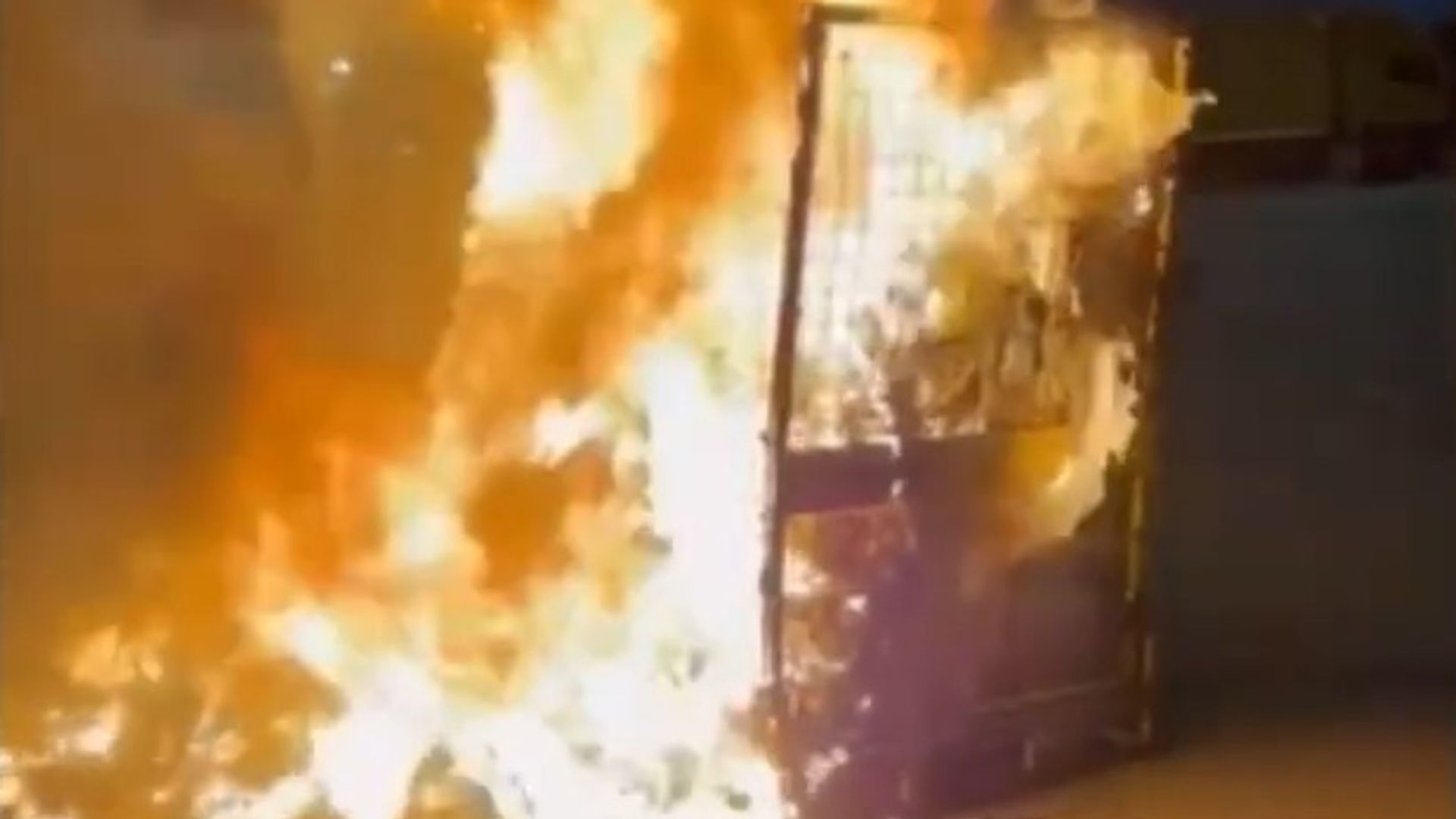
The steel doors of a Volkswagen Crafter are designed to muffle the sound of the world outside. When you are sitting inside one, surrounded by reinforced plating and the heavy, metallic scent of ink and linen, the war in the east feels like a distant radio frequency. But for seven bank employees traveling from Ukraine into Hungary, the silence of that armored shell was shattered not by a shell or a drone, but by the cold click of handcuffs.
Somewhere near the border, the flow of capital stopped.
Eighty million dollars. In cash, that is a physical weight. It is not a digital flicker on a screen or a ledger entry in a central bank’s database. It is a mountain of paper that represents salaries, reconstruction, and the literal lifeblood of a nation under siege. When the Hungarian authorities descended on those vehicles, they weren't just seizing currency. They were severing a nervous system.
The Mechanics of a Seizure
The facts, as reported by Ukrainian officials, are stark. Seven individuals—professionals tasked with the most dangerous courier job in Europe—were detained. The funds, roughly $80 million, were effectively wiped from the Ukrainian ledger and placed into the custody of the Hungarian state.
Think of a bank not as a building, but as a heart. Its primary job is to pump. When that pump is constricted, the extremities begin to go cold first. For a country like Ukraine, which is currently operating on a knife-edge of fiscal survival, $80 million is not "rounding error" money. It is the difference between a hospital floor having power for a month or falling into darkness.
The official narrative from Budapest remains guarded. They cite regulations, perhaps a lack of proper documentation, or the murky complexities of cross-border transport during a state of emergency. But beneath the bureaucratic jargon lies a deeper, more friction-filled reality. Borders are no longer just lines on a map; they have become ideological filters.
A Walk Through the Grey Zone
Imagine a mid-level compliance officer at a Ukrainian commercial bank. Let’s call him Viktor.
Viktor hasn't slept properly in three years. His job is to move liquidity through a landscape where the traditional rules of international finance have melted away. In peace time, you wire the money. In war, when the infrastructure is brittle and the scrutiny is suffocating, sometimes you have to put the money in a truck and drive.
Viktor watches the GPS ping of his armored fleet. He sees them approach the Hungarian border. He expects the usual delays—the paperwork checks, the suspicious glances of guards who see a Ukrainian license plate and think "trouble." He does not expect the pings to stop moving for twenty-four hours. He does not expect a phone call telling him his staff are in a holding cell and the vault in the back of the van is being cracked open by a foreign government.
The tension between Kyiv and Budapest is a well-documented friction point in European politics. While the rest of the EU has largely moved in lockstep to support Ukraine’s sovereignty, Hungary has often played the role of the skeptic. This seizure is the physical manifestation of that skepticism. It is what happens when geopolitical posturing meets the cold reality of a customs check.
The Invisible Stakes of Liquidity
Why carry $80 million in a truck?
To the average person, it sounds like the plot of a heist movie. To a financial expert in a conflict zone, it is a Tuesday. When a country’s banking infrastructure is under constant cyber-attack and physical bombardment, "physicality" becomes the only true security. You cannot hack a pallet of hundred-dollar bills. You cannot "de-platform" a bag of Euros.
This incident exposes a terrifying vulnerability in the modern world: the fragility of the "safe passage." We assume that money, especially sovereign or institutional money, moves with a certain level of diplomatic immunity. We assume that if a bank says "this is ours," the neighboring state will respect the claim.
But Hungary’s move suggests that the rules of the game have changed. By detaining the employees and sequestering the funds, they have introduced a new variable into the logistics of survival: the "neighbor's tax." If you want to move your resources through our backyard, we reserve the right to stop the clock.
The human cost of this delay is immediate. Seven families in Ukraine are currently waiting for news of relatives who were simply doing their jobs. These aren't soldiers; they are accountants, drivers, and security guards. They are caught in a legal limbo that has more to do with the tension between Viktor Orbán and Volodymyr Zelenskyy than it does with any actual crime.
The Ghost in the Machine
There is a specific kind of dread that comes with being "detained" in a foreign country under the cloud of financial suspicion. You are no longer a person. You are a "person of interest." Your passport is a liability. Your explanation—that you are moving money to keep your country’s economy from collapsing—sounds like a desperate lie to a customs official who has been told to look for "irregularities."
Consider the message this sends to every other financial institution trying to keep Ukraine afloat. It creates a chilling effect that is more damaging than any single seizure. If $80 million can vanish into the Hungarian legal system, who is going to risk $100 million tomorrow?
This is how an economy dies. Not with a bang, but with a series of red lights at border crossings. It dies because the risk of moving the money becomes higher than the risk of losing the war.
The Ukrainian government has been vocal. They call it a seizure. They call it a provocation. They are demanding the immediate return of the "hostages" and the capital. But in the halls of power in Budapest, the clocks tick slower. They talk about "investigations." They talk about "money laundering protocols." They use the language of the law to mask the intent of the politics.
The Weight of the Paper
We often talk about war in terms of territory gained or lost. We count the square kilometers. We count the casualties. We rarely count the "lost liquidity."
But money is a form of territory. If you cannot move your wealth, you do not own it. If your neighbor can reach into your pocket and hold your hand there for weeks at a time, you are not fully sovereign. The $80 million sitting in a Hungarian evidence locker is a hole in the Ukrainian front line.
It represents thousands of transactions that will never happen. It represents a loss of trust in the corridors of the European Union. It is a reminder that even among "allies" or "partners," the old instincts of the border guard—the desire to control, to extract, and to impede—are never far from the surface.
The seven bank employees are likely sitting in a room right now, staring at a wall, wondering how a routine transport turned into an international incident. They are the collateral damage of a financial cold war. They are the humans behind the headline, the ones who had to carry the weight of that paper and are now paying the price for its value.
The road from Kyiv to the heart of Europe was supposed to be a highway of integration. Instead, it has become a gauntlet. Every kilometer is a question. Every border post is a gamble. And for now, eighty million answers are locked away in a vault, while the people who were supposed to deliver them wait in the dark.
The van is empty. The ink is dry. The border remains closed.