The North Sea does not care about your vacation plans. It is a gray, churning expanse that swallows light and spits back salt, and on a Tuesday morning, it framed the view from cabin 412 like a wet slate.
Inside, the air smelled faintly of industrial lavender and trapped anxiety. For an alternative look, consider: this related article.
Elena adjusted the wool blanket around her husband’s shoulders. Marcus wasn't a complainer. He was the kind of man who laughed off a broken toe during a rocky shore excursion in Norway. But today, his skin possessed the translucent quality of a skimmed puddle. His breath came in shallow, ragged catches. When he tried to lift a glass of water, his fingers trembled so violently the liquid splashed against the nightstand.
"Just a flu," he muttered, his voice raspy, a ghost of its usual baritone. "Seasickness. The swell is bad today." Further coverage regarding this has been shared by AFAR.
It wasn't the swell.
Deep within the steel labyrinth of the cruise liner, far below the glittering chandeliers of the dining hall and the synthetic green of the upper-deck running track, something small, ancient, and indifferent was waking up. The ship, a floating city of three thousand souls seeking northern lights and midnight suns, was no longer just a vessel of pleasure.
It had become an incubator.
The Microscopic Stowaway
When we think of maritime disasters, our minds drift to the cinematic. We picture towering walls of water, black icebergs cutting through hulls, or engine rooms swallowed by fire. We do not think of dust. We do not think of the invisible, dried remnants of a rodent’s existence, swept into a ventilation shaft during a routine maintenance check in a distant port.
But the greatest threats to our collective safety are rarely loud. They do not blow foghorns.
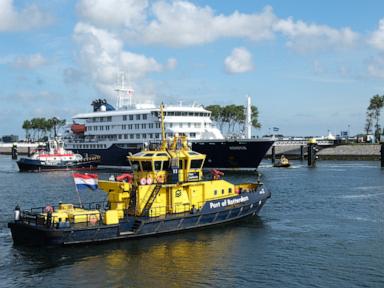
The ship was heading for the coast of the Netherlands, its white bow cutting through the waves toward Rotterdam. On paper, the itinerary promised tulips, canals, and centuries of art. In reality, the vessel was running from an invisible ghost: Hantavirus.
To understand the sheer panic that ripples through a ship’s medical bay when that word is whispered, you have to understand how the virus operates. It is not like the common cold. It does not wait for a cough or a sneeze to hitch a ride from person to person. Instead, it waits in the dark, dry corners of the world. It thrives in the excretions of mice and rats. When that material dries, it turns into a fine, imperceptible powder.
One broom stroke. One gust of air from an aging HVAC unit. That is all it takes.
The particles become airborne, suspended in the oxygen we breathe. You inhale, thinking of nothing but the breakfast buffet or the evening’s theater lineup, and the virus settles deep into your lungs. It targets the endothelial cells—the very lining of your blood vessels.
Then, the leaking begins.
The Border Control of the Mind
By afternoon, the rumors had outpaced the ship's engines.
In the crowded observation lounge, the chatter shifted from shore excursions to a creeping sense of confinement. Travelers are, by nature, optimistic creatures. We buy tickets because we believe the world is accessible, beautiful, and safe. We surrender our autonomy to a captain and a crew, trusting that the steel hull between us and the deep ocean is an absolute barrier.
But when a health crisis hits a cruise ship, that illusion of safety evaporates. The vessel transforms from a luxury resort into a floating prison.
"They aren't letting anyone off at the next port," a woman in a bright yellow windbreaker said, her voice tight with suppressed panic. She was clutching a smartphone, staring at a signal that flickered between one bar and none. "My daughter checked the news from shore. The Dutch authorities are setting up a perimeter."
A collective weight descended upon the room. The ocean, once a beautiful backdrop for photographs, suddenly felt vast and hostile.
Every cough in the lounge became an accusation. A man cleared his throat near the coffee station, and three people immediately cleared out of his radius. The thin veneer of civilization on vacation is remarkably fragile. It requires predictability to survive. Take away the guarantee of the next port, and the cracks show instantly.
Consider what happens next to the human body under the assault of a hemorrhagic virus. The early symptoms are cruel because they mimic the mundane. Fatigue. Fever. Muscle aches in the thighs, hips, and back. It feels like the exhaustion of a long day of walking through cobblestone streets. It is easy to ignore. It is easy to take two aspirin and lie down.
But within days, the true nature of the affliction reveals itself. The virus causes the capillaries in the lungs to leak fluid directly into the air sacs. It is a terrifying, internal drowning. The medical term is Hantavirus Pulmonary Syndrome.
It has a mortality rate of nearly forty percent.
When you tell a passenger that nearly one in three people who develop the severe form of this illness will not survive, the luxury of the cruise ship disappears. The gold leaf on the railings looks tacky. The ambient jazz music playing through the deck speakers sounds like a mockery.
The View from the Pier
In Rotterdam, the rain was steady, a relentless drizzle that turned the harbor concrete into a dark mirror.
Jan de Jonge stood near the edge of the terminal, his hands shoved deep into the pockets of his high-visibility jacket. As a port official, he had seen everything enter these waters. Container ships stacked high with electronics from Asia, oil tankers riding low in the surf, and luxury liners filled with wealthy retirees.
Today was different. The atmosphere on the pier was sterile, tense, and heavy with precaution.
Ambulances were already lined up, their light bars throwing rhythmic pulses of blue against the gray bellies of the clouds. Men and women in full-body personal protective equipment—hazardous material suits that made them look like astronauts stranded on a concrete beach—moved with methodical, unhurried precision.
"You look at a ship like that, and you see wealth," Jan remarked to a colleague, nodding toward the white leviathan slowly turning in the harbor channel. "I look at it and see a giant petri dish with propellers."
He wasn't wrong.
The design of modern cruise ships is a marvel of human engineering, a testament to our desire to compress the comforts of land and move them across the water. But that very compression is a vulnerability. Thousands of people from different corners of the globe, sharing the same air filtration system, eating from the same kitchens, walking the same narrow corridors. If a pathogen enters that ecosystem, it doesn't have to fight for survival. We have built the perfect highway for it.
The Dutch response was swift, a clinical exercise in containment. The ship would be allowed to dock, but it would not be a standard arrival. There would be no welcoming committees, no tour buses lined up to take visitors to the windmills of Kinderdijk, no souvenir shops ringing up sales.
This was a quarantine. A hard line drawn between the infected vessel and the mainland.
The Invisible Mathematics of Risk
Why the panic over a handful of cases? The answer lies in the terrifying mathematics of public health.
When an exotic or highly lethal pathogen is detected in a closed environment, health officials do not look at the numbers today; they look at the exponential graph of next week. If Hantavirus were highly contagious from human to human, a cruise ship would be a global catastrophe machine. Fortunately, science tells us that person-to-person transmission of most Hantavirus strains is incredibly rare. The danger is almost exclusively environmental.
But that fact offers little comfort when you are breathing the air inside that environment.
The real problem lies elsewhere. The issue isn't just who is sick now, but where the source hides. Until the specific rodent population or contaminated area within the ship’s bowels is identified, isolated, and eradicated, every square inch of the vessel remains under suspicion. The air vents become suspect. The food storage lockers become suspect. The plush carpets of the grand ballroom become potential fields of microscopic landmines.
Inside cabin 412, Marcus’s fever had spiked.
Elena held a cold washcloth to his forehead, listening to the distant, rhythmic thud of the ship's thrusters as it maneuvered alongside the Rotterdam pier. The silence from the hallway was deafening. The usual sounds of a cruise—the clinking of room service trays, the laughter of couples returning from the bar, the heavy tread of the cabin stewards—had vanished.
The ship had gone quiet. It was the silence of a community holding its collective breath, waiting to see who would be carried down the gangway first.
The True Cost of Comfort
We live in an era where distance has been conquered. We expect to travel to the ends of the earth with our slippers on, sipping a martini while watching Antarctica or the fjords glide past a triple-paned window. We have commodified exploration, stripping it of its inherent danger and replacing it with an all-inclusive beverage package.
But nature has a way of reminding us that the contract we sign with the wild is non-negotiable.
When we venture out into the world, we bring our vulnerability with us. And sometimes, the world hitches a ride back. The event in the Netherlands wasn't just a breakdown in maritime sanitation or a failure of a ship’s maintenance protocol. It was a stark, uncomfortable glimpse behind the curtain of our modern lifestyle.
The ambulances on the pier began to move, their tires hissing against the wet asphalt. The gangway was lowered—not the grand, carpeted entrance used for gala nights, but a utility ramp near the water line, shrouded in plastic sheeting.
Marcus opened his eyes, staring blankly at the ceiling of the cabin. "Are we there?" he whispered.
"Yes," Elena said, watching the first team of medics in white suits step onto the ship. "We're there."
The cruise was over. The journey toward survival, for the passengers and the ship itself, was just beginning. The white liner sat against the dark Dutch pier, a monument to human ambition, temporarily conquered by a handful of dust.