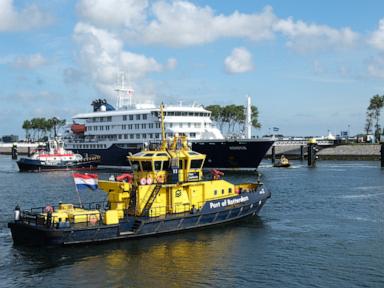
The media is predictably losing its collective mind over a cruise ship pulling into the Netherlands with reported cases of hantavirus. Headlines are screaming about lockdowns, port quarantines, and the "imminent threat" floating off the Dutch coast. Bureaucrats are shuffling papers, preparing to trap thousands of passengers inside a steel hull in the name of public safety.
They are getting it completely wrong. Don't miss our previous coverage on this related article.
The knee-jerk reaction to isolate a vessel experiencing a viral outbreak is not just lazy public policy; it is biologically illiterate. By forcing a ship into a prolonged quarantine at a pier, authorities actively transform a controllable medical situation into a high-density incubator for accelerated transmission. The conventional wisdom says we must keep the danger "out there" at sea. The cold, scientific reality is that keeping the danger trapped on board ensures everyone inside gets sick.
The Hantavirus Misconception: You Can't Catch It From the Buffet
Before panic drives the port authority to weld the hatches shut, we need to address a glaring medical ignorance running through the mainstream narrative. Hantaviruses are not norovirus. They are not influenza. You do not catch hantavirus because the guy ahead of you at the chocolate fountain didn't wash his hands. To read more about the context here, AFAR provides an informative summary.
http://googleusercontent.com/image_content/185
True hantaviruses—specifically those found in Europe and Asia, like the Puumala virus—are rodent-borne. Humans contract the virus primarily by inhaling aerosolized particles of dried rodent urine, feces, or saliva.
- Fact: Human-to-human transmission of European hantaviruses is virtually non-existent. Only the Andes virus variant in South America has shown sporadic person-to-person spread.
- Fact: The incubation period spans anywhere from one to several weeks, meaning passengers who are symptomatic now were likely exposed long before they stepped foot on the gangway, or the ship has an undetected rodent infestation in its lower decks.
Locking down a ship because of a hantavirus outbreak to "protect the public" is a theater of the absurd. The public on land is at zero risk from the passengers. However, the passengers are at extreme risk if they are forced to remain inside an enclosed environment with the actual, unaddressed source of the pathogen: a contaminated ventilation system or a hidden rodent vector in the ship's hold.
The Floating Petri Dish Fabricated by Bureaucracy
I have spent years analyzing maritime logistics and emergency response frameworks. I have watched port authorities panic and tank local economies because they treat a ship like an isolated island. It is not an island. It is a closed-loop HVAC system wrapped in steel.
When a regulatory body denies a ship berthing rights or confines passengers to their cabins, they invoke a mechanic known as the "amplification effect." Consider the mechanics of cruise ship ventilation. Modern vessels recycle a significant portion of their internal air to maximize energy efficiency. If a pathogen is airborne or localized within certain sectors of the ship, locking down the vessel and running the climate control on a closed loop ensures maximum exposure for every single soul on board.
Imagine a scenario where a hotel ashore discovers a localized health hazard. Do local authorities lock the doors from the outside, turn off the exits, and force the guests to stay in their rooms for two weeks? No. They evacuate the building, treat the patients, and remediate the structure.
Yet, the moment a hull touches water, normal logic evaporates. Maritime law and port politics dictate that the ship becomes a pariah. By refusing to disembark passengers immediately upon arrival in the Netherlands, authorities are forcing healthy individuals to marinate in the exact environment that caused the outbreak in the first place.
The Cost of the Safe Option
Let us be completely transparent about the counter-argument. The mainstream defense of shipboard quarantines rests on economic and administrative convenience. It is incredibly difficult to disembark 3,000 passengers, screen them, trace their contacts, and isolate them in shoreside facilities. It requires massive inter-agency cooperation, strains local hospital infrastructure, and creates a public relations nightmare for the host city.
So, governments choose the path of least resistance: they leave them on the ship.
It is cheaper to let the cruise line figure it out at sea. But let's stop pretending this is a clinical decision. It is a financial and political calculation disguised as biosafety. The downside of my approach—immediate, orderly disembarkation and shoreside triage—is that it expensive, loud, and logistically punishing for the Dutch healthcare system. But it is the only approach that aligns with actual epidemiological science.
The Questions We Are Erasing With Panic
If you look at the queries circulating in public forums, the wrong questions are driving the conversation.
Is it safe to travel on a cruise ship during a viral outbreak?
This question assumes the ship itself is a sentient entity generating disease. The correct question is: Has the vessel’s maintenance program adhered to rigorous pest control and HVAC decontamination standards? A ship is only as safe as its lowest-paid contractor’s cleaning log. If a cruise line cuts corners on bilge maintenance or food storage sanitation, the ship becomes a hazard regardless of global health trends.
How do ports stop infected ships from entering?
They shouldn't. The premise is deeply flawed. Ports exist to facilitate trade and ensure safety, which includes maritime rescue and medical assistance. Refusing entry to a vessel in distress—medical or otherwise—is a violation of basic maritime tradition and international law under the International Maritime Organization (IMO) guidelines. A civilized nation does not turn away sick people to keep its ledger clean.
Dismantling the Quarantine Playbook
The current playbook used by maritime authorities is a relic of the 14th century, when Venice forced ships to sit at anchor for forty days (quarantena) during the Black Death. We have advanced molecular biology, rapid diagnostic testing, and real-time data tracking, yet our response to a shipboard outbreak remains identical to the medieval era.
Here is the exact framework that should replace the archaic lockdown protocol:
- Immediate Pier Separation: Stop treating the ship as a hospital. It is a transport vehicle. Disembark all passengers within hours of docking.
- Shoreside Zonal Triage: Process passengers through modular, temporary negative-pressure facilities established on the pier, not inside the ship's cramped terminal.
- Targeted Veterinary Inquest: Treat the ship as an active crime scene for vectors. Bring in specialized agricultural and pest control teams to locate the rodent reservoir immediately, rather than spraying generic disinfectants in the passenger cabins.
- Aerosol Remediation: Purge the entire HVAC infrastructure using high-efficiency particulate air (HEPA) filtration upgrades and ultraviolet germicidal irradiation (UVGI) before a single crew member re-boards.
The narrative surrounding the hantavirus situation in the Netherlands is driven by a fear of the outside world, translated into bureaucratic paralysis. Keeping passengers trapped on that vessel won't contain the virus. It will just ensure the virus finishes what it started.
Open the gates, get them off the ship, and terminate the medieval theater.