Wall Street is currently obsessed with the theater of "quiet" markets. The financial press looks at a ten-year Treasury yield sitting nearly motionless and attributes it to a polite waiting game for peace talks in the Middle East and a routine hearing for Kevin Warsh. They want you to believe the bond market is a patient observer, holding its breath for the next geopolitical headline or the latest Federal Reserve appointment.
They are wrong. The market isn't waiting. It's paralyzed by a structural debt trap that has nothing to do with whether Warsh gets a seat at the table or if a ceasefire is signed tomorrow.
The lazy consensus suggests that "geopolitical risk" and "central bank uncertainty" are the primary drivers of current yield curves. This narrative is a comfortable lie designed to fill airtime on cable news. In reality, we are witnessing the terminal phase of the Treasury market’s transition from a price-discovery mechanism to a government-funded life support system.
The Warsh Hearing is a Distraction
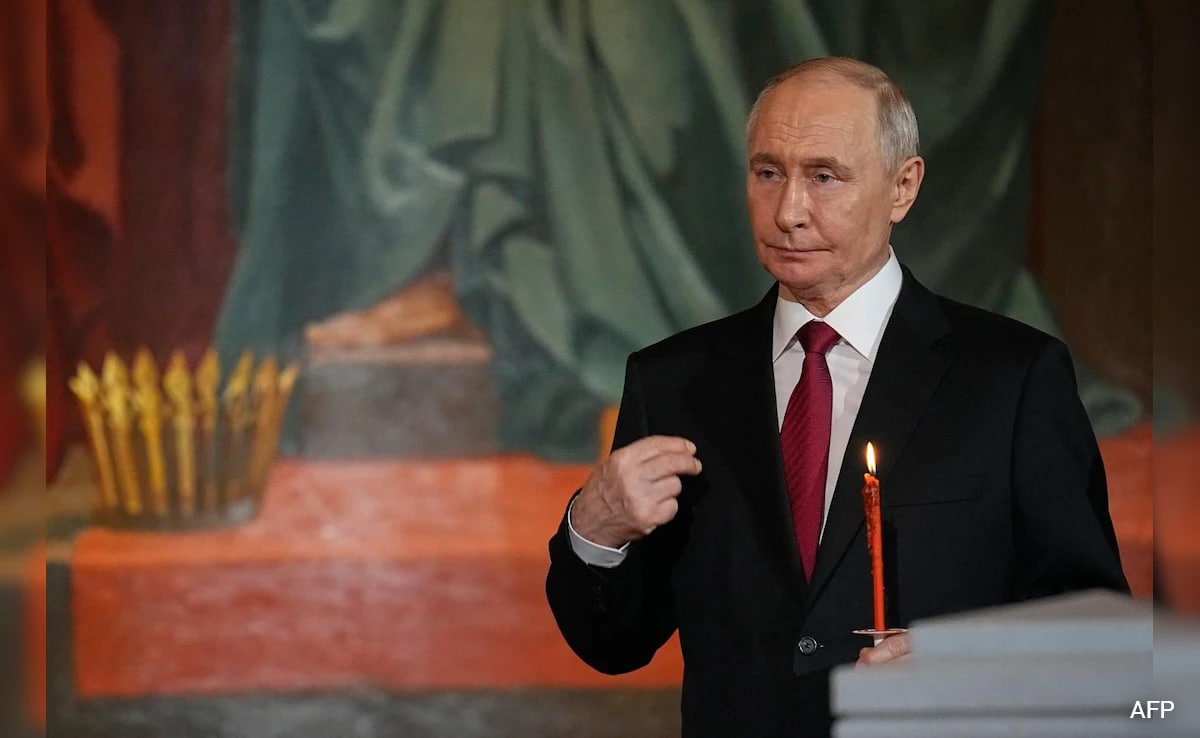
The obsession with Kevin Warsh—or whoever the current favorite for the Treasury or Fed might be—ignores the math. Analysts act as if a single personality can alter the trajectory of a $35 trillion debt pile. It’s a classic case of the "Great Man" theory of history applied to bond yields, and it’s nonsense.
Whether the yield on the 10-year Treasury sits at 4.2% or 4.5% isn't being decided by a congressional testimony. It’s being decided by the Treasury’s need to roll over trillions in maturing debt without blowing up the interest expense on the federal budget.
We’ve reached a point where the "neutral rate" is no longer a theoretical calculation of inflation plus growth. The real neutral rate is now whatever keeps the US government from spending 50% of its tax revenue on interest payments. If Warsh or any other candidate tries to implement a truly hawkish regime, the fiscal math collapses. The market knows this. That’s why yields aren't moving; they are pinned by the gravity of insolvency, not the uncertainty of an appointment.
Peace Talks Are Not a Bullish Signal for Bonds
The media loves the "flight to safety" narrative. They claim that if peace talks in Iran or elsewhere fail, investors will rush into Treasuries, driving yields down. Conversely, they argue that peace is "risk-on," which should drive yields up.
This is 20th-century logic applied to a 21st-century debt crisis.
In the current environment, "peace" might actually be more volatile for the bond market than conflict. Why? Because the only thing keeping the global demand for dollars afloat is the necessity of the petrodollar and the military-industrial complex that secures it. If you remove the geopolitical premium from the dollar, you remove a significant reason for foreign central banks to hoard US debt.
If we actually saw a long-term stabilization in the Middle East, we might see a massive diversification away from the dollar. That means less demand for Treasuries. Less demand means higher yields. The "peace dividend" for the bond market is a myth. Peace is a de-dollarization trigger.
The Myth of the "Little Changed" Yield
When you read that yields are "little changed," you should read that as "the market has lost its ability to signal."
Historically, the bond market was the "smart money." It predicted recessions and spotted inflation before the equity guys even woke up. Today, the bond market is a manipulated utility. Between the Fed’s balance sheet maneuvers and the Treasury’s shift toward issuing more short-term T-bills to hide the true cost of long-term borrowing, the 10-year yield has become a vanity metric.
It’s like looking at a thermometer that’s been taped at 98.6 degrees. You aren't seeing health; you’re seeing a broken instrument.
I’ve watched traders waste months trying to play the "Warsh trade" or the "peace talk bounce." They lose because they are trying to trade a market that no longer responds to traditional stimuli. The liquidity is thinner than it looks, and the volatility is being suppressed by sheer exhaustion.
The Term Premia Lie
Economists love to talk about "term premia"—the extra compensation investors demand for the risk of holding long-term debt. They argue that because yields aren't spiking, the term premium must be low, signaling confidence.
This is a fundamental misunderstanding of the current buyer profile. The marginal buyer of Treasuries is no longer a value-seeking investor. It is a regulatory captive—banks forced to hold "high-quality liquid assets"—or a central bank trying to manipulate its own currency.
When your primary buyers are forced to buy regardless of price, the "term premium" becomes a useless statistic. The lack of movement in yields isn't a sign of confidence; it’s a sign of a cornered market. There is no one left to sell because everyone who could leave has already gone to gold, Bitcoin, or private credit.
Stop Asking About the Fed
People always ask: "When will the Fed finally pivot and let yields drop?"
This is the wrong question. The right question is: "At what point does the Fed lose control of the long end of the curve entirely?"
We are approaching a scenario where the Fed could cut the Fed Funds Rate to 0%, and the 10-year yield could still stay at 5% because the sheer volume of supply is overwhelming. The "Warsh hearing" is a sideshow because the Fed's tools are becoming increasingly blunt. They can control the short end, but the long end is beginning to sniff out the inevitable debasement of the currency required to pay back the debt.
If you are waiting for a hearing to tell you where the market is going, you’ve already lost the game.
The Nuance of the Debt Trap
The "lazy consensus" says that high yields are bad for stocks and low yields are good. This ignores the nuance of the "Debt Trap."
Imagine a scenario where yields stay low not because of a strong economy, but because of "Financial Repression"—a deliberate policy where inflation is allowed to run at 4% while yields are capped at 3%. This effectively steals 1% of the value from bondholders every year to pay down the national debt.
That is what "little changed" yields actually represent. It is the sound of your purchasing power being slowly ground into dust by a system that cannot afford for interest rates to reflect reality.
Why You Should Ignore the Peace Talks Headline:
- Irrelevance of Sentiment: The structural need for $2 trillion in new annual issuance outweighs any "sentiment" shift caused by a diplomatic meeting.
- The Inflation Lag: Even if peace is achieved, the inflationary pressures of the last four years are baked into the cake. Wages aren't coming down because of a treaty in the Middle East.
- Liquidity Black Holes: Market depth is at historic lows. A "little changed" day often precedes a massive, gapping move because there are no limit orders left in the book.
The Actionable Reality
If you are managing a portfolio based on the idea that Treasuries are a "safe haven" that will appreciate when the world gets scary, you are operating on a 1995 playbook.
In a world of $35 trillion in debt, Treasuries are a certificate of guaranteed confiscation. The "quiet" you see in the yields today isn't the calm before the storm; it's the eye of a hurricane. The volatility hasn't disappeared; it has shifted into the currency.
Look at the DXY. Look at gold. Look at the spread between the 2-year and the 10-year. That’s where the truth is. The headline yield is just a decoy.
The market isn't waiting for Kevin Warsh to speak. It’s waiting for the first major central bank to blink and admit that the debt can never be repaid in current dollars. When that happens, the "little changed" yields will be a distant memory, and no amount of peace talks will save the bondholders who mistook paralysis for stability.
The consensus is looking at the scoreboard while the stadium is on fire. Stop watching the 10-year yield and start watching the exit doors.