Amazon just poured an additional $4 billion into Anthropic, bringing its total stake in the AI startup to $8 billion. This is not a simple venture capital play. It is a desperate, multi-billion-dollar tethering of two giants who cannot afford to lose the ground they currently hold. While the public narrative focuses on "collaboration" and "innovation," the reality is much more transactional. Amazon is buying a guaranteed customer for its custom chips, and Anthropic is buying the literal electricity and processing power required to remain relevant in a market that swallows small players whole.
The math of modern artificial intelligence is brutal. Training a top-tier model now requires capital expenditures that rival the GDP of small nations. By doubling down on Anthropic, Amazon Web Services (AWS) is attempting to prevent a future where Microsoft and Google dictate the terms of the cloud. This latest cash injection cements a relationship where the money essentially travels in a circle: Amazon provides the funds, and Anthropic immediately hands them back to pay for AWS server time.
The Silicon Trap
For years, Nvidia has held a near-monopoly on the high-end GPUs needed for heavy machine learning. Amazon wants out of that arrangement. By integrating Anthropic more deeply into its ecosystem, Amazon is forcing its partner to use Trainium and Inferentia—Amazon’s own proprietary chips. This is a massive gamble on hardware that hasn't yet proven it can outperform Nvidia’s H100s or the upcoming Blackwell architecture.
Anthropic is now the primary test subject for Amazon's silicon ambitions. If Claude, Anthropic’s flagship model, can run efficiently on Amazon’s homegrown hardware, AWS can offer lower prices to every other enterprise client. If the hardware underperforms, Anthropic risks falling behind OpenAI in the raw race for intelligence. It is a high-stakes trade: Anthropic gets the cash to survive, but it loses the freedom to shop for the best hardware on the open market.
A Hedge Against the Microsoft Hegemony
The industry is currently split into warring camps. Microsoft has its multibillion-dollar marriage with OpenAI. Google has its internal Gemini project. Amazon, despite its dominance in the cloud, lacked a credible "brain" to sell to its corporate users. Buying into Anthropic was a necessity, not a luxury.
Corporate clients are terrified of vendor lock-in. They don't want to be beholden to one ecosystem for their data, their cloud, and their intelligence. Amazon’s strategy with Anthropic is to position AWS as the "neutral" ground where multiple models can live, even as it pours billions into one specific horse in the race. This creates a strange tension. Amazon must promote Anthropic to justify the $8 billion investment, but it must also convince customers that AWS is still a fair marketplace for other AI providers.
The Hidden Cost of Safety
Anthropic was founded by former OpenAI executives who left because they felt the pursuit of profit was overshadowing the need for safety. They branded themselves as the "Public Benefit Corporation" of the AI world. However, $8 billion in funding comes with heavy expectations.
There is a fundamental friction between "Constitutional AI"—Anthropic's method of training models to follow a set of ethical rules—and the commercial demand for unrestricted, lightning-fast performance. Amazon didn’t write an $8 billion check for a philosophy lesson. They wrote it for a product that can beat GPT-4o and O1. As the pressure to deliver returns increases, the "safety-first" culture at Anthropic will face its first true stress test.
Follow the Electricity
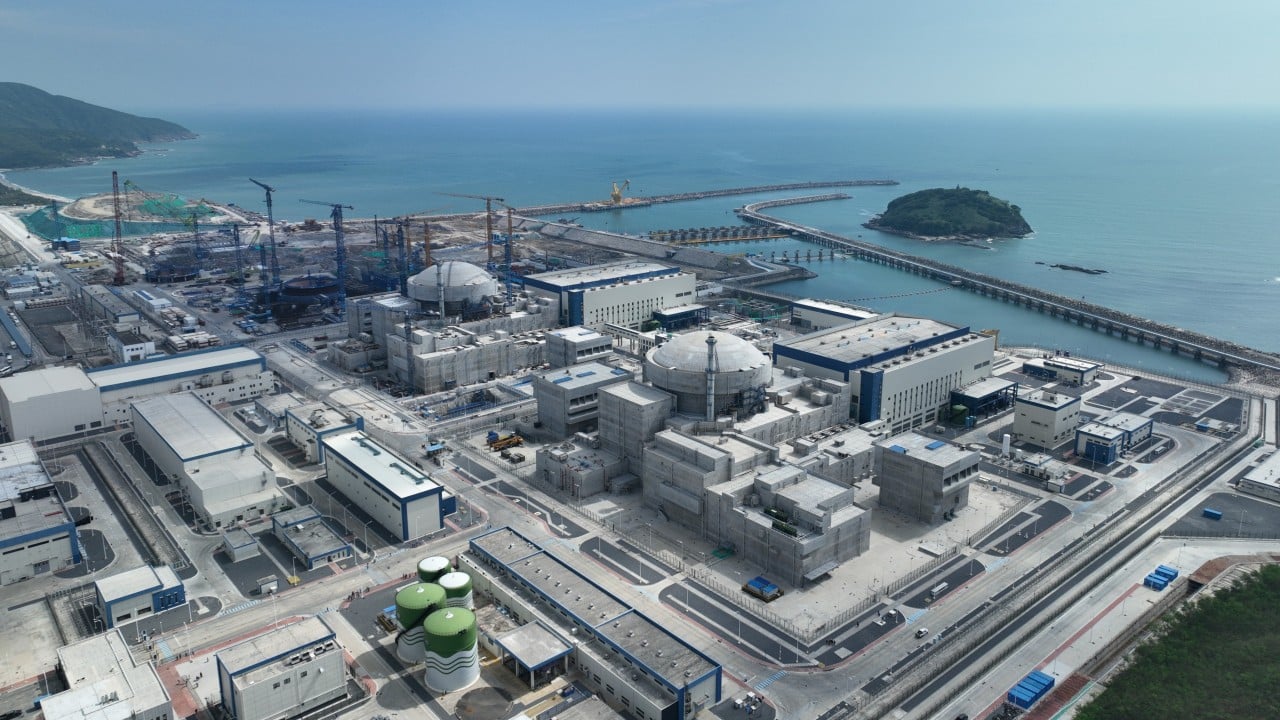
The most overlooked factor in this deal isn't the software. It’s the power grid. Training these models requires an astronomical amount of energy, and Amazon is currently buying up nuclear power capacity and building massive data centers at a breakneck pace.
Anthropic’s need for "compute" is actually a need for gigawatts. By securing this investment, they aren't just getting money; they are getting a priority seat at the table for Amazon’s energy infrastructure. In a world where there is a finite amount of electricity available for data centers, being Amazon’s preferred partner is the only way to ensure the lights stay on during the training of Claude 4 or 5.
The Enterprise Battlefield
While ChatGPT captured the public imagination, the real money is in the boring stuff: legal document review, supply chain optimization, and automated coding for legacy banks. This is where Amazon excels. They have the deepest relationships with the Fortune 500.
Amazon is using Anthropic to build a moat around its existing cloud business. If a company already has all its data sitting in an AWS S3 bucket, it is infinitely easier to use Claude for analysis than it is to ship that data over to Microsoft Azure or Google Cloud. The $5 billion isn't just an investment in a startup; it's a defensive spend to ensure that AWS customers never have a reason to look elsewhere.
The Risk of a Single Point of Failure
Reliance on a single partner is dangerous for both sides. If Anthropic suffers a major security breach or a catastrophic model failure, Amazon’s AI reputation takes a direct hit. Conversely, if Amazon’s Trainium chips fail to scale, Anthropic is stuck on a platform that can't compete with the raw power available to OpenAI.
We are seeing the end of the "independent" AI startup. The costs are simply too high. To build at the frontier, you must choose a king to serve. Anthropic has chosen Amazon, and in doing so, they have traded their independence for a chance to define the next decade of computing.
The era of the $100 million Series A is over. We have entered the era of the $10 billion infrastructure subsidy. Success in this field is no longer just about who has the smartest researchers; it is about who has the most reliable access to capital, silicon, and the power grid. Amazon is betting that by owning the hardware and the energy, they can eventually own the intelligence.