The recent death of a Hong Kong hiker on Japan’s Mount Yari is not an isolated tragedy but a symptom of a widening gap between urban hiking culture and the brutal reality of high-altitude seasonality. In the city, May signifies the onset of heat and the preparation for summer. On the 3,000-meter peaks of the Northern Alps, May is a volatile transition zone where winter refuses to retreat. Most travelers see cherry blossoms at the base and assume the peaks have followed suit. They are wrong.
The mistake is fueled by a lack of understanding regarding the sub-zero microclimates that persist in the Japanese highlands long after the lowlands have thawed. When a seasoned trekker or a casual tourist looks at a weather app and sees 18°C in Tokyo or even 12°C in Matsumoto, they often fail to calculate the lapse rate. For every 1,000 meters of ascent, the temperature drops by roughly 6°C. At the summit of Mount Yari, that same sunny day in the valley translates to freezing temperatures, exacerbated by wind chill factors that can plunge the "feels like" temperature into the negative double digits. You might also find this related story insightful: The Canary Islands Hantavirus Incident and the Massive Security Failure at Sea.
The Deadly Deception of the Snow Bridge
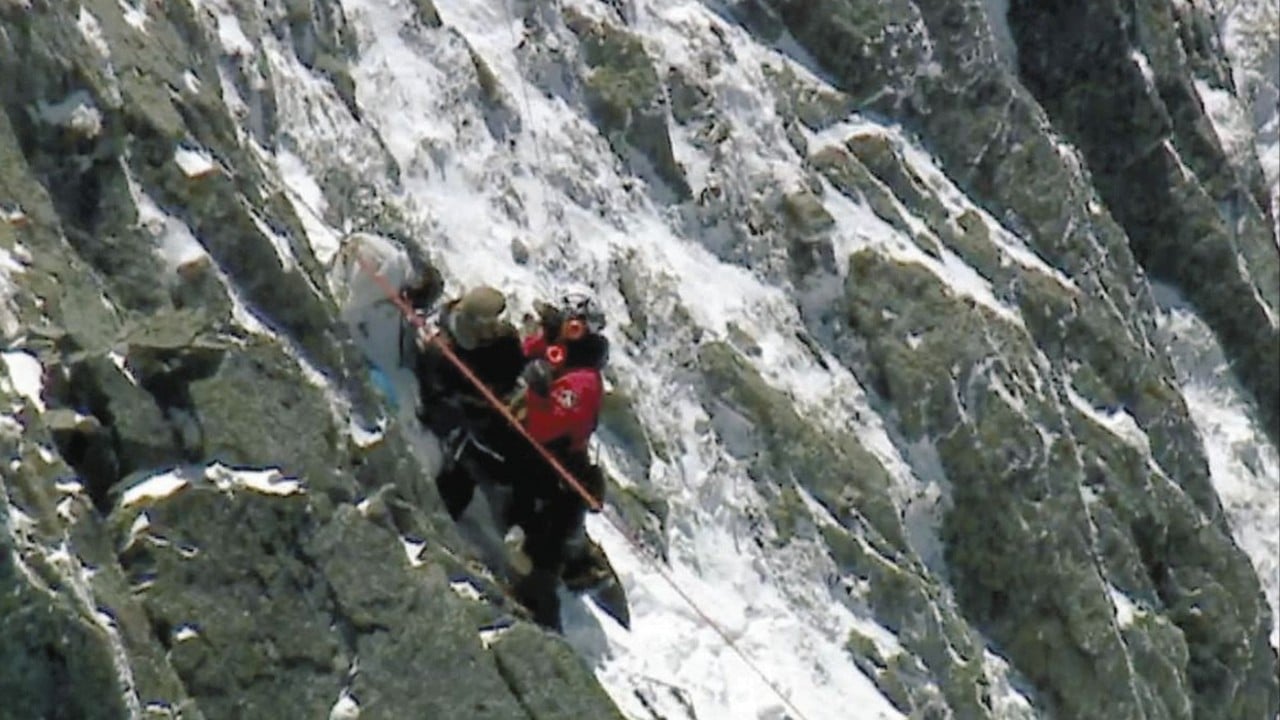
The most significant hazard in late spring isn't just the cold; it is the physical state of the terrain. We are currently in the season of rotten snow. During the day, the sun melts the upper layers of the snowpack. At night, it refreezes. This constant cycle creates a deceptive crust that looks solid but hides deep cavities or "moats" around boulders and bushes.
A hiker steps onto what looks like a firm path, only to have the surface give way. This is how many solo trekkers find themselves trapped in "tree wells" or wedged between rocks and melting ice. Once you fall through a snow bridge, the physical exertion required to climb out—often while wet and in freezing winds—leads to rapid exhaustion and hypothermia. As discussed in recent coverage by Lonely Planet, the effects are worth noting.
Unlike the dry, powdery snow of January, May snow is heavy and saturated with water. It sticks to clothing and boots. Once your base layers are damp, your body loses heat 25 times faster than it would in dry conditions. In the case of the recent fatality on Mount Yari, the transition from a manageable hike to a life-threatening crisis likely happened in minutes, not hours.
Why Technical Gear Often Fails the Unprepared
There is a dangerous trend in the modern hiking community: the belief that high-end gear can substitute for technical skill. We see hikers equipped with the latest ultralight carbon poles and Gore-Tex shells who lack the fundamental knowledge of how to use an ice axe or 12-point crampons.
In the Japanese Alps during May, a pair of "micro-spikes" bought for a casual winter stroll in a city park is useless. The slopes of the Northern Alps are steep, often exceeding 40 degrees. If you slip on the morning ice, you have approximately two seconds to perform a self-arrest with an ice axe before you reach terminal velocity. Without that specific skill, you are simply a passenger on a slide toward a rock field.
The Gear Disconnect
- Footwear: Many hikers attempt these peaks in "trail runners" because they are comfortable. On May snow, these shoes offer zero lateral support and no protection against the freezing slush that inevitably soaks through the mesh.
- Navigation: Cloud cover in the Japanese Alps can descend in seconds. When the world turns white, "visual navigation" disappears. Many hikers rely solely on smartphone GPS, which fails when the battery dies due to cold or when the touchscreen becomes unresponsive in the rain.
- Communication: Japan’s mountains are notorious for dead zones. Relying on a standard roaming SIM card without a satellite communication device is a gamble that assumes everything will go perfectly.
The Cultural Pressure of the Limited Window
Part of the problem is the way international tourism interacts with Japan’s "Golden Week" and the opening of mountain huts. There is a psychological pressure to complete a bucket-list hike during a specific vacation window. If you have flown from Hong Kong or London specifically to climb Mount Yari, you are less likely to turn back when the weather turns sour.
This "summit fever" is compounded by the fact that mountain huts in Japan begin opening in late April and early May. Their opening creates a false sense of security. Hikers assume that if the huts are open, the trails must be safe. In reality, the huts open to serve experienced mountaineers who are equipped for winter conditions, not to signal that the mountain is now a casual hiking trail.
The staff at these huts are often the first responders when things go wrong, but they are not a professional rescue service. When a blizzard hits or a hiker goes missing, the burden falls on the Prefectural Police mountain rescue teams, who must often wait for a break in the weather to launch a helicopter. If the clouds don't part, the hiker is on their own.
The Myth of the Easy Trail
Social media has sanitized the image of the Japanese Alps. On platforms like Instagram, the Kamikochi valley and the surrounding peaks look like a pristine playground. What the photos don't show are the hidden crevasses and the sheer physical toll of post-holing through waist-deep slush for six hours.
A trail that takes four hours in August can take twelve hours in May. Most hikers do not pack enough calories or water for that kind of duration. They hit a wall of fatigue, their core temperature drops, and their decision-making abilities vanish. At that point, they make the final, fatal mistake: they sit down to rest.
Reevaluating Risk in the Transition Season
To survive the Japanese Alps in May, one must abandon the "spring" mindset entirely. You are not hiking; you are engaging in early-season mountaineering. This requires a complete shift in preparation and philosophy.
If you cannot perform a self-arrest with an ice axe, you have no business on a 3,000-meter peak in May. If you do not have a hard-shell layer capable of withstanding 80km/h winds, you are underdressed. Most importantly, if the forecast mentions a "low-pressure system" approaching from the Sea of Japan, the only correct move is to stay in the valley.
The mountains do not care about your flight schedule or your social media feed. They operate on a geological and seasonal clock that ignores the calendar on your wall. The tragedy of the Hong Kong hiker is a reminder that the "false sense of safety" isn't just an expert's warning—it is a measurable, physical trap.
Respect the snow, acknowledge the limits of your gear, and understand that in the high Alps, winter doesn't end until the mountain says it does.