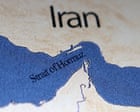
The global economy hangs by a thread that runs through a narrow, thirty-mile strip of water. If you think your grocery bill is high now, you haven't seen what happens when the Strait of Hormuz stops breathing. While analysts often focus on the dramatic image of sinking tankers or naval skirmishes, the real damage happens in the quiet math of insurance premiums and sovereign debt. This isn't just about the price of gas at the pump. It is about the systemic collapse of affordable living across every continent.
The Strait of Hormuz carries roughly one-fifth of the world’s total oil consumption and a massive portion of its liquefied natural gas (LNG). When this artery clogs, the world doesn't just lose fuel; it loses the ability to manufacture, transport, and refrigerate everything from antibiotics to infant formula.
The Crude Reality of the Twenty One Mile Gap
The geography is a nightmare for logistics. At its narrowest point, the shipping lanes are only two miles wide in each direction, separated by a two-mile buffer zone. This creates a predictable, slow-moving target for any state or non-state actor looking to exert maximum leverage over the West.
When a crisis hits the Strait, the immediate reaction is a "war risk premium." This is an additional cost slapped onto shipping insurance. It doesn't require a single shot to be fired. The mere threat of instability forces insurers to hike rates, and those costs are instantly passed down to the consumer. If a container ship carrying electronics or grain has to pay an extra $200,000 to traverse the region, you pay for it at the checkout counter three months later.
Energy markets operate on perception as much as reality. Traders bid up the price of Brent Crude not because there is a current shortage, but because they fear a future one. This speculative fever creates a domestic feedback loop. High energy prices act as a hidden tax on every single household. You feel it when you heat your home, but you also feel it when the local bakery raises the price of bread because their ovens are more expensive to run and the flour delivery truck charged a fuel surcharge.
The LNG Factor and the New Cold Front
Modern discussions about Hormuz often dwell on oil, but the true vulnerability lies in gas. Qatar is one of the world’s largest exporters of LNG, and almost all of its output must pass through the Strait. Unlike oil, which can occasionally be diverted through pipelines across Saudi Arabia or stored in massive strategic reserves, LNG is a "just-in-time" commodity.
Europe, having spent the last few years weaning itself off Russian pipeline gas, is now dangerously dependent on seaborne LNG. A disruption in the Strait doesn't just mean more expensive gas; it means the potential for industrial de-industrialization. If factories in Germany or northern Italy cannot secure affordable energy, they shut down. When production stops, supply chains break. When supply chains break, the cost of the remaining goods on the shelf skyrockets.
This is how a local maritime dispute in the Middle East turns into a foreclosure crisis in a Chicago suburb. The transmission mechanism is cold, hard, and unforgiving.
Why Pipelines are a Paper Shield
Governments often point to bypass pipelines as a solution. Saudi Arabia operates the East-West Pipeline, and the UAE has its own route to the Gulf of Oman. On paper, these should mitigate the risk. In practice, they are woefully inadequate.
The total capacity of these bypasses represents only a fraction of the daily flow through the Strait. Furthermore, these pipelines are static targets. They are vulnerable to sabotage, drone strikes, and cyber-attacks. To believe that a few thousand miles of steel pipe can replace the heavy-lift capacity of the world's tanker fleet is a dangerous fantasy.
We are also seeing a shift in how maritime blockades are executed. It is no longer about a traditional navy line-of-battle. It is about "gray zone" warfare—mines that appear out of nowhere, GPS jamming that sends tankers into territorial waters, and the use of cheap, commercial-grade drones to harass multi-billion dollar vessels. This asymmetry means that even a minor power can hold the global economy hostage for pennies on the dollar.
The Death of Disinflation
Central banks have been fighting a desperate war against inflation for years. They use interest rates as their primary weapon, trying to cool down demand. But interest rates are a blunt instrument that cannot fix a broken supply chain or a closed shipping lane.
If Hormuz is disrupted, inflation becomes "sticky." It stops being a temporary spike and becomes a structural reality. If the cost of moving goods doubles, no amount of interest rate hiking will bring prices down at the grocery store. Instead, we enter the territory of stagflation—stagnant economic growth combined with high inflation. This is the worst-case scenario for any government, as it wipes out the middle class and destroys the purchasing power of retirees on fixed incomes.
The China Contradiction
One factor rarely discussed with enough nuance is China’s role. Beijing is the largest buyer of Iranian oil and a massive consumer of Gulf energy. In theory, this should make China a stabilizing force. They need the water to stay open.
However, the geopolitical calculus is shifting. China is also building a "shadow fleet" of tankers that operate outside Western insurance and regulatory frameworks. They are increasingly capable of bypassing the traditional financial systems that the West uses to police the Strait. If Beijing decides that the strategic pain a closure causes the United States outweighs the economic pain it causes China, the calculations of "mutually assured economic destruction" no longer hold.
The Insurance Trap
We must look closer at the Lloyd’s of London market. The global shipping industry relies on a handful of protection and indemnity (P&I) clubs. These organizations provide the insurance that allows a ship to enter a port. If these clubs declare the Strait of Hormuz a "no-go" zone, the global economy stops.
Ship owners will not risk a $150 million vessel and a $100 million cargo without coverage. During previous periods of tension, we saw "blackouts" where ships turned off their transponders to avoid detection. This creates a chaotic, data-dark environment where accidents are more likely, further driving up insurance costs. It is a self-fulfilling prophecy of escalating expenses.
The Domestic Fallout for the Average Household
Let’s be specific about the "cost of living" impact. When oil prices sustain a 30% increase due to maritime instability, the effects ripple through a standard household budget in stages:
- Stage 1: The Pump. Immediate increase in personal transportation costs.
- Stage 2: The Utility Bill. Lagged increases in electricity and heating costs as power plants pass on fuel surcharges.
- Stage 3: The Grocery Store. Increased costs for fertilizers (produced from natural gas) and transportation.
- Stage 4: The Service Sector. Airfare, delivery fees, and even dry cleaning prices rise as small businesses struggle to maintain margins.
This isn't a hypothetical model. We saw the preamble during the supply chain shocks of 2021 and 2022. A Hormuz closure would be those shocks on steroids, stripped of the "transitory" excuses used by politicians.
The Military Industrial Burden
Maintaining "freedom of navigation" in the Strait is an incredibly expensive endeavor. The U.S. Fifth Fleet and its allies spend billions annually to patrol these waters. As the cost of this protection rises, it adds to the national deficit, which in turn pressures the value of the dollar.
Every time a carrier strike group is deployed to the region to deter a blockade, the taxpayer picks up the tab. We are paying for the openness of the Strait twice—once through our taxes to fund the military protection, and again at the store when that protection fails to keep prices stable.
The reality is that our globalized world was built on the assumption of cheap, safe, and infinite transit through maritime chokepoints. That assumption is now dead. We are entering an era where geography once again dictates destiny. The Strait of Hormuz is not just a point on a map; it is the single most volatile variable in your personal financial future.
If you want to understand why your salary doesn't go as far as it used to, stop looking at your local politician and start looking at the narrow gap between the Persian Gulf and the Gulf of Oman. That is where your wealth is being drained. The vulnerability is baked into the system, and there is no easy way to build a workaround.
Watch the "tanker spreads"—the difference in price between oil in the Gulf and oil delivered to the Atlantic. When that gap widens, it is a signal that the market is beginning to price in the end of the world as we know it. We are one miscalculation away from a decade of economic winter.
Check the maritime insurance charts for the Middle East Gulf region this week. If the premiums are moving, your grocery bill is next.
Would you like me to analyze the specific impact of a Hormuz closure on the European natural gas market for the upcoming winter?