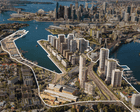
The transformation of Glebe Island and White Bay into the precinct known as Bays West represents the most significant land-use shift in Sydney since the 2000 Olympics. It is not merely a residential expansion. It is a calculated, multi-billion dollar bet that the city can successfully graft a high-density "Innovation Precinct" onto an active industrial port without triggering a total systemic rejection from the surrounding infrastructure. The New South Wales government intends to turn eighty hectares of prime waterfront into a high-tech hub, but the reality on the ground suggests a much harder road than the glossy brochures admit.
For decades, Glebe Island served as the gritty, unglamorous engine room of the city. It is where the bulk of Sydney’s construction sand and cement arrives. Now, with the Metro West station at the heart of the plan, the state is attempting to balance 25,000 new jobs and thousands of homes against the noisy, dusty requirements of a working harbor. The friction between luxury apartments and bulk-handling cranes is not a hypothetical problem. It is the central tension that will define whether Bays West becomes a thriving extension of the city or a sterilized, traffic-clogged enclave.
The Metro Anchor and the Density Debt
Everything in the Bays West strategy hinges on the Metro West. Without a high-capacity rail link, the site is a logistical dead zone, cut off by the bottleneck of the Anzac Bridge and the already failing capacity of Victoria Road. The government is using the rail station as a justification for extreme density.
We have seen this play before. In Barangaroo and Central Park, the promise of public transport was used to secure massive floor-space ratios that favor developers. In Bays West, the scale is even more ambitious. The draft master plans indicate heights that will radically alter the skyline of the Inner West. While the "Innovation" label sounds sophisticated, the economic engine of this project is undeniably residential real estate. The state needs the developer contributions to help offset the astronomical costs of the Metro tunneling. This creates a "density debt" where the quality of life for future residents is traded off to balance the infrastructure budget.
Silos and Sand vs. Silicon Dreams
The most overlooked factor in the Bays West redevelopment is the survival of the port. Unlike the wholesale conversion of Darling Harbour in the 1980s, Glebe Island cannot simply be shut down. It is the only deep-water port left in the inner harbor capable of handling the raw materials needed for Sydney’s endless construction boom. If you push the cement ships out of Glebe Island, you force hundreds of extra heavy truck movements across the metropolitan road network every single day.
The plan claims these uses can "coexist." That is a polite word for a messy, permanent conflict. Modern residents who pay three million dollars for a waterfront view rarely tolerate the 3:00 AM drone of a bulk carrier or the industrial hum of a concrete batching plant. By placing high-end housing within a stone’s throw of the silos, the state is inviting a decade of litigation and noise complaints. The "Innovation" branding is a shield; it suggests quiet offices and clean labs, but the financial reality of the site requires high-rise living to be viable.
The White Bay Power Station Problem
At the center of the site sits the White Bay Power Station, a hulking, soot-stained monument to Sydney’s industrial past. It has stood empty for nearly forty years, a victim of its own scale and the staggering cost of remediation. The current plan treats it as the "cultural heart" of Bays West, a southern hemisphere version of London’s Battersea Power Station.
However, the economics of heritage restoration are brutal. To make the Power Station commercially viable, the surrounding land must be packed with enough profitable square meterage to subsidize the cleanup of asbestos, lead, and decades of industrial grime. There is a high risk that the Power Station becomes a decorative shell surrounded by sterile glass boxes, stripped of its historical context to make room for maximum yield. The public has been promised an arts and culture destination, but without a massive, ongoing taxpayer subsidy, the "culture" will likely be limited to high-end retail and corporate lobbies.
Infrastructure Without Interconnection
The biggest failure of Sydney’s recent urban renewals has been a lack of "permeability." If you look at the master plan for Bays West, it remains strangely isolated from its neighbors in Rozelle, Balmain, and Pyrmont. The geography is unforgiving. Steep ridges and the water itself create natural barriers that are difficult to bridge.
The government speaks of "active transport" and bike paths, but the reality is that the site is hemmed in by the WestConnex portals and the Anzac Bridge approach. Unless there are radical interventions—like a dedicated pedestrian bridge to Pyrmont or a massive reworking of the Victoria Road interchange—Bays West will function as an island. It will be a place people commute to via Metro, but not a place that feels integrated into the fabric of the Inner West. This isolation is a feature for luxury developers who want to sell "exclusive" waterfront living, but it is a bug for a city that desperately needs interconnected, walkable neighborhoods.
The Missing Middle and the Affordability Myth
Despite the talk of housing supply, there is little evidence that Bays West will do anything to solve Sydney’s affordability crisis. The price point of these apartments, given the land value and the construction costs of building on reclaimed industrial soil, will be astronomical.
To truly serve the city, Bays West should be the site of a massive experiment in non-market housing—built-to-rent schemes, worker cooperatives, and genuine social housing for the people who actually keep the city running. Instead, the signals point toward another precinct of investor-owned one-bedroom units and "luxury" penthouses. When we build a new suburb from scratch on public land, we have a once-in-a-century opportunity to mandate a different ownership model. If we simply sell the parcels to the highest bidder, we are just privatizing the harbor for a different class of person.
The Environmental Blind Spot
The site is essentially a massive concrete slab over a highly modified shoreline. As the climate shifts, this low-lying precinct faces significant challenges. The master plan mentions "resilience," but building thousands of homes on the water’s edge in an era of rising sea levels is inherently risky.
Furthermore, the heat island effect in these glass-and-steel precincts is a documented reality. The "Green Star" ratings of individual buildings often mask the fact that the precinct as a whole becomes a heat trap. To avoid the mistakes of the Olympic Park or Barangaroo, Bays West requires a forest, not just a few "pocket parks" squeezed between towers. There is a genuine fear among urban planners that the pressure for floor space will cannibalize the open green space that was promised to the community in the early visioning phases.
The Industrial Reality Check
If you want to see the future of Bays West, look at the dust on your car in Rozelle. The construction of the Metro and the ongoing port operations are not going away. The government’s biggest challenge isn't the architecture; it's the physics. They are trying to squeeze a 21st-century lifestyle into a 19th-century industrial footprint that still has work to do.
The success of this new suburb will not be measured by the beauty of the renders. It will be measured by whether a nurse can afford to live there, whether a child can walk to a park without crossing a six-lane exhaust vent, and whether the city’s construction industry survives the loss of its most vital supply node. Right now, the plan looks like a developer's dream and a logistical nightmare.
The state needs to stop selling the "Innovation" fantasy and start addressing the hard engineering and social equity questions that actually determine if a suburb works. If they don't, Bays West will just be another expensive glass canyon where the wind howls between empty investment properties.
Demand a breakdown of the specific percentage of sub-market housing mandated for the site before the first sod is turned.