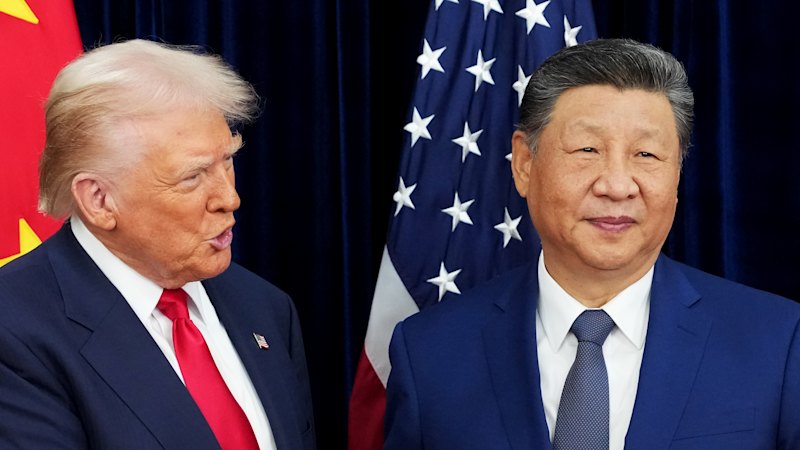
The air in the room doesn't just sit; it presses.
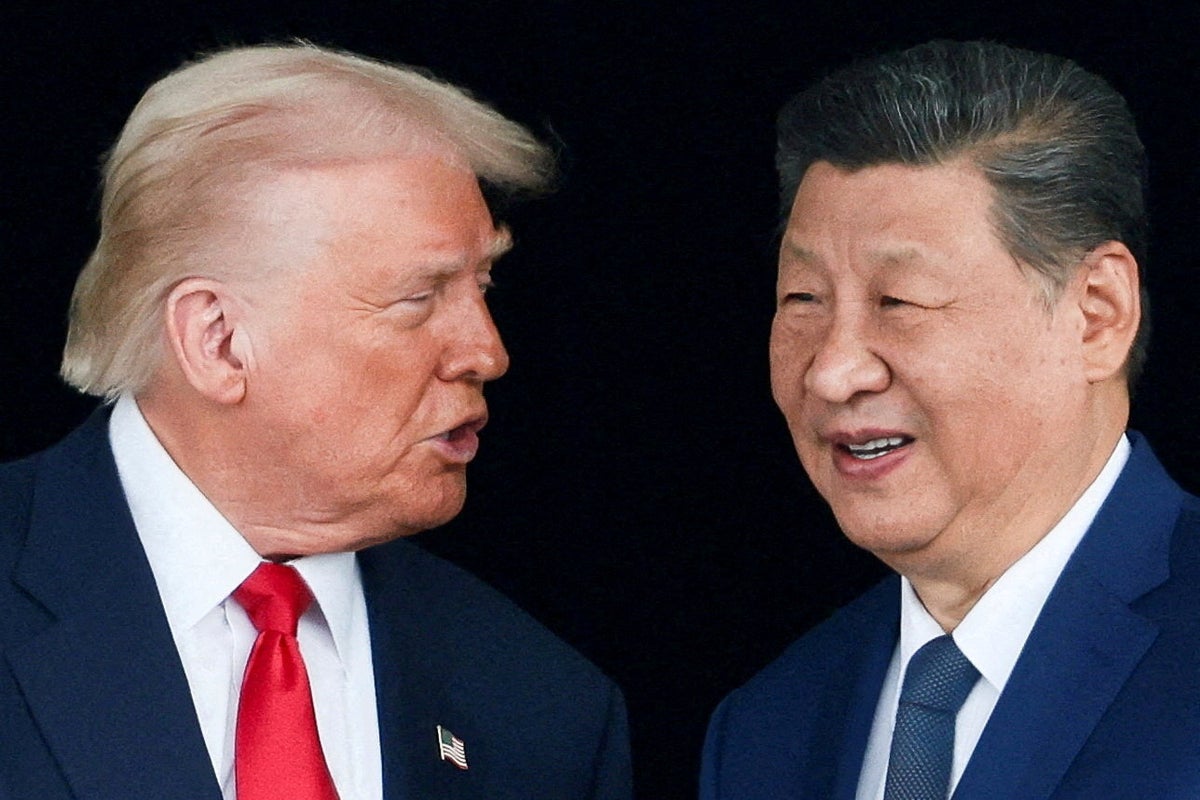
When Donald Trump and Xi Jinping sit across from one another, the oxygen seems to vanish, replaced by the sheer weight of two histories, two egos, and two diverging futures. This isn't a meeting about "bilateral cooperation" or "diplomatic frameworks." Those are the polite masks worn by bureaucrats. This is a collision. It is the moment when the world’s most powerful salesman meets the world’s most patient architect.
Beneath the polished mahogany tables and the flashbulbs of the international press, three distinct wires are humming with high-tension electricity: the flow of oil from Iran, the flow of goods across the Pacific, and the flow of data through the silicon veins of Artificial Intelligence. If any one of these wires snaps, the sparks won't just stay in the room. They will land on your kitchen table, in your gas tank, and inside the smartphone currently vibrating in your pocket.
The Iranian Shadow
Consider a merchant seaman named Elias. He is hypothetical, but his reality is shared by thousands. He stands on the deck of a tanker in the Strait of Hormuz, watching the horizon. To him, the tension between Washington and Beijing isn't a headline; it’s the difference between a quiet voyage and a regional inferno.
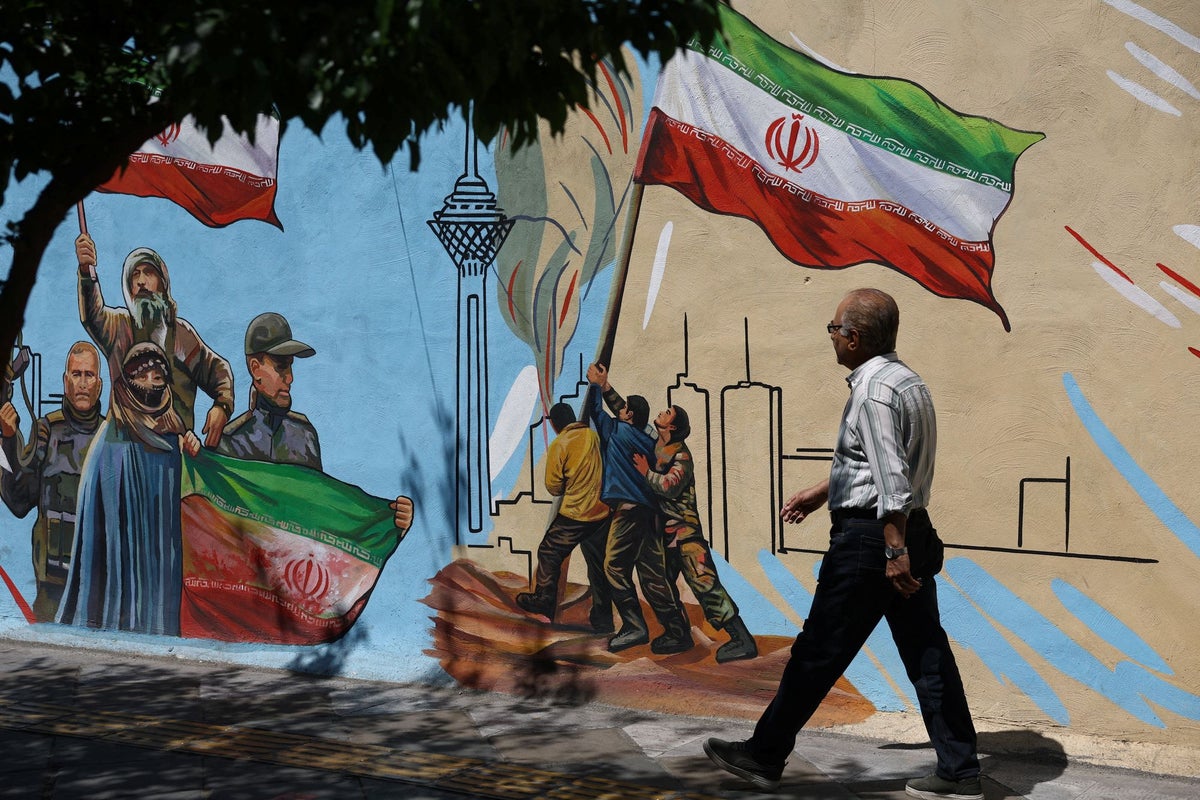
Trump views Iran through a lens of maximum pressure. He sees a regime that must be starved of resources until it bends or breaks. To do that, he needs to choke off their lifeblood: oil. But there is a massive, sovereign obstacle in his path. China.
For Xi, Iran is more than a pariah state; it is a gas station and a strategic outpost on the New Silk Road. China has been the silent buyer, the one who keeps the lights on in Tehran when the rest of the world turns its back. When Trump demands that the taps be closed, he isn't just asking for a policy change. He is asking Xi to abandon a junior partner and a vital source of energy security.
The friction here is visceral. If Trump reinstates the harshest version of his previous sanctions, he forces a choice. China can comply and lose its grip on Persian energy, or it can defy and risk a direct financial war with the United States. It’s a game of chicken played with supertankers. One mistake, one miscalculated seizure in the Gulf, and the price of oil doesn't just rise. It leaps.
The Ledger of Broken Things
Trade used to be about balance sheets. Now, it is about survival.
We often talk about trade wars as if they are abstract math problems. They aren't. They are about the factory worker in Ohio who can’t understand why the parts he needs are suddenly 30% more expensive. They are about the rice farmer in southern China who watches his export market evaporate overnight because of a tweet or a decree.
Trump’s approach to trade is visceral. He views the trade deficit not as a technical economic indicator, but as a scar—a sign that America has been "raided." His solution is the hammer: tariffs. Huge, sweeping, indiscriminate tariffs. He sees them as leverage. He believes that if you make the pain of doing business with China high enough, the jobs will simply migrate back across the ocean like homing pigeons.
Xi sees it differently. To the Chinese leadership, these tariffs are a form of containment. They see an aging superpower trying to trip a rising one because it can no longer win a fair race. Xi’s response is the shield. He has spent years "de-risking" the Chinese economy, trying to make it so that China can survive even if the American consumer disappears.
But here is the truth that neither side likes to admit: the world is too tangled to be neatly untied.
Imagine a single semiconductor. It might be designed in California, etched in Taiwan, packaged in Malaysia, and installed in a device in Shenzhen before being shipped back to a store in Chicago. You cannot slap a tariff on that process without hitting your own citizens in the face. We are living in a house where the walls are made of glass and both owners are throwing stones.
The human cost is a slow erosion of stability. It’s the "hidden tax" on every consumer. When these two men lock horns over trade, they aren't just fighting over steel or soybeans. They are fighting over who gets to define the standard of living for the next fifty years.
The Ghost in the Machine
If trade is the battle of today, AI is the war for forever.
This is where the narrative shifts from the physical to the ethereal. Artificial Intelligence is the first technology in human history that can think faster than its creators. It isn't just about better chatbots or fake images. It is about the algorithms that will control power grids, the autonomous systems that will pilot drones, and the surveillance tools that can predict dissent before it happens.
For Trump, AI is a race that America must win at any cost. There is no silver medal in this competition. To lose the AI race is to lose military and economic primacy. His focus is on deregulation—letting American companies run as fast as possible, unburdened by the "safety" concerns that he views as a European-style anchor.
For Xi, AI is the ultimate tool of social and national harmony. It is the "Great Firewall" evolved into a sentient nervous system. China has the advantage of data; they have a billion people living in a digital ecosystem that records every transaction and every movement. In the world of AI, data is the new oil.
The tension here is terrifying because it is invisible. We aren't talking about soldiers at a border. We are talking about code. If China achieves a breakthrough in "General AI" first, they could potentially crack every encrypted American server in a matter of seconds. If America maintains the lead, they can keep China locked in a technological "middle-income trap."
There is no middle ground in a race for the "god-tool." You either have it, or you are subject to it.
The Empty Chair at the Table
What is missing from the news cycles and the official communiqués is the sense of shared vulnerability. Both leaders are acting out of a profound, gnawing fear.
Trump fears a declining America, a country that has forgotten how to build and how to lead. Xi fears a fractured China, a country that could collapse under the weight of its own ambitions if the growth ever stops. They are two men fueled by the terror of being the one who let the flame go out.
When they meet, they don't see a partner. They see a mirror of their own anxieties.
The "horn-locking" isn't a sporting event. It is a tectonic shift. We are moving away from the era of "Globalism"—the idea that we could all get rich together—and into the era of "Great Power Competition." In this new world, the goal isn't to win; it’s to ensure the other guy loses more.
Think back to Elias on his tanker. Or the factory worker. Or the software engineer. They are the ones who live in the world these two men are reshaping. They are the ones who will pay the "security premiums" on their groceries and their gasoline.
The meeting ends. The motorcades roll away. The joint statements are issued, full of carefully weighed words and empty promises. But the gravity remains. The two shadows have crossed, and for a brief moment, the whole world felt the chill.
The sun sets over the Potomac and the Yangtze. The wires are still humming. The tension is still there. We are all just waiting to see which one snaps first.