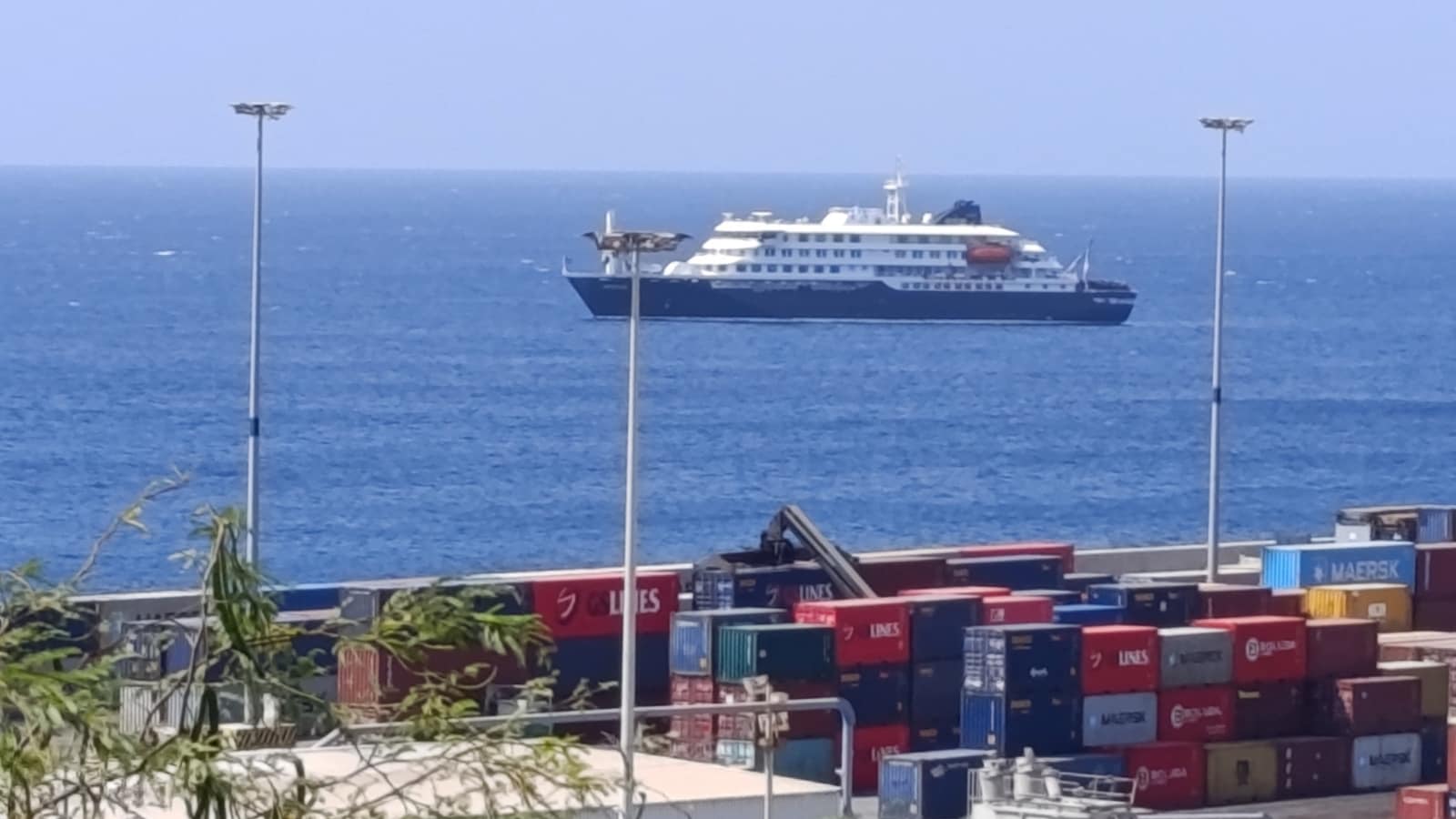
The Atlantic is a cruel mirror. On a clear day off the coast of Tenerife, the water reflects a blue so deep it looks like ink, but for the residents of the Canary Islands, the horizon has recently held something far more opaque. A cruise ship is coming. It carries more than just vacationers with sunburnt shoulders and buffet plate memories. It carries a whisper of a fever that the world usually associates with the dusty plains of the Americas or the humid forests of East Asia.
Hantavirus.
The word itself sounds like a sharp intake of breath. For the people of Santa Cruz, a city that breathes the salt air and lives by the rhythm of the docks, the news of an approaching vessel under medical scrutiny wasn't just a headline. It was a vibration in the floorboards. When the World Health Organization (WHO) stepped in to offer reassurances, it served as a reminder that in our hyper-connected age, the ocean is no longer a moat. It is a highway.
The Anatomy of a Panic
Panic is rarely a loud explosion. It is a slow leak. Imagine a shopkeeper on the Calle Castillo, watching the evening news. He hears that a ship is diverted, that passengers are confined to cabins, and that a pathogen usually spread by rodents is the primary suspect. He doesn't think about global health statistics. He thinks about his daughter’s school, the cruise passengers who usually flood his shop for postcards, and the way the air felt during the last global lockdown.
The facts, as relayed by the WHO chief, were designed to be a sedative. The risk to the local population is low. The virus doesn't typically jump from human to human like a common cold. It is a "dead-end" infection in most cases, requiring direct contact with the waste of infected mice or rats. But fear doesn't care about biology. Fear cares about the unknown.
Hantavirus Pulmonary Syndrome is a brutal thief. It starts with the mundane—fatigue, fever, muscle aches in the large groups like the thighs and back. It feels like the flu. It feels like you just pushed yourself too hard on a hike. Then, the lungs begin to fill with fluid. The body, in its desperate attempt to fight an invisible intruder, begins to drown from within.
When a ship carrying this potential burden heads toward your home, the "low risk" label feels like a thin shield.
The Invisible Barrier
Tedros Adhanom Ghebreyesus, the face of global health oversight, stepped to the microphone not to announce a quarantine, but to project calm. His message was clear: Spain has the infrastructure. The Canary Islands have the medical rigor. The ship is a contained ecosystem.
But how contained is any ship, really?
Think of a cruise liner as a floating city. It has its own power plants, its own waste management, and its own secret life below deck. In the sterile corridors of the upper decks, there is champagne and linen. In the guts of the ship, there are miles of wiring, ventilation shafts, and storage lockers. It is here, in the dark corners, that the stowaways live. A single infected rodent, perhaps tucked away in a crate of supplies loaded thousands of miles away, can turn a luxury voyage into a petri dish.
The challenge for the authorities in Tenerife isn't just medical; it's psychological. They have to prove that the border between the pier and the pavement is impenetrable.
A Tale of Two Cities
To understand the stakes, consider a hypothetical passenger. Let’s call her Elena. She saved for three years to afford this cruise. She is sixty-five, retired, and was looking forward to the volcanic beauty of Mount Teide. Instead, she is sitting in a cabin with a balcony she is told not to leave. Every time she coughs, her heart hammers against her ribs. Is it the dry air-conditioning? Or is it the beginning of the fluid?
On the shore, there is Javier. He works the docks. His job is to catch the heavy lines thrown from the ship and secure them to the bollards. Usually, he likes the weight of the rope and the sense of arrival. Now, he looks at the massive hull of the approaching ship and sees a Trojan Horse. He wonders if the salt spray coming off the bow carries more than just brine.
These two people are separated by a few hundred yards of water and a massive gulf of information. The WHO’s role is to bridge that gap with cold, hard science.
The Science of the Stowaway
Hantaviruses are unique because they are "enveloped" viruses. They are fragile in the open air, easily destroyed by sunlight or simple disinfectants. Unlike the hardy spores of anthrax or the hyper-contagious droplets of measles, Hantavirus is a specialist. It thrives in the shadows. It waits in the dust of a disturbed nest.
When the WHO chief insists the residents are safe, he is banking on the fact that the virus is a poor traveler once it leaves its host. It doesn't want to be in a human. We are an accidental stop on its journey, a biological mistake that usually ends in the virus dying out because it cannot find its way to another victim.
Yet, the history of medicine is a graveyard of "low-probability" events. The residents of Tenerife know this. They live on an island that has been a crossroads for centuries—a stopover for explorers, traders, and, inevitably, the diseases they carried. The memory of past shadows is etched into the very stones of the harbor.
The Logistics of Mercy
What happens when the gangway finally drops?
The process is a silent, choreographed dance of yellow vests and respirators. The WHO doesn't just watch; they provide the framework for how a modern city absorbs a threat without breaking. The sick are moved in isolation units that look like something out of a science fiction film. The healthy are monitored, their temperatures tracked with the obsessive detail of a countdown.
This is where the "human-centric" part of the story becomes a matter of logistics. We often talk about "healthcare systems" as if they are machines. They aren't. They are made of nurses who haven't slept, doctors who are balancing the fear for their own families with their duty to the stranger in the bed, and technicians who process samples in the quiet hours of the morning.
Spain’s response to the Hantavirus ship is a test of this human machinery. It is a demonstration that we have learned how to be both guarded and compassionate. The WHO chief’s reassurance wasn't just for the people on the shore; it was a signal to the world that we do not abandon the ships at sea. We bring them in. We clean the wounds. We watch the horizon.
The Weight of the Reassurance
Trust is a heavy currency. When a global leader says, "You are safe," he is asking for a leap of faith. He is asking the shopkeeper in Santa Cruz to keep his doors open. He is asking the docker to catch the rope.
The invisible stakes here aren't just about a virus. They are about the integrity of our global community. If we fail to manage a single ship with a known, controllable pathogen, what hope do we have for the next great unknown? The Canary Islands are currently the front line of a very quiet war—a war against misinformation and the primal urge to pull up the drawbridge.
The sun sets over the harbor, turning the water to gold, then to a bruised purple. The ship sits there, a mountain of steel and glass, lights twinkling in the cabins like stars trapped in a cage. Inside, people are waiting. On the shore, people are watching.
We live in a world where a mouse in a grain elevator in South America can eventually cause a panic in a Spanish archipelago. It is a terrifying realization, but it is also a beautiful one. It means we are connected. It means that the health of a passenger in cabin 402 is inextricably linked to the peace of mind of a man walking his dog along the seawall.
The ship will eventually leave. The tests will come back negative, or the sick will be treated and recover. The headlines will fade, replaced by the next crisis, the next celebrity scandal, or the next political upheaval. But the lesson remains. The ocean is no longer a barrier, and the only way to navigate it is with a steady hand, a transparent heart, and the recognition that every ship is, in some way, our own.
The Atlantic remains a mirror. Today, it reflects a world that is scared, but prepared. The fever may be real, but the response is the only medicine that truly works: the cold, clinical truth delivered with the warmth of human resolve.
The ropes are thrown. The lines are caught. The city holds its breath, and then, slowly, it begins to breathe again.