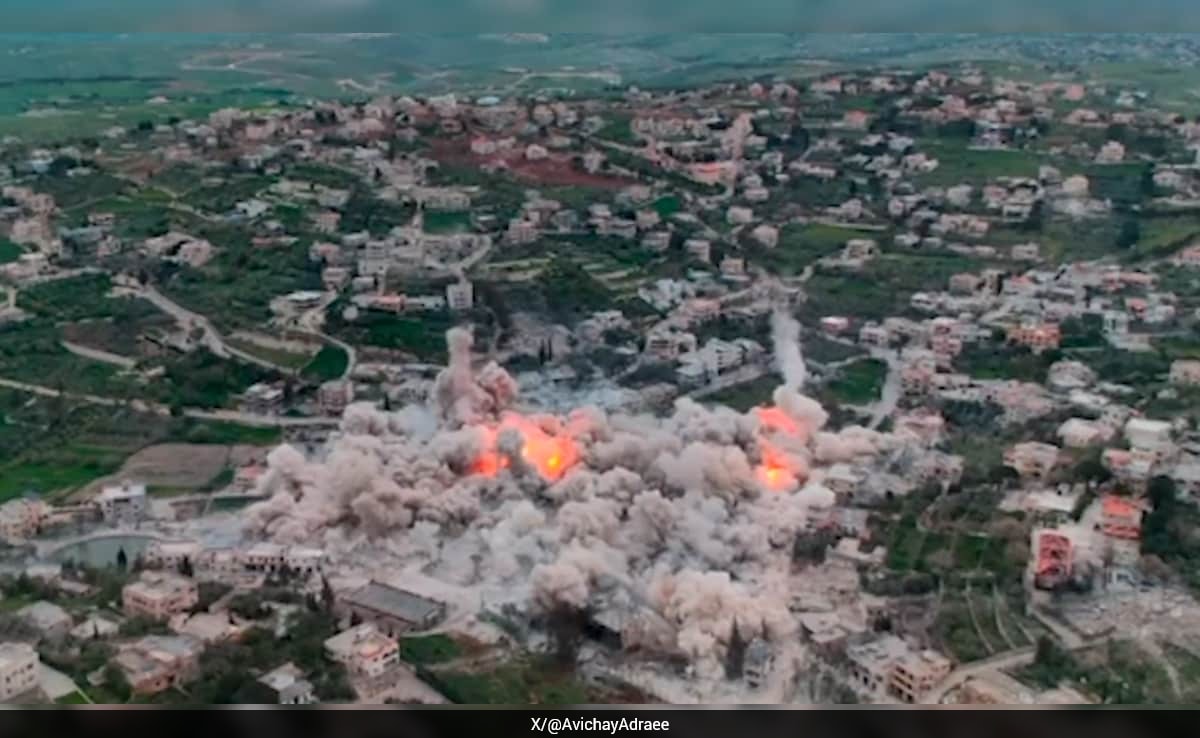
Lebanon is shaking. Huge explosions just tore through southern towns as the Israeli military stepped up its air campaign to a level we haven't seen in years. If you've been watching the border skirmishes over the last few months, you might think this is just more of the same. It's not. This is a massive assault that signals a shift from containment to something much more dangerous. Smoke is billowing over the hills of Lebanon, and the civilian toll is climbing fast.
The situation on the ground is chaotic. People are grabbing what they can and heading north. Roads are jammed. You can hear the low rumble of jets and the sharp, terrifying crack of missiles hitting residential areas. This isn't just about military outposts anymore. The strikes are hitting deep into Lebanese territory, aiming at what the Israeli Defense Forces claim are weapons caches hidden in homes. But when a missile hits a house in a crowded village, the distinction between a military target and a living room disappears.
The Reality of the Air Campaign
The sheer scale of these strikes is hard to wrap your head around. We're talking about hundreds of targets hit in a single day. The Israeli military says they're neutralizing long-range rockets and drones before they can be fired. They've even taken the unusual step of sending mass text messages and making "robo-calls" to Lebanese civilians, telling them to get away from any building where weapons are stored.
Think about that for a second. You're sitting at home and your phone buzzes with a warning that your neighborhood is about to be leveled. Where do you go? How fast can you move your kids or your elderly parents? Honestly, it's a terrifying psychological tactic as much as it is a safety warning. It creates instant, widespread panic. It turns entire towns into ghost cities in a matter of hours.
The Lebanese health ministry is reporting hundreds of casualties. Hospitals in the south and in Beirut are already struggling. They were already short on supplies because of Lebanon's crumbling economy. Now, they're dealing with a massive influx of trauma cases. It's a disaster on top of a disaster.
Why the Strategy Has Shifted
For a long time, both sides seemed to follow an unwritten set of rules. You hit us, we hit you back, but we keep it within a certain distance from the border. Those rules are gone. Israel's government is under intense pressure to return tens of thousands of displaced citizens to their homes in the north. They've decided that diplomacy isn't working fast enough.
The goal now seems to be "de-escalation through escalation." It sounds like a contradiction because it is. The idea is to hit the other side so hard that they're forced to back off and agree to a buffer zone. But history in this region shows that usually doesn't happen. Instead, the other side feels they have to strike back even harder to save face and maintain their own deterrence. It's a cycle that's incredibly hard to break once it gains this kind of momentum.
I've seen these patterns before. When the air strikes go this deep and the rhetoric gets this sharp, the risk of a full-scale ground invasion skyrockets. Tanks are already moving toward the border. Reservists are being called up. It's not just a possibility anymore; it's a looming reality.
The Human Cost Nobody Talks About
We see the maps with the red dots. We see the grainy drone footage of explosions. But we don't always see the long-term wreckage. Lebanon was already a country on the brink. Its currency is worthless. Its government is paralyzed. For many Lebanese families, these strikes are the final blow.
When a school is turned into a shelter, it means education stops. When a farm in the south is scorched, it means the food supply takes a hit. The displacement isn't just a temporary move. For many, it's the loss of everything they've built over decades. You don't just "go back" to a pile of rubble and start over when you have no money in the bank.
The international community is calling for restraint. It's the same script we've heard for years. But the words feel hollow when the bombs are falling. France and the United States are trying to broker some kind of deal, but the gap between the two sides is a canyon. Neither side wants to look weak. And in this part of the world, looking weak is often seen as a death sentence.
The Regional Ripple Effect
This isn't happening in a vacuum. What happens in a small Lebanese town impacts the entire Middle East. There's a real fear that this could pull in other players. If the fighting doesn't stop, the conflict could spread to multiple fronts. We're already seeing flashes of this in other neighboring countries.
The shipping lanes in the Red Sea, the stability of Jordan, the internal politics of Iraq—everything is connected. A full-blown war in Lebanon would be a catastrophe for the global economy, too. Oil prices would jump. Trade would slow down. It’s a mess that goes far beyond the borders of Lebanon and Israel.
What You Need to Watch For
If you're trying to make sense of the headlines, look past the daily body counts. Watch the movement of ground troops. That's the real indicator of where this is going. If the tanks cross the line, we're in a whole new world of pain.
Also, watch the rhetoric coming out of Beirut and Tel Aviv. When the talk of "limited operations" stops and the talk of "total victory" or "existential struggle" begins, you know the window for diplomacy has slammed shut.
Right now, the best thing anyone can do is stay informed through diverse sources. Don't just rely on one side's military briefings. Look at what international NGOs and local journalists are reporting on the ground. The truth is usually buried somewhere under the rubble.
Support organizations that provide direct medical aid to civilians caught in the crossfire. Groups like the International Committee of the Red Cross and Doctors Without Borders are often the only ones actually helping when the bombs are falling. Keep an eye on the diplomatic efforts at the UN, even if they seem slow. Sometimes, a tiny bit of pressure is all that prevents a bad situation from becoming a total regional collapse.
Stay skeptical of quick fixes or "clean" wars. There's no such thing. Every explosion has a lingering echo that lasts for generations. The situation is moving fast, and the next 48 hours will likely determine the path of the region for the next decade.