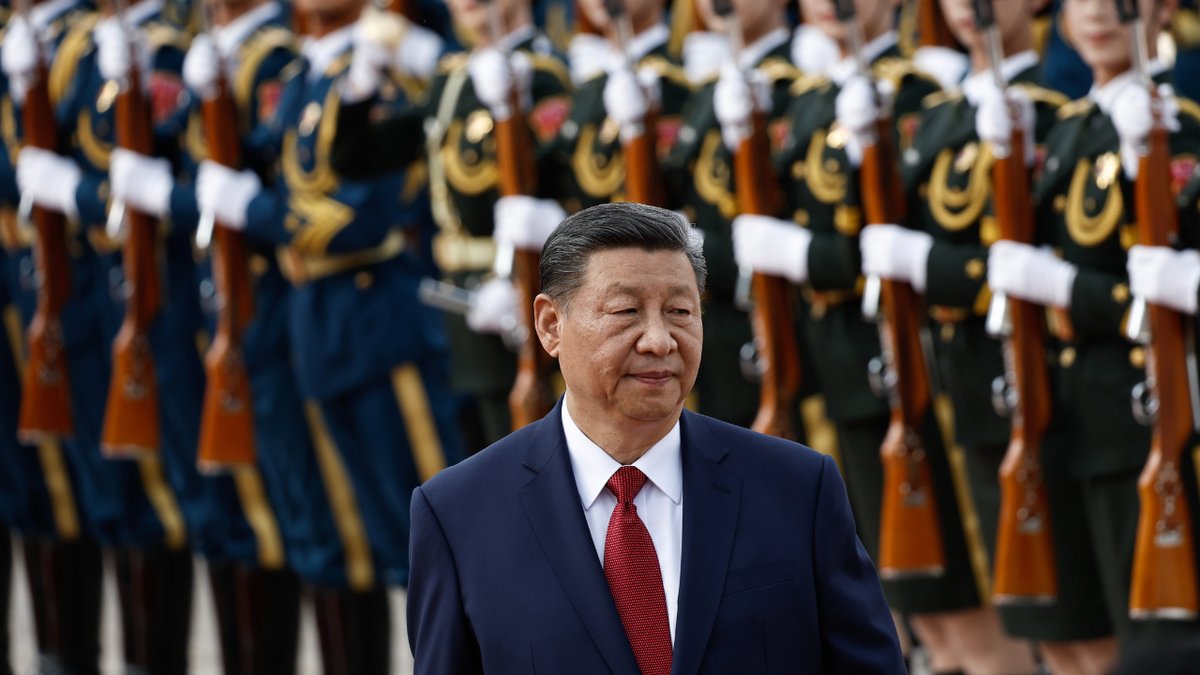
Don't let the red carpets and the military bands fool you. When Donald Trump flew out of Beijing this weekend, he left behind a trail of superlatives and a "9.99 out of 10" rating for his host. But if you look at the actual ledger, the math tells a different story. Xi Jinping didn't just host a summit; he executed a masterclass in tactical patience.
The two leaders just wrapped up 43 hours of high-stakes theater in the Great Hall of the People. For Trump, the goal was clear: secure big-ticket "deliverables" to flash before voters back home and get China to help end the war involving Iran. For Xi, the mission was more subtle but far more vital. He needed to project a sense of "strategic stability" to calm his own jittery markets while ensuring he didn't sign away China’s long-term leverage. For a deeper dive into similar topics, we recommend: this related article.
Xi got exactly what he wanted. Trump got a "YMCA" cover by a military band and a promise to buy some airplanes. Honestly, in the world of high-stakes geopolitics, that's what we call a landslide victory for Beijing.
The Illusion of the Big Deal
The headlines will scream about China’s agreement to buy 200 Boeing jets. On paper, it sounds massive. In reality? It’s a standard move from the Beijing playbook. China needs planes anyway to keep its domestic aviation industry from collapsing, and 200 jets is actually a modest number compared to previous cycles. To get more information on this issue, comprehensive coverage is available on The Guardian.
Think about what wasn't on the table. There were no structural changes to how China subsidizes its tech industry. No new agreements on fentanyl that went beyond the "compliance checkpoints" we already knew about. Most importantly, the word "tariff" barely even came up in the formal meetings.
Trump’s team brought an entourage of American CEOs—the titans of industry—hoping for a signing ceremony that would shake the world. Instead, they got a photo op. They traveled halfway across the globe just for the privilege of shaking Xi’s hand. While Trump boasted about these introductions, the lack of new, market-shifting deals suggests that China doesn't feel the same pressure it did back in 2017.
Strategic Stability is the New Code Word
If you're wondering what the "win" looks like for China, it’s all in the branding. Xi introduced a new framework for the relationship: "Constructive Strategic Stability."
This isn't just diplomatic jargon. It’s a direct replacement for the "strategic competition" label used during the Biden years—a term Beijing absolutely hated. By getting Trump to buy into this "stability" framing, Xi has effectively lowered the temperature without lowering his guard.
For a Chinese economy struggling with high youth unemployment and stagnant growth, this "stability" is oxygen. It signals to global investors that the two biggest economies aren't about to stumble into a hot war. Xi used the summit to prove he can manage the "erratic" American president, projecting a calm, steady hand to his own people and the rest of the world.
The Taiwan Red Line Got Thicker
The most lopsided part of the summit happened behind closed doors regarding Taiwan. Xi didn't just repeat his usual talking points; he reportedly delivered his most direct warning yet, calling the island a "red line" that would put the entire relationship in "great jeopardy" if crossed.
How did Trump respond? With uncharacteristic restraint.
After the meeting, Trump told reporters he hadn't decided whether to proceed with a multibillion-dollar arms sale to Taipei. He basically called Taiwan a "negotiating chip." That kind of language sends a chill through Taipei and a surge of confidence through Beijing. By creating doubt about U.S. commitment to Taiwan’s defense, Xi won a psychological victory that didn't cost him a single yuan.
Why Trump Thinks He Won
You might ask why Trump seems so happy if he got so little. The answer lies in the optics. Trump thrives on being treated as a peer of the world’s "strongmen." Xi knows this.
The choreography was perfect:
- A lavish reception that made the 2017 "State Visit Plus" look like a rehearsal.
- Public praise for Trump’s leadership.
- Elon Musk’s son, Lil X, running around the Great Hall in traditional Chinese dress (which, by the way, became an instant viral sensation on Taobao).
Xi gave Trump the "face" he craves. In exchange, Trump gave Xi the one thing China needs most right now: time. Time to fix its domestic economy, time to continue its push for tech self-sufficiency, and time to navigate the messy "strategic triangle" with a looming visit from Vladimir Putin.
What This Means for Your Wallet
If you’re looking for the bottom line, don't expect your cost of living to drop because of this summit. While the "strategic stability" might prevent a sudden spike in tariffs this month, the underlying friction remains.
- Trade uncertainty isn't over. The Supreme Court might have limited Trump's power to impose sweeping tariffs via the IEEPA, but Section 301 investigations into Chinese "overcapacity" are still very much alive.
- Tech remains a battlefield. Expect the "Constructive Strategic Stability" to apply to corn and cows, but definitely not to chips and AI. The "TikTok model"—where American investors take control of U.S. operations while ByteDance keeps a minority stake—is likely the blueprint for future tech disputes.
- The "Board of Trade" is a wait-and-see. Trump announced a new joint board to oversee deal implementation. Historically, these boards are where deals go to die in a sea of bureaucracy. Don't hold your breath.
The reality of the 2026 Beijing Summit is that we've moved from the brink of conflict to a stabilized stalemate. Xi Jinping successfully charmed the most unpredictable man in politics, conceded virtually nothing of substance, and walked away with his status as a global stabilizer reinforced.
If you're tracking the U.S.-China relationship, stop looking at the Boeing orders. Start looking at the "red lines" Trump is now hesitant to cross. That’s where the real story lives. For now, the best move for any business or investor is to treat this "peace" as a tactical pause, not a permanent resolution. Keep your assets flexible and don't assume the red carpet will stay rolled out for long.