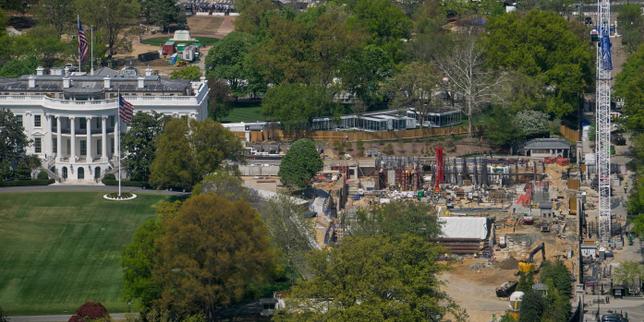
The legal battle over the East Room and the White House ballroom just took a sharp turn. If you’ve been following the messy intersection of historic preservation and executive branch authority, you know this isn't just about fresh paint or new flooring. It's a fight over who actually controls the most famous house in America. A federal appeals court just stepped in, handing the administration a massive win by allowing construction to continue despite frantic attempts from activists to freeze the site.
This ruling matters. It isn't just a technicality buried in a court docket. It sets a precedent for how the White House manages its own structural evolution. Preservationists argue that the current changes risk erasing history. The government says the building is a living office and residence that needs to function in 2026. Right now, the court is siding with function.
Why the DC Circuit Court Stepped In
The U.S. Court of Appeals for the District of Columbia Circuit didn't just stumble into this. They had to decide on an emergency stay. A group of preservation advocates filed a lawsuit claiming the renovations violated the National Historic Preservation Act. They wanted the hammers to stop immediately. They argued that once you rip out historic material, you can't just "undo" that damage if a court later finds the project was illegal.
The court disagreed. By lifting the lower court's temporary block, the three-judge panel signaled that the government likely has the upper hand here. It's a blow to those who think the White House should be treated strictly as a museum. The judges looked at the balance of interests. They weighed the cost of construction delays—which can run into the millions—against the potential "irreparable harm" to the building’s fabric. They weren't convinced the harm was enough to stall the project.
The Friction Between History and Modern Utility
Every president wants to leave a mark. Sometimes that’s policy. Sometimes it's the literal wallpaper. The current renovation focuses heavily on the ballroom area, a space that handles everything from state dinners to high-stakes press conferences.
Critics say the current plans are too aggressive. They point to the 1948-1952 Truman reconstruction as the gold standard of how to handle White House bones. Back then, they basically hollowed out the building but kept the soul intact. The current dispute centers on whether these new updates are "necessary maintenance" or an "unauthorized overhaul."
I’ve seen this play out before in historic districts across the country. You have the "freeze it in amber" crowd versus the "make it work" crowd. When it’s the White House, the stakes are just higher. The administration argues that the infrastructure—HVAC, wiring, and structural supports—was failing. You can't host a world leader in a room where the ceiling might leak or the lights might flicker because of 70-year-old wiring.
What This Means for Historic Preservation Law
This ruling ripples far beyond 1600 Pennsylvania Avenue. If the federal government can bypass certain oversight hurdles for the White House, it changes the game for other federal landmarks. Usually, Section 106 of the National Historic Preservation Act requires a long, grueling review process. It involves consulting with the public and historical societies.
The administration basically argued they have a unique carve-out. They claim the President's need to manage the Executive Mansion outweighs the typical red tape. By allowing work to proceed, the court is tacitly acknowledging that the White House isn't just another federal building. It’s a unique entity where security and functionality often trump aesthetic preservation.
The Cost of Stopping Mid Stream
Let’s talk about the money. When a federal project stops, taxpayers don't stop paying. Contractors have "standby" fees. Equipment leases keep ticking. Materials sitting on-site can degrade. The government’s lawyers leaned heavily on the financial impact of a shutdown.
If the work stayed frozen for six months while the court deliberated, the budget could have bloated by 30%. That’s a tough pill for any administration to swallow, especially with the eyes of the GAO (Government Accountability Office) watching. The court's decision to let the work continue prevents a massive financial sinkhole. It also ensures the ballroom is ready for the upcoming summit season. Timing is everything in diplomacy. You can't exactly move a G7 meeting to a local Marriott because your ballroom is a construction zone.
The Critics Won't Quiet Down
Don't think for a second the preservationists are packing up. They see this as a temporary setback, not a final defeat. Their main argument is that once these changes are made, the "historic integrity" is gone forever. They’re worried about the removal of specific architectural details that date back to the early 20th-century renovations.
There's a legitimate fear that "modernizing" leads to a bland, corporate look. We’ve seen it happen to historic hotels and government offices worldwide. The White House should feel like the White House, not a high-end Hilton. However, the administration maintains that all "significant" historic elements are being cataloged and protected. Whether you believe that depends on how much you trust the current National Park Service oversight.
What Happens Next on the Construction Site
Now that the legal red light has turned green, expect the pace to accelerate. The contractors are likely moving into high gear to finish the heavy structural work before another legal challenge can land.
If you’re tracking this project, watch for these specific milestones:
- The completion of the primary structural reinforcement in the East Wing transition zones.
- The installation of the updated climate control systems designed to protect the art and furniture.
- The final reveals of the interior finishes, which will likely be leaked to the press long before the official ribbon-cutting.
The court will still hear the full merits of the case later this year. But let's be real. Once the walls are up and the chandeliers are hung, a judge is very unlikely to order the government to tear it all down and start over. The "status quo" has shifted. The administration won the battle of momentum.
If you care about architectural history, keep an eye on the filings at the DC Circuit. This case defines the limit of the National Historic Preservation Act. It tells us if the law has actual teeth or if it's just a suggestion for whoever happens to live in the White House. For now, the drills are spinning and the work continues. The ballroom will be ready, but the debate over its soul is far from over.