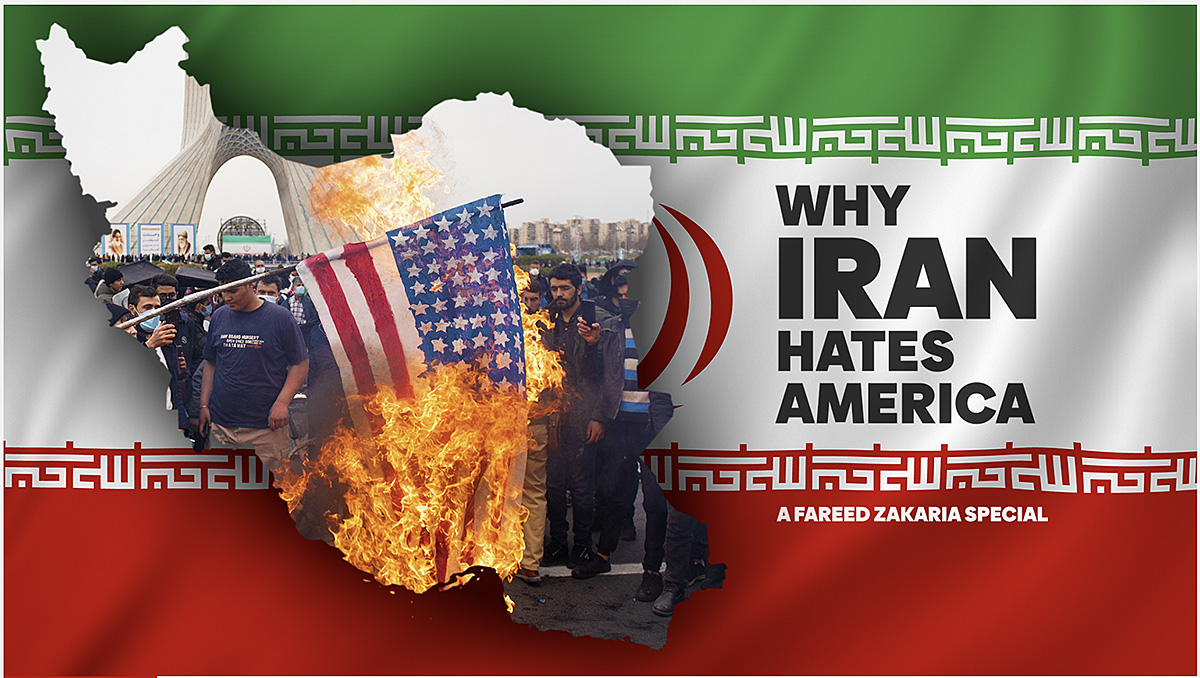
Sports are never just about a ball. If you believe that, you haven't been paying attention to the collision between Washington and Tehran. Every time these two nations meet on a grass pitch, the world stops looking at the scoreboard and starts looking at the history books. We aren't just talking about a game. We're talking about forty years of baggage, sanctions, and broken promises compressed into 90 minutes.
The reality is that for the US and Iran, the World Cup isn't a tournament—it’s a pressure cooker. While FIFA suits try to keep things "neutral," the fans and the players know the truth. This is the one place where the "Great Satan" and the "Islamic Republic" have to stand in the same circle and shake hands. It’s awkward. It’s beautiful. And honestly, it’s terrifyingly high-stakes. Don't miss our recent post on this related article.
The Mother of All Games in 1998
Go back to 1998 in Lyon, France. The draw had placed them in Group F. It was the first time they’d ever faced off. The atmosphere was thick enough to choke on. US and Iranian relations had been dead for twenty years. No phone calls. No handshakes. Just cold, hard silence since the 1979 revolution and the embassy hostage crisis.
The Iranian players walked out with white roses. They handed them to the Americans. It was a gesture that shocked the suits in Tehran and the pundits in D.C. It wasn’t a surrender; it was a human moment in a match that everyone else wanted to treat like a war. Then the whistle blew. To read more about the context here, The Athletic provides an in-depth summary.
Iran won 2-1. For the US, it was a disaster that sent them home early. For Iran, it was a national holiday. Millions poured into the streets of Tehran. Women threw off their headscarves. People drank. The government tried to claim it as a victory of "Islam over arrogance," but the fans just saw it as a win. It was the most-watched game in Iranian history. It proved that on the pitch, the underdog doesn't just have a chance—they have a weapon.
Qatar 2022 and the Modern Tension
Fast forward to 2022. The world was different, but the vibe was just as heavy. This time, the drama started before the first kick. The US Soccer Federation posted a graphic of the Iranian flag without the Islamic Republic emblem. They said it was to support the "Woman, Life, Freedom" protests. Tehran went ballistic. They demanded the US be kicked out of the tournament.
The game itself was a cagey, nervous affair. Christian Pulisic scored, crashed into the goalkeeper, and basically sacrificed his body for the 1-0 win. But the real story was in the stands. You had pro-regime fans shouting down protesters. You had families crying. You had the Iranian players refusing to sing their anthem in the first game.
It was a mess. A loud, complicated, political mess. The US won the match, but the narrative belonged to the Iranian people. It showed that the national team, known as Team Melli, is a heavy burden. They have to represent a country they love while dealing with a government many of them are wary of.
Why 2026 feels like a Different Beast
Now we’re looking at 2026. The World Cup is coming to North America, and Iran is in Group G. They’re scheduled to play in Los Angeles and Seattle. Think about that for a second. Los Angeles has the largest Iranian population outside of Iran. It’s "Tehrangeles."
But the current climate is brutal. With the recent military strikes in the Middle East and the death of Supreme Leader Ali Khamenei, the participation of Iran is a massive question mark. US-Israeli operations have changed the board. This isn't just about a travel ban anymore. It's about a state of war.
If Iran shows up, the security will be unprecedented. We're talking about a host nation that is actively in conflict with a participant. That’s never happened in World Cup history. Not like this. FIFA says they’re "monitoring the situation," which is code for "we have no idea what to do."
The Human Cost of the Game
We forget that the players are stuck in the middle. Most of these guys play in Europe. They have lives outside the regime's reach, but their families don't. In 2022, reports surfaced that players' families were threatened with "torture and violence" if the team didn't behave.
It’s easy for us to sit on a couch in Ohio or London and talk about "the beautiful game." For an Iranian player, a loss isn't just a loss. It can be a liability. A win isn't just three points; it’s a momentary shield.
What to watch for in the coming months
- The Visa Battle: Watch if the US State Department actually grants visas to the entire Iranian delegation. In the past, they've denied the federation president.
- The Replacement Protocol: If Iran withdraws or is banned, FIFA has to pick a replacement. Usually, it's the next-highest-ranked team from the same region (AFC).
- The LA Factor: If the games happen, Los Angeles will be the epicenter of the biggest political protest in sports history. Expect more than just flags.
The US-Iran rivalry is the only one in sports where the results on the field are the least interesting part of the story. It’s a tragedy, a comedy, and a thriller all wrapped into a soccer match.
Don't wait for the tournament to start to get the full picture. Follow the specific news out of the AFC (Asian Football Confederation) and the US State Department briefings. The decision on Iran's participation will likely come down to the wire in May. If you're planning to attend the games in Los Angeles, stay updated on local security advisories and transit changes near SoFi Stadium, as the protest presence will be massive.