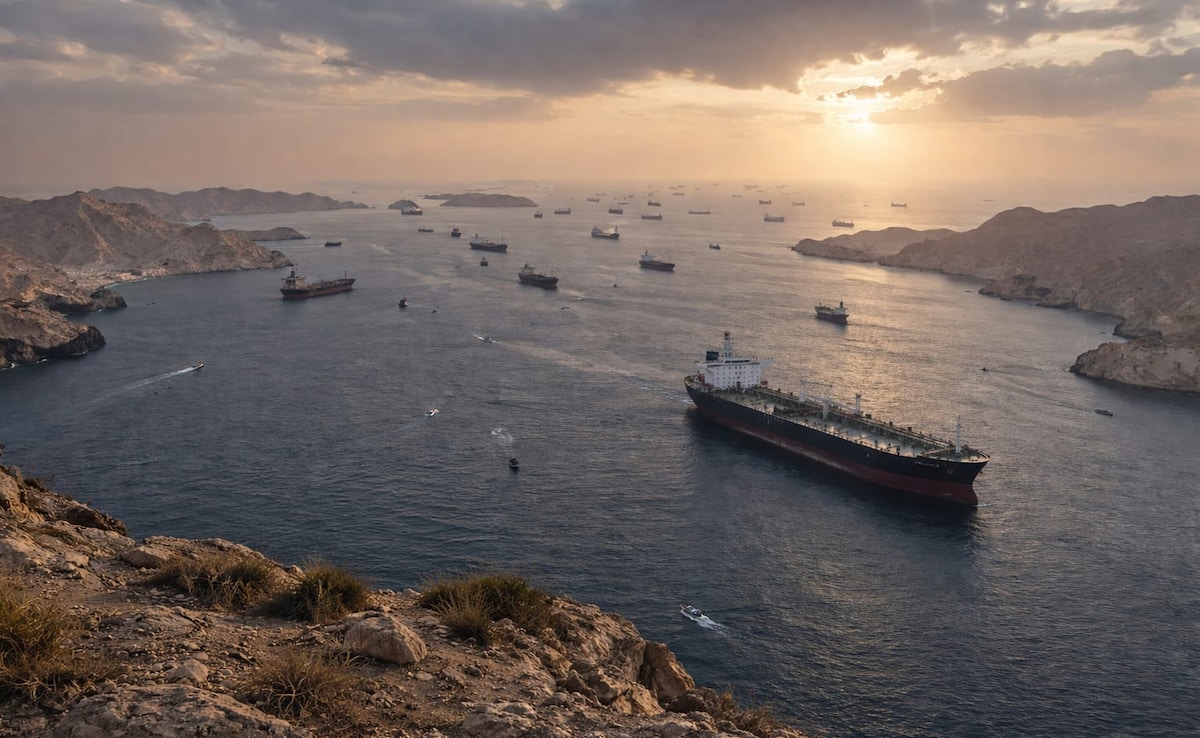
Donald Trump just upped the ante in a way that’s either a masterstroke of geopolitical pressure or a redundant flex of naval muscle. On Sunday, after ceasefire talks in Islamabad collapsed over Iran’s refusal to budge on its nuclear program, Trump declared the U.S. Navy will begin "BLOCKADING" any ship entering or leaving the Strait of Hormuz.
There’s just one problem. The Strait is already effectively ghost-towned.
Since hostilities broke out in early 2026, traffic through this 21-mile-wide needle’s eye has plummeted by over 95%. Ships aren't moving because Iran has spent months seeding the waters with "maybe" mines and demanding illegal tolls from anyone brave—or stupid—enough to try the transit. Trump isn't just threatening to close a door; he's threatening to put a padlock on a door that’s already been barred from the inside.
The Blockade of a Blockade
What’s actually happening here isn't a traditional naval blockade. Usually, you block a port to stop supplies from getting in. Here, the U.S. is targeting the "toll booth" Iran has set up. Trump’s strategy focuses on "interdicting" every vessel in international waters that has paid a fee to Tehran. It’s a direct hit to the Iranian war chest.
CENTCOM has been blunt about the rules. They aren't stopping everyone. If you're a tanker moving from Kuwait to Japan and you haven't touched an Iranian port or paid an Iranian "tax," you’re technically free to go. But in reality, who's taking that risk?
The insurance rates alone have made the Strait a no-go zone. When Trump says "no one who pays an illegal toll will have safe passage," he’s effectively telling the global shipping industry that the U.S. Navy is now just as much of a threat to their bottom line as Iranian mines are to their hulls.
Why the Islamabad Talks Failed
The Islamabad sessions were a marathon—20 hours of high-stakes haggling facilitated by Pakistan. By all accounts, there was progress on minor issues. But Trump and Vice President JD Vance hit a brick wall on the "Nuclear Red Line."
The U.S. demands were aggressive:
- Total dismantling of major enrichment facilities.
- Forfeiture of all highly enriched uranium.
- A permanent, verifiable end to the nuclear program.
- Cutting off funds for the Houthis and Hezbollah.
Iran’s response? "If you fight, we will fight." Speaker Mohammad Bagher Qalibaf didn't flinch. To Tehran, giving up the nuclear program is a death sentence for the regime. To Trump, letting them keep it is a death sentence for regional stability. So, we're at a stalemate where the only move left is to starve the beast by choking the waterway.
Can the World Survive a Dry Hormuz
We’re talking about 20 million barrels of oil a day. That’s roughly 25% of the world’s seaborne oil. When the news of the blockade hit, oil prices didn't just tick up; they leaped. Brent crude is already hovering over $100, and we haven't even seen the first ship seized yet.
Most of this oil is headed for Asia—China, India, Japan, and South Korea. If the U.S. keeps this up, it isn't just hurting Iran; it’s testing the patience of its own allies and its biggest economic rival, China. Trump’s logic is simple: "We don't need the strait. We have so much oil." He’s leaning hard on U.S. energy independence to justify a move that could bankrupt half of the Eastern Hemisphere.
The Reality of Alternative Routes
Is there a workaround? Not really.
- The East-West Pipeline (Saudi Arabia): Can move maybe 5 million barrels a day. It’s a drop in the bucket compared to the 20 million passing through the Strait.
- The Habshan-Fujairah Pipeline (UAE): Can bypass the Strait but only for a fraction of the total volume.
- The Cape of Good Hope: Going around Africa adds weeks to a trip and sends shipping costs into the stratosphere.
The Legal and Military Powder Keg
International law is pretty clear: you can’t block an international strait. The "right of transit passage" is supposed to be sacred. Iran’s been violating it for months with "security inspections" and threats. Trump’s counter-move is to claim the U.S. is "impartially" enforcing freedom of navigation by stopping those who fund the obstruction.
It’s a legal gymnastics routine that would make an Olympian dizzy.
But the real danger isn't in a courtroom; it’s on the water. Iran’s Revolutionary Guard has warned that any military vessel approaching the Strait will be treated as a ceasefire breach. If a U.S. destroyer tries to clear a mine and an Iranian fast-attack craft opens fire, the "limited military strikes" Trump has been briefed on become a full-scale regional war in minutes.
What You Should Watch For
If you’re trying to figure out how this affects your wallet or the world, stop looking at the politicians and start looking at the tankers.
Watch the "Notice to Mariners" from CENTCOM. If they begin active boarding of vessels in the Gulf of Oman, the blockade is real. Watch the VLCC (Very Large Crude Carrier) tracking data. If the number of ships sitting at anchor outside the Strait continues to grow, the global supply chain is about to hit a wall.
Don't expect a quick resolution. This isn't a "show of force" anymore. It’s a deliberate attempt to see who blinks first: a president who thinks he’s bulletproof because of domestic oil production, or a regime that believes its survival depends on the very nukes Trump is trying to take away.
If you’re invested in energy or logistics, now’s the time to diversify. The Strait is closed, whether or not there’s a physical line of ships across it. The "blockade" just made the vacancy official.