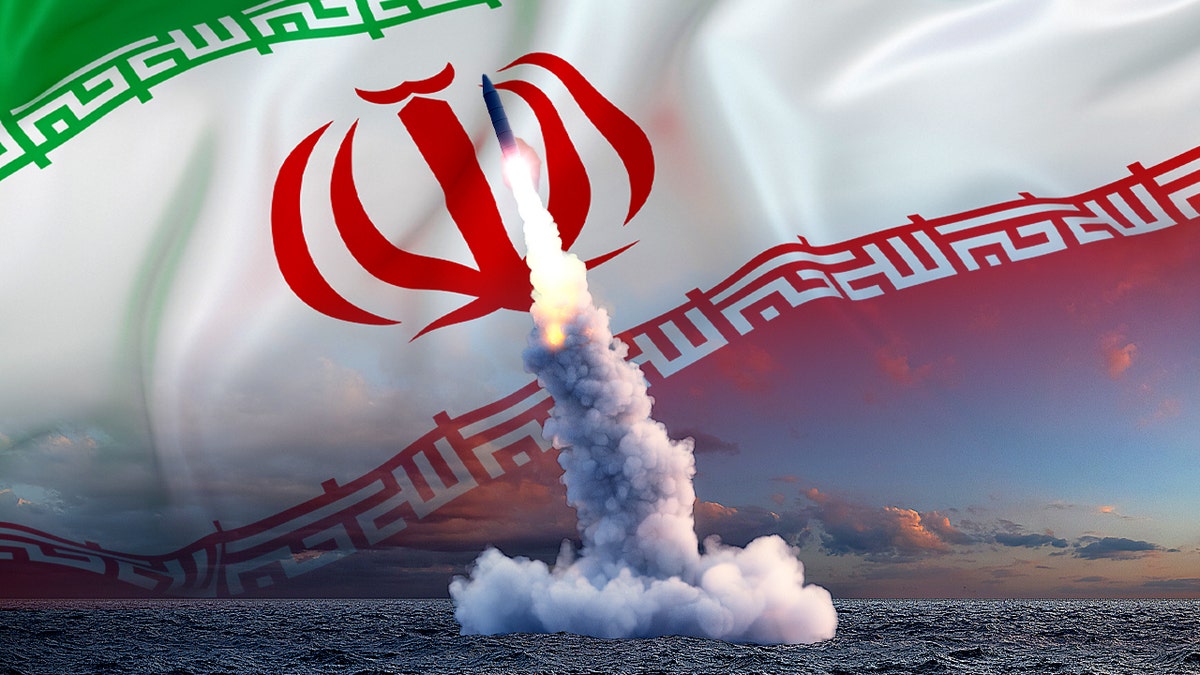
The reported strike on an elementary school in Tehran marks a grim escalation in the shadow war currently engulfing the Middle East. According to statements released by Iran’s Foreign Ministry, the educational facility was caught in the crossfire of recent aerial engagements, raising immediate questions about targeting intelligence and the fraying boundaries of modern urban warfare. While official reports from Tehran emphasize the civilian nature of the site, the incident fits into a broader, more dangerous pattern where the distinction between military infrastructure and public life has effectively dissolved.
This isn't just about a single building. It is about the collapse of the "red lines" that previously governed regional escalations. When a school becomes a debris field, the tactical justification matters far less to the global community than the strategic precedent it sets. We are witnessing a transition from precision-guided deterrence to a high-stakes game of urban attrition where no square meter of a capital city is truly off-limits.
The Fog of Urban Targeting
The mechanics of modern missile defense and aerial bombardment are rarely as clean as the briefing room videos suggest. In a densely packed metropolis like Tehran, the proximity of government ministries, communication hubs, and military barracks to residential neighborhoods creates a logistical nightmare. When an elementary school is hit, there are generally only three technical possibilities.
First, there is the possibility of a direct targeting error. This occurs when intelligence assets misidentify a structure or when GPS coordinates are entered incorrectly. Second, we must consider the role of kinetic interception. When a defensive battery engages an incoming projectile, the resulting debris—or the missile itself—often falls far from the intended target. Finally, there is the grim reality of "dual-use" proximity, where military assets are positioned near civilian hubs, a common tactic used to discourage strikes or to win a domestic propaganda war when those strikes inevitably occur.
The Geopolitical Fallout
Iran’s Foreign Ministry has moved quickly to frame this event as a violation of international law. By centering the narrative on an elementary school, Tehran aims to pivot from its role as a regional provocateur to that of a victim of unchecked aggression. This shift is designed to galvanize domestic support while simultaneously putting diplomatic pressure on Western nations to rein in their allies.
However, the international community remains skeptical. The history of the region is littered with claims and counter-claims regarding civilian casualties. To understand the gravity of this specific strike, one must look at the timing. It occurred during a period of peak tension, following weeks of "tit-for-tat" exchanges that many hoped would remain confined to remote military outposts. By bringing the fire into the heart of a residential district, the parties involved have signaled that the period of restraint is over.
Intelligence Failures or Intentional Messaging
In the world of high-stakes espionage, a strike on a school is rarely just an accident. It is often a message. If the strike was intentional, it suggests that the attacking party believes the target held value that outweighed the certain international backlash. This could include underground bunkers, communication arrays, or the presence of high-level personnel.
If the strike was truly accidental, it exposes a terrifying lapse in the "surgical" capabilities that modern militaries brag about. If you cannot differentiate a primary school from a military command post in 2026, the technology is not as advanced as the marketing suggests. The reality likely lies in the messy middle. Urban combat environments are saturated with electronic interference, signal jamming, and decoy signatures that make "clean" strikes nearly impossible.
The Human Cost of Strategic Ambiguity
While analysts debate the caliber of the munitions used, the families in Tehran are dealing with a different reality. The psychological impact of a school strike ripple through a population far more effectively than a strike on a power plant or an oil refinery. It strikes at the most basic sense of security. When parents cannot trust that a school is a sanctuary, the social contract begins to buckle.
The Iranian government is currently walking a fine line. They must project strength and promise retaliation to satisfy hardliners within the Revolutionary Guard, yet they are also dealing with a weary public that has endured years of economic sanctions and internal unrest. Using this incident to stoke nationalist fervor is a standard move, but it carries the risk of dragging the country into a full-scale conflict that it may not be prepared to win.
The Breakdown of International Norms
We are living through the death of the "proportional response." For decades, the unwritten rules of Middle Eastern conflict dictated that if you hit a drone base, your opponent hits a fuel depot. If you target a general, they target a commander. Those rules are being shredded in real-time.
The strike in Tehran represents a move toward "total gray-zone warfare." In this environment, every piece of civilian infrastructure is a potential liability. Hospitals, schools, and water treatment plants are no longer protected by their status; they are simply variables in a complex equation of risk and reward. This erosion of norms doesn't just affect Iran; it sets a standard for every other conflict zone across the globe.
Technical Realities of the Strike
Data gathered from satellite imagery and ground-level footage suggests the impact was localized but high-intensity. Unlike the sprawling damage caused by older "dumb" bombs, this strike shows the characteristics of a high-velocity kinetic impact.
- Impact Cratering: The depth and diameter of the hole suggest a delayed-fuse munition designed to penetrate hardened surfaces.
- Structural Integrity: The surrounding buildings remained largely standing, indicating a highly concentrated blast radius typical of modern small-diameter bombs.
- Debris Pattern: The lack of widespread fire damage suggests the weapon was designed for structural destruction rather than incendiary effect.
These technical details point toward a sophisticated actor. This wasn't a homemade rocket or a malfunctioning drone from a local proxy. This was a high-tier military operation executed with specific hardware.
The Failure of Diplomacy
Every time a civilian target is hit, it marks a failure of the diplomatic backchannels that usually keep these conflicts from boiling over. Reports suggest that multiple neutral parties have been attempting to broker a de-escalation for months. This strike effectively silences those voices.
When the dust settles in Tehran, the physical repairs will happen quickly. The Iranian state is adept at rebuilding its image and its infrastructure. What won't be repaired so easily is the sense that there are still boundaries in this conflict. We have entered a phase where the "unthinkable" is now a daily briefing item.
The Strategic Pivot
The strike on the elementary school forces the Iranian leadership into a corner. They cannot ignore it without looking weak, but a symmetrical response—targeting a school or civilian center in a rival nation—would invite a level of international condemnation that even they might find unbearable.
Instead, expect to see an increase in asymmetric responses. This likely means cyberattacks on financial institutions, disruption of maritime trade in the Strait of Hormuz, or the activation of sleeper cells in third-party countries. The school strike isn't the end of a chapter; it’s the beginning of a much more volatile one.
The world is watching to see if this was a tragic anomaly or the new baseline for engagement. If the latter is true, the concept of "civilian" is about to become a historical relic. Governments must now decide if they are willing to uphold the Geneva Convention in practice, or if they will continue to let it be buried under the rubble of "unfortunate accidents" and "intelligence overlaps."
Investigating these incidents requires looking past the immediate outrage and examining the hardware, the geography, and the political desperation that led to the trigger being pulled. The elementary school in Tehran is a warning. It is a signal that the theater of war has expanded to include the very places where the next generation is supposed to be safe.
Demand a transparent investigation into the origin of the munitions and the specific intelligence that led to this strike. Without accountability, the next "accident" is already being programmed into a flight computer.