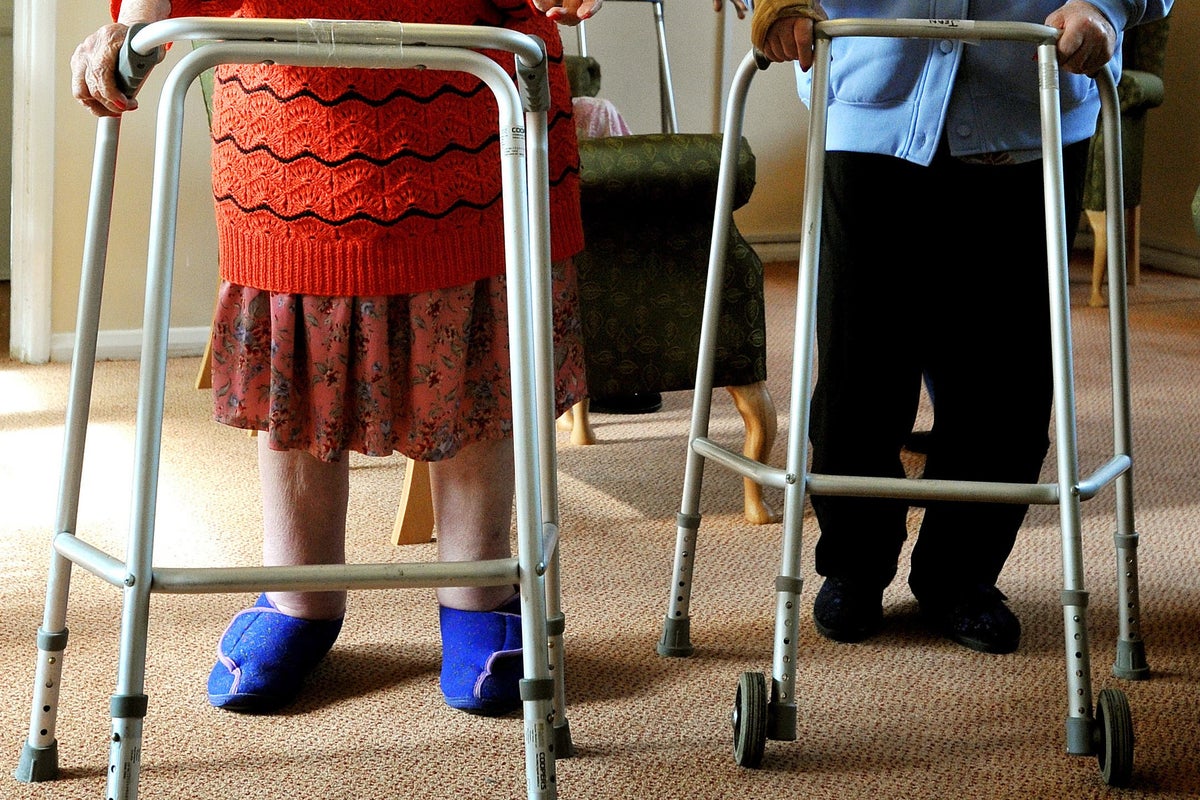
Arthur didn’t know he was being evicted until the van door slid open and the cold air of a Columbus evening hit his shins. He was eighty-two. His world had narrowed over the last three years to the size of a semi-private room, the smell of industrial floor wax, and the rhythmic squeak of a medication cart. He had a stroke, a fading memory, and a Medicaid check that the nursing home cashed every month.
Then, he had a trash bag. Also making news in this space: The White House Bet on Psychedelic Medicine.
The driver didn’t look him in the eye. He just set Arthur’s plastic bag of belongings on the pavement outside a local homeless shelter, climbed back into the driver’s seat, and pulled away. Arthur sat in his wheelchair, clutching a tattered cardigan, watching the taillights fade. He wasn't a criminal. He wasn't "cured." He was simply a line item that no longer balanced.
This is the reality of "patient dumping" in Ohio. It is a quiet, clinical cruelty masquerading as a discharge. Further information on this are explored by WebMD.
The Calculus of Human Worth
To understand why a facility would leave a vulnerable senior at a shelter door, you have to look at the ledger. Nursing homes operate on thin margins, and the math is cold. Private-pay residents—those with hefty savings or high-end insurance—are the golden geese. Medicaid patients, however, are viewed by some corporate owners as a burden.
When a resident becomes "difficult," perhaps through the wandering symptoms of dementia or the behavioral outbursts of a brain injury, they become expensive. They require more staff. They require more eyes. In a world where profit is the primary metric, an expensive patient is an expendable one.
The industry calls it "involuntary discharge." The streets call it a death sentence.
State data and advocacy reports have begun to pull back the curtain on a surge of these incidents across the Buckeye State. It’s a systemic loophole. A facility claims they can no longer meet the patient’s needs. Legally, they are supposed to find a "safe and appropriate" alternative. But "appropriate" is a flexible word when no one is looking. A crowded shelter meant for able-bodied adults in crisis is not a home for a man who cannot stand on his own or a woman who forgets to swallow her pills.
The Invisible Pipeline
Consider a hypothetical woman named Elena. Elena worked thirty years as a school secretary. She paid into the system, raised a family, and eventually, after a fall shattered her hip and her husband passed away, she moved into a long-term care facility.
For two years, Elena was a model resident. Then, the facility changed ownership. The new management looked at the reimbursement rates. They saw a wing full of Medicaid recipients and decided they wanted a "premier" rebranding. Suddenly, Elena’s occasional confusion was labeled as "aggressive behavior."
The facility didn't call her daughter. They didn't seek a psychiatric consultation. They waited until a Friday afternoon—when state offices are closing and ombudsmen are heading home—and they told Elena she was going on a "trip."
That trip ended at the Faith Mission or a similar downtown refuge. When the shelter staff sees a van from a nursing home pull up, they know the drill. They see a person in a hospital gown and slippers being wheeled into a lobby filled with hundreds of people struggling with addiction, mental health crises, and the raw edge of poverty.
The shelter isn't equipped for wound care. They don't have Hoyer lifts. They don't have locked memory units.
A Ghost in the System
The terror of this trend lies in its silence. When a person is dumped, they often lose their link to the world. Their records stay at the facility. Their medications are left behind or handed over in a confusing jumble. For a senior with cognitive decline, the trauma of being abandoned in a chaotic, loud environment can trigger a "transfer trauma" so severe it leads to rapid physical decline.
Why does it keep happening? Because the punishment rarely fits the profit.
If a nursing home gets caught, the fines are often treated as the cost of doing business. It is cheaper to pay a five-figure fine once every two years than to keep a "low-reimbursement" resident for a decade. The regulatory framework is a sieve. Inspectors arrive, they cite the facility, and the facility promises to do better. Meanwhile, the resident is already gone, swallowed by the anonymity of the streets or the overstressed emergency rooms of local hospitals.
We like to think of our elders as the keepers of our history. We use words like "dignity" and "honor" in our brochures. But the sidewalk doesn't care about history. The wind blowing off the Scioto River doesn't care about a lifetime of secretarial work or a career in the trades.
The Paper Trail of Abandonment
If you look at the complaints filed with the Ohio Department of Health, a pattern emerges. It isn't just the frail elderly. It’s the "younger" nursing home residents—those in their 50s with chronic mental illness or physical disabilities. They are the most likely to be pushed out because they are perceived as more capable of "navigating" a shelter.
But navigating a shelter requires a level of executive function that many of these patients simply do not possess.
When a facility decides to purge a resident, they often bypass the legal requirement of a thirty-day notice. They claim an "emergency" exists. They might send the patient to a hospital for a minor issue and then refuse to take them back, claiming their bed has been filled. The hospital, desperate to clear their own beds, eventually looks for the easiest exit. That exit is often a taxi voucher to a shelter.
It is a game of hot potato played with human lives.
The Sound of a Closing Door
The solution isn't just "more oversight." It's a fundamental reckoning with how we value the end of life. We have turned aging into a commodity, and when a commodity loses its value, we discard it.
Advocates in Ohio are pushing for "Right to Return" laws and stricter penalties that actually bite into the bottom line of these corporations. They are fighting for a system where a discharge must be signed off by an independent third party who verifies the safety of the new location.
Until then, the vans keep moving.
Arthur stayed at the shelter for three days. He sat in his wheelchair near the radiator, staring at the door. He didn't eat. He didn't speak. He was waiting for the nurse who used to bring him chocolate pudding on Tuesdays. He was waiting for the room that smelled like floor wax. He was waiting for someone to remember that he was still there.
The tragedy of the "dumped" is not just that they are homeless. It is that they have been told, in the most literal way possible, that they no longer exist. They are ghosts who are still breathing, left to haunt the corners of a city that was supposed to be their home.
The van pulls away. The door clicks shut. The city moves on. And on the sidewalk, a single trash bag sits in the wind, containing everything a human being has left to show for eighty years of life.