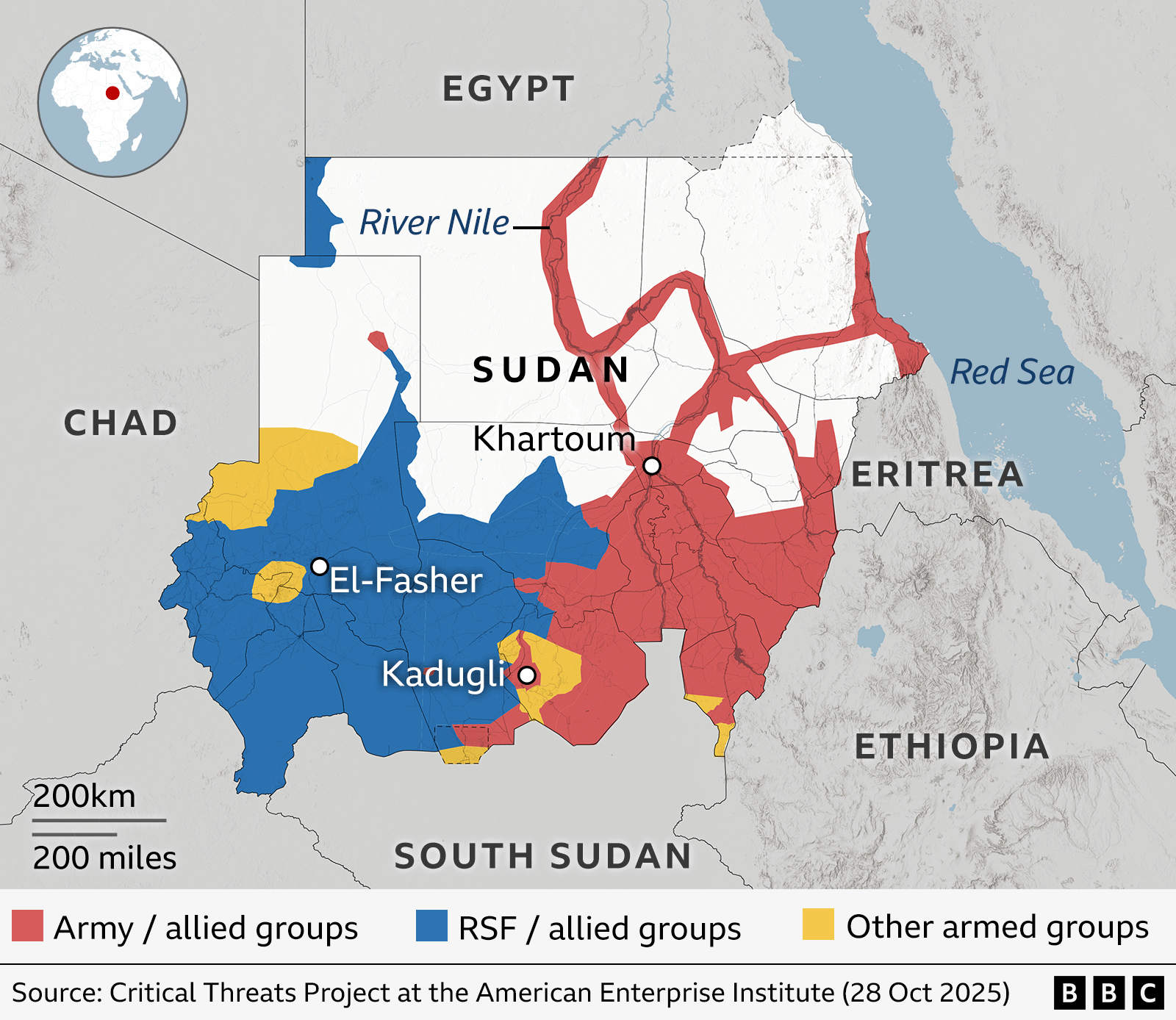
Sudan is not just a country in conflict; it is a nation being systematically dismantled while the rest of the world looks the other way. After three years of relentless fighting between the Sudanese Armed Forces (SAF) and the Rapid Support Forces (RSF), the situation has regressed from a political power struggle into a full-scale ethnic cleansing campaign and a manufactured famine. The primary query for anyone looking at Khartoum or Darfur today is simple: how did a transition toward democracy collapse into the world’s most acute humanitarian disaster? The answer lies in a toxic mix of failed international diplomacy, gold-funded private militaries, and a total collapse of the state’s monopoly on violence.
The Architecture of a Failed Coup
The current nightmare began as a partnership of convenience. General Abdel Fattah al-Burhan, leading the regular army, and Mohamed Hamdan Dagalo, better known as Hemedti, leading the paramilitary RSF, joined forces in 2021 to oust the civilian-led transitional government. They were allies in tyranny until the inevitable moment when they had to decide who would actually hold the scepter.
The core of the dispute was the integration of the RSF into the regular military. Hemedti wanted a ten-year timeline to maintain his autonomy and his lucrative business empire. Burhan demanded two. When the first shots were fired in Khartoum, it wasn’t a spontaneous uprising. It was the sound of two warlords realizing that the room was only big enough for one.
Unlike traditional wars where front lines move across a map, this conflict is urban and molecular. It is fought house-to-house in high-density neighborhoods. The SAF uses its superior air power to drop bombs that frequently miss their marks, hitting hospitals and markets instead. The RSF uses its mobility to occupy residential homes, turning civilians into human shields.
The Gold that Greases the Gears
War is expensive, yet neither side shows signs of running out of bullets. To understand why Sudan continues to burn, you have to look at the gold mines of Darfur and the River Nile state. For years, the RSF has controlled the lion’s share of Sudan’s gold exports. This isn't just local corruption. This is a global supply chain issue.
Much of this gold flows through regional hubs before hitting international markets. This provides Hemedti with a war chest that functions independently of the Sudanese central bank. It allows him to pay fighters, buy sophisticated drones, and secure political lobbying in foreign capitals. On the other side, the SAF maintains control over the state's official bureaucracy and traditional agricultural heartlands, though their grip is slipping.
The international community has tried sanctions, but they are often toothless. Targeting a general's bank account matters very little when he deals in physical bullion and shadowy private military contracts. The "why" of this war is power, but the "how" is gold.
Darfur and the Echo of Genocide
In the early 2000s, "Save Darfur" was a rallying cry for the West. Today, the atrocities in Darfur are arguably worse, yet the silence is deafening. The RSF, which grew out of the Janjaweed militias, is systematically targeting the Masalit and other non-Arab groups.
This isn't collateral damage. It is a deliberate policy of displacement. Reports from El Geneina and other cities describe a pattern of executions, sexual violence, and the burning of entire villages. The goal is to reshape the demography of the region permanently. When a village is burned and its people are driven into Chad, they don't just lose their homes. They lose their claim to the land.
The Famine that Could Have Been Avoided
Sudan was once envisioned as the "breadbasket of the Arab world." Today, it is starving. This is not the result of a drought or a bad harvest. It is a man-made catastrophe.
Both the SAF and the RSF use food as a weapon. The SAF restricts aid from entering RSF-controlled areas, claiming that supplies will be diverted to fighters. The RSF loots warehouses and prevents farmers from planting crops in the fertile Gezira scheme, which was once the country's economic engine.
Current Humanitarian Metrics
| Category | Estimated Impact | Primary Cause |
|---|---|---|
| Displaced Persons | Over 10 million | Urban warfare and ethnic cleansing |
| Facing Acute Hunger | 18 million | Destruction of agriculture and aid blockades |
| Non-functional Hospitals | 70-80% | Targeted shelling and lack of supplies |
The numbers are staggering. Over 10 million people have fled their homes. This represents the largest internal displacement crisis on the planet, surpassing Ukraine and Gaza. Yet, the funding for the Sudan humanitarian response plan remains a fraction of what is required.
The Ghost of a State
What makes the Sudanese situation particularly grim is the total disappearance of civil authority. In the areas not actively being shelled, there is no police force, no judicial system, and no functioning economy. The Sudanese pound has plummeted, making basic goods like flour and fuel unaffordable for those few who still have savings.
Local "Emergency Response Rooms"—volunteer-led grassroots groups—are the only things keeping many neighborhoods alive. These are young men and women who set up communal kitchens and makeshift clinics. They are doing the work of an entire government with nothing but donations and courage. Ironically, these are the same activists who led the 2019 revolution to overthrow Omar al-Bashir. They are now being targeted by both sides for the "crime" of being neutral and organized.
The Regional Fire Risk
Sudan does not exist in a vacuum. It shares borders with seven countries, many of which are already fragile. The influx of hundreds of thousands of refugees into Chad, South Sudan, and Egypt is straining local resources and threatening to ignite regional tensions.
Foreign intervention has been more a curse than a blessing. Various regional powers have picked sides, funneling weapons to their preferred generals. This turns a domestic power struggle into a proxy war. When foreign actors provide surface-to-air missiles or advanced logistics, they aren't just supporting a side; they are ensuring the war lasts for another decade.
The Myth of Neutrality
International diplomatic efforts have largely been a series of failed meetings in Jeddah and elsewhere. The problem is that these talks treat the SAF and RSF as legitimate political actors rather than two groups holding a nation hostage. By focusing on "ceasefires" that are broken within hours, the international community ignores the fundamental reality: neither Burhan nor Hemedti believes they can survive a peace deal.
For them, this is existential. If Burhan loses, the traditional military establishment is gutted. If Hemedti loses, his family’s wealth and his personal safety vanish. There is no incentive for either man to stop unless the cost of continuing the war becomes higher than the cost of stopping it.
The Immediate Mandate
Waiting for a comprehensive peace treaty is a death sentence for millions. The focus must shift from high-level diplomacy to aggressive humanitarian intervention. This means forcing open aid corridors, regardless of whether the generals in Khartoum or the commanders in the field give their "permission."
It also requires a serious crackdown on the financial networks that sustain the fight. This involves tracking the gold trade with the same intensity used to track terrorist financing. If the money dries up, the mercenaries leave.
The tragedy of Sudan is that it was preventable. The warning signs were ignored in 2021 when the coup happened, and they are being ignored now as the country dissolves into a collection of fiefdoms. Sudan is currently a graveyard of democratic hopes, and every day the world waits to act, that graveyard grows larger.
The international community must stop treating Sudan as a secondary crisis. The map of Africa is being redrawn in blood, and the ink is being supplied by global indifference. Stop waiting for the generals to find their conscience. They don't have one. Focus on the people in the communal kitchens, the refugees in the camps, and the supply lines that keep the guns firing. That is where the war ends.