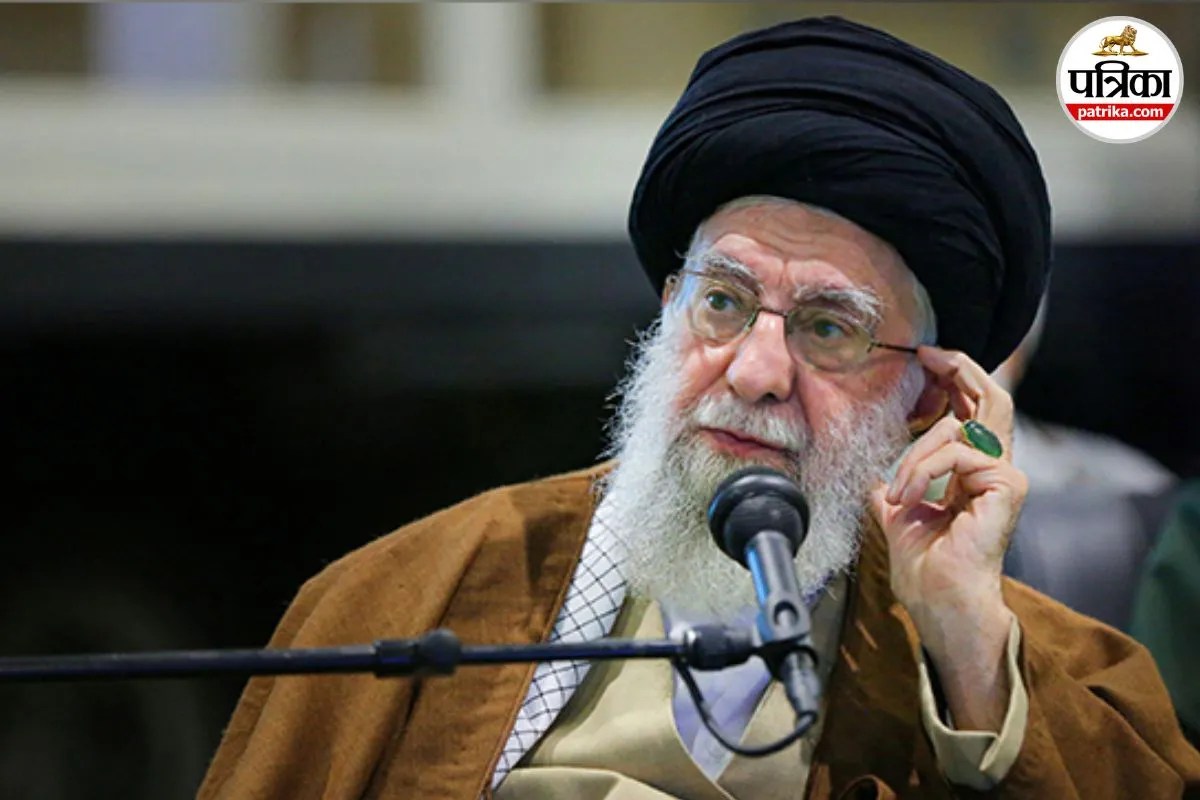
The physical preservation of a regime’s ideological anchor is not merely a matter of ritual; it is a critical function of state stability. Reports indicating that Iranian officials are hesitating to conduct a public funeral for Ali Khamenei—following his unconfirmed death or incapacitation—expose a catastrophic breakdown in the Islamic Republic's transition mechanics. This hesitation is not rooted in grief, but in a calculated assessment of three distinct operational risks: the vulnerability of the gathering to kinetic strikes, the potential for mass civil unrest, and the unresolved power struggle within the Assembly of Experts.
The Security Dilemma of Mass Assembly
In high-tension geopolitical environments, a state funeral represents the most significant security vulnerability a regime can face. The logistics of such an event require the simultaneous presence of the entire political and military elite in a single, predictable geographic coordinate. This creates a "decapitation opportunity" that the Iranian security apparatus—reeling from the intelligence failures that led to the assassination of Ismail Haniyeh in Tehran and the degradation of Hezbollah’s leadership—is currently unable to mitigate.
The decision to delay or obfuscate the status of the Supreme Leader is a defensive maneuver designed to prevent a "security vacuum" where the following variables converge:
- Intelligence Saturation: The Iranian Intelligence Ministry (VAJA) and the IRGC Intelligence Organization are currently operating under the assumption that their internal communications are compromised. A public funeral requires months of coordination across agencies that no longer trust one another.
- Air Defense Limitations: Providing a persistent, impenetrable "iron dome" over a massive funeral procession in Tehran is technically unfeasible against advanced stealth assets or loitering munitions. The failure to protect high-value targets in recent months suggests that the S-300 and Khordad systems have detectable gaps.
- The Martyrdom Paradox: While the regime thrives on the cult of martyrdom, the death of the Supreme Leader under suspicious or "weak" circumstances (such as a long-hidden illness or a failure to prevent internal sabotage) undermines the image of divine protection.
The Succession Architecture and Its Failure Points
The Islamic Republic’s constitution, specifically Articles 107 and 111, dictates that the Assembly of Experts must elect a successor. However, the theoretical framework of "Velayat-e Faqih" (Guardianship of the Jurist) is currently clashing with the pragmatic reality of military-economic control. The delay in funeral proceedings suggests that the Assembly has reached a deadlock.
The power struggle is defined by a tri-polar competition:
- The Hereditary Contender: Mojtaba Khamenei represents continuity but lacks the clerical credentials traditionally required. His ascension would transform the "Revolutionary" state into a de facto monarchy, risking the alienation of the traditional religious establishment in Qom.
- The IRGC Technocrats: The Islamic Revolutionary Guard Corps prefers a weak clerical figurehead who will allow the military to manage the country’s vast economic holdings (the bonyads) without ideological interference.
- The Pragmatists: A dwindling faction of veteran politicians seeking a "Leadership Council" rather than a single Supreme Leader, aiming to distribute risk and power.
The inability to announce a successor before the burial is a tactical error. In the history of the Islamic Republic, the transition from Khomeini to Khamenei in 1989 was choreographed with surgical precision. The current silence indicates that the "Succession Blueprint" has been shredded by internal factionalism.
Social Volatility and the Crowd Control Function
The Iranian state views its population as a primary threat vector. Following the "Woman, Life, Freedom" protests, the social contract is non-existent. A public funeral provides a legitimate reason for millions of people to take to the streets. While many would attend in mourning, the regime fears the "Crowd Inversion" phenomenon, where a state-sanctioned gathering is hijacked by dissidents.
The cost-benefit analysis of a public burial includes:
- Logistical Overload: Diverting the Basij and Law Enforcement Forces (FARAJA) to manage a funeral leaves the rest of the country’s critical infrastructure—oil refineries, government buildings, and communication hubs—vulnerable to localized uprisings.
- Optics of Dissent: In the age of satellite internet and social media, even a small pocket of protest within a funeral crowd becomes a global narrative. The regime cannot risk a "Ceausescu Moment," where a live broadcast captures a loss of control.
- The Psychological Threshold: An unburied leader is, in the eyes of the law, still the leader. By delaying the formal rites, the inner circle buys time to consolidate control over the state media and the military-industrial complex.
The Mechanistic Impact of a Hidden Death
When a central authority figure disappears without a formal succession, the state enters a period of "Administrative Entropy." This is characterized by a cessation of long-term strategic planning and a pivot to short-term survivalism.
The immediate casualties of this entropy are:
- Foreign Policy Paralysis: Negotiations regarding the nuclear program or regional proxy wars (the "Axis of Resistance") cannot proceed. No official has the mandate to sign a treaty or authorize a major military escalation without the Rahbar’s seal.
- Economic Speculation: The Iranian Rial is hyper-sensitive to political stability. The uncertainty surrounding Khamenei’s status triggers capital flight and hoarding, further destabilizing the domestic environment.
- Chain of Command Fragmentation: Local IRGC commanders may begin acting autonomously, seeking to secure their own regional interests in anticipation of a fractured central government.
The "Fear" mentioned in external reports is not an emotional state but an operational constraint. It is the realization that the infrastructure of the Islamic Republic was built around a singular personality, and the removal of that pillar without a pre-installed replacement risks a total structural collapse.
The strategic play for the Iranian deep state is now the "Stalin Model": maintain the illusion of life until the internal purge of rivals is complete. They will likely attempt to simulate the Leader's presence through pre-recorded messages or strictly controlled digital outputs until a consensus candidate is forced upon the Assembly of Experts. Only then will the "death" be formalized and the funeral risk be mitigated through a massive, preemptive security lockdown.