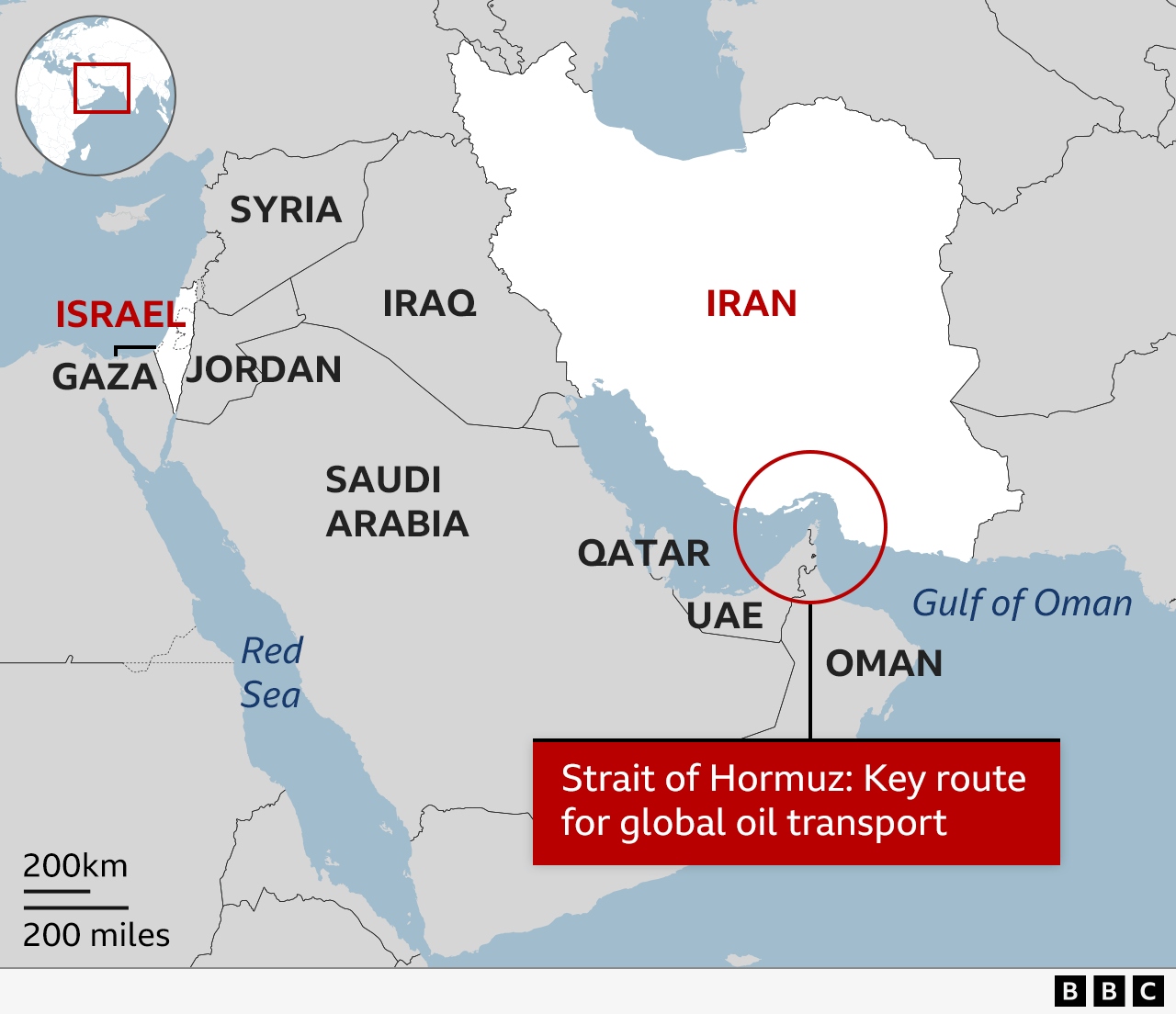
Energy markets are currently obsessing over a nightmare scenario that’s far more likely than anyone wants to admit. If the Strait of Hormuz closes, we aren't looking at a minor price spike or a week of nervous headlines. We're looking at a global economic freeze that could last half a year. The Pentagon recently dropped a bombshell by warning that clearing mines from this waterway would take at least six months. That’s a staggering timeline for a world that runs on just-in-time delivery and razor-thin oil inventories.
You’ve probably heard people say the U.S. is energy independent now. That’s a dangerous myth. While the States produce plenty of crude, oil is a global fungible commodity. If twenty percent of the world’s supply gets choked off at the Persian Gulf, prices in Texas or London will rocket regardless of where the local barrels come from. We’re talking about a logistical knot that the most powerful military on earth says they can't untie quickly. For a different look, check out: this related article.
Why clearing the Strait of Hormuz takes so long
The Pentagon’s six-month estimate isn't just bureaucratic padding. It’s a reflection of how mine warfare actually works in 2026. This isn't like the movies where a diver snips a red wire and everyone goes home. Modern sea mines are smart. They can sit on the ocean floor and wait for a specific acoustic signature of a tanker before detonating. Some are "rising" mines that stay deep until they detect a target above.
When a hostile power drops a few hundred of these into a narrow shipping lane, the entire area becomes a "no-go" zone for insurance companies. No captain is going to sail a $200 million vessel through a suspected minefield. To clear it, the Navy has to use specialized ships, autonomous underwater vehicles, and dolphins. Yes, actual dolphins are still part of the toolkit because their sonar outclasses almost anything we’ve built. Similar reporting on this trend has been published by Financial Times.
Each square mile has to be swept multiple times. If you miss just one mine, the shipping lane stays closed. The math is brutal. The strait is about 21 miles wide at its narrowest point, but the actual shipping lanes are only two miles wide in each direction. It’s a tiny target that’s incredibly easy to foul and painfully slow to scrub clean.
The oil price frustration is hitting a breaking point
Washington is visibly annoyed. You can see it in the briefings. There’s a growing sense of frustration over high oil prices because they act like a regressive tax on every single person with a car or a heater. High energy costs bleed into the price of groceries, plastic, and shipping. When the Pentagon talks about a six-month closure, they’re sending a signal to markets that the "strategic reserve" won't be enough to bridge the gap.
Current global demand is hovering around 100 million barrels per day. The Strait of Hormuz handles roughly 20 million of those. If that flow stops, you can't just flip a switch in North Dakota or Guyana to make up the difference. Most spare capacity sits in the very countries that would be blocked by the closure. It’s a circular trap.
Investors often underestimate the psychological impact of a prolonged shutdown. Markets can handle a shock. What they can't handle is "indefinite." A six-month timeline means two full fiscal quarters of supply chain chaos. That’s long enough to trigger a global recession, kill off consumer spending, and force central banks to hike rates even if the economy is crashing. It's a stagflationary "perfect storm."
Misconceptions about military intervention
Many people think the U.S. Navy can just "patrol" the mines away. It doesn't work that way. A destroyer is great at shooting down a missile or a drone, but it’s vulnerable to a $20,000 mine. To actually clear the path, you need slow, clunky minesweepers that are essentially sitting ducks for shore-based anti-ship missiles.
This creates a secondary problem. You can't start the six-month clock on mine clearing until you’ve neutralized the coastal batteries on the Iranian side. That means an actual war, not just a "cleanup operation." Any politician promising a quick fix to energy prices in this scenario is lying to you. The logistics of naval warfare are slow, methodical, and incredibly dangerous.
The ripple effect on LNG and food security
It isn't just about the oil. Qatar sends massive amounts of Liquefied Natural Gas (LNG) through that same narrow gap. If those shipments stop, Europe’s energy security crumbles. After the shift away from Russian pipelines, the EU is more dependent on Gulf LNG than ever before.
- Fertilizer production stops when gas prices get too high.
- Agriculture costs skyrocket without fertilizer.
- Food prices follow energy prices with a three-month lag.
Basically, the "six-month" warning is a warning about global hunger and industrial collapse, not just expensive gas at the pump.
What you should actually watch for
Don't look at the daily price fluctuations. Look at the insurance premiums for tankers. When Lloyd’s of London starts marking the Persian Gulf as a "listed area," the real trouble begins. That’s the first domino.
Second, keep an eye on the "dark fleet." These are the older tankers that operate outside of standard regulations to move sanctioned oil. If these ships start avoiding the strait, you know the threat level is genuine. They usually have a higher risk tolerance than commercial fleets, so their movements are a great "canary in the coal mine."
Third, check the status of the East-West Pipeline in Saudi Arabia. It’s one of the few ways to bypass the strait, but its capacity is limited. It can only handle about 5 million barrels per day. It’s a band-aid on a gunshot wound. If that pipeline is at max capacity, the world is already in deep trouble.
Preparing for the fallout
Most people wait for the news to tell them there’s a crisis. By then, it’s too late to do anything about it. If you're running a business or managing a portfolio, you need to assume that "energy security" is a fragile illusion.
Diversify your supply chains away from regions that depend heavily on Gulf oil. This means looking at suppliers in the Americas or North Sea. It’s more expensive now, but it’s cheaper than a six-month total shutdown.
Hedge your energy exposure if you're in a transport-heavy industry. Don't play the "it won't happen" game. The Pentagon is telling us the timeline for a reason. They're setting expectations. When the military says something will take six months, it usually means they hope it doesn't take a year.
Stop thinking about the Strait of Hormuz as a geopolitical talking point and start treating it as a single point of failure for the global economy. The frustration in D.C. is real because they know they have very few moves left on the board. You should act accordingly. Check your contracts for "force majeure" clauses. Review your fuel surcharges. Get ready for a world where the most important waterway on earth is a parking lot for half a year.