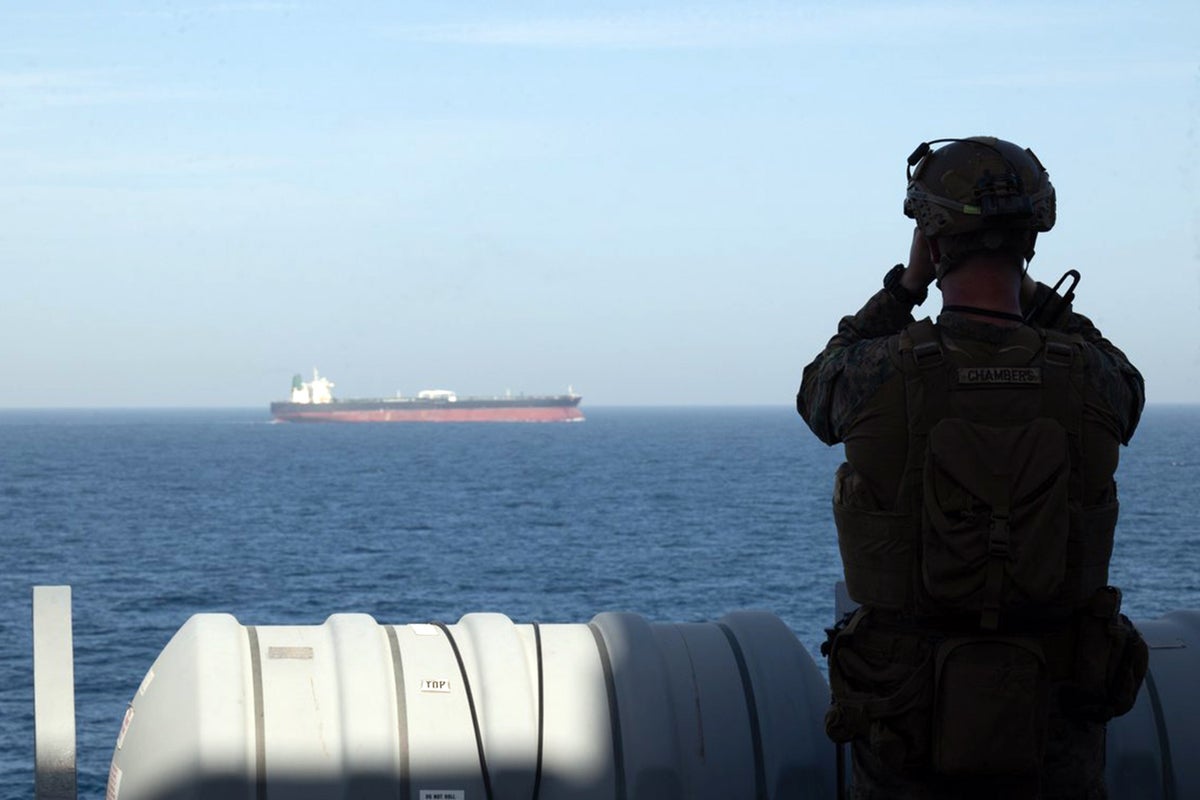
Energy analysts love a good map. They point to the twenty-one-mile-wide throat of the Strait of Hormuz and call it the world’s most dangerous chokepoint. They obsess over the twenty million barrels of oil flowing through it daily. They sketch out elaborate "alternative routes" across the desert as if building a pipeline is as simple as drawing a line on a napkin.
The consensus is lazy. It suggests that if we just build enough bypasses—East-West pipelines in Saudi Arabia, Habshan-Fujairah links in the UAE, or even theoretical canals through Iran—the global energy market can finally breathe easy.
They are wrong.
The frantic search for "bypass routes" isn't a solution; it is a multi-billion-dollar distraction. These alternatives are economically fragile, operationally insufficient, and strategically irrelevant. We aren't just looking for the wrong solutions—we are asking the wrong questions.
The Myth of Pipeline Redundancy
The most common "solution" cited is the Saudi East-West Pipeline (Petroline). It stretches 745 miles from the Abqaiq plants to the Red Sea. On paper, it has a capacity of five million barrels per day. Proponents argue that in a crisis, Saudi Arabia simply flips a switch and sends the oil west.
This is a fundamental misunderstanding of how global logistics actually function.
First, capacity is not the same as availability. Much of that space is already utilized for domestic refineries or existing long-term contracts. Second, the Red Sea is not a "safe" destination. It is merely a different chokepoint. Between the Bab el-Mandeb strait and the Suez Canal, you are simply trading one kinetic risk for another. Ask any shipping insurance underwriter about the cost of moving crude through the Red Sea during a regional flare-up. The premium spikes don't disappear; they just change currency.
Furthermore, pipelines are static targets. A tanker in the open ocean is a moving dot on a radar. A pipeline is a fixed coordinate that stays in the same place for fifty years. In modern warfare, high-precision drones and cruise missiles make "bypassing" a physical chokepoint a moot point if the infrastructure at either end of the pipe is vulnerable.
The Volume Fallacy
Let’s look at the math. The Strait of Hormuz handles roughly 20% to 30% of total global liquid petroleum consumption. To "bypass" this, you would need to recreate the world’s largest shipping lane on land.
Even if you combined every single operational bypass in the region:
- Saudi Petroline: ~5 million bpd
- Abu Dhabi’s ADCOP: ~1.5 million bpd
- Iraq’s Ceyhan line (when it’s actually working): ~0.6 million bpd
You are still short by over 13 million barrels per day. That’s a deficit larger than the entire daily production of the United States. You cannot "alternative route" your way out of a 65% shortfall. The global economy doesn't just need some oil; it needs all of it to maintain price stability.
When analysts talk about "mitigating risk" through these routes, they are offering a band-aid for a decapitation. If Hormuz closes, the price of Brent crude doesn't go to $120. It goes to a level where the "price" ceases to be the primary concern, replaced by sovereign rationing and the total collapse of just-in-time supply chains.
The Infrastructure Trap
I have seen governments sink billions into "strategic" infrastructure that serves no purpose other than optics. These bypass routes are the ultimate vanity project.
Take the UAE’s Habshan-Fujairah pipeline. It’s a feat of engineering, capable of moving 1.5 million barrels a day to the Gulf of Oman, successfully bypassing the Strait. But look at the cost-benefit analysis. The tolls and operational costs of moving oil through that pipe, rather than just sailing it through the Strait, add a permanent tax on every barrel.
In a world of thin margins and the "lower for longer" reality of the energy transition, these bypasses are white elephants. They are built for a "Black Swan" event that may never happen, while dragging down the competitiveness of the producer every single day they are in operation.
We are obsessed with the "what if" of a physical blockade while ignoring the "what is" of economic efficiency.
The Digital Chokepoint Nobody Mentions
While everyone stares at satellite photos of Iranian speedboats, the real threat to the flow of energy isn't a physical barrier. It’s the code running the pumps.
Modern oil and gas infrastructure is a massive, interconnected network of Industrial Control Systems (ICS) and SCADA networks. You don't need to sink a tanker in the Strait of Hormuz to stop twenty million barrels of oil. You just need to encrypt the logic controllers at the pumping stations.
The focus on physical "bypass routes" assumes a 20th-century conflict. In a 21st-century conflict, a pipeline is just a long, expensive piece of metal that won't move a drop if the software is compromised. Why aren't we spending that "bypass" money on air-gapping critical infrastructure or building redundant analog overrides? Because "cyber-resilience" doesn't look as good in a press release as a massive new terminal in Fujairah.
The Hubris of Natural Gas
The conversation usually focuses on oil, but the Qatar-led LNG market is even more trapped. You cannot put LNG in a standard oil pipeline. To bypass Hormuz for gas, you need massive Liquefaction-to-Pipe-to-Regasification infrastructure that simply does not exist.
The world’s dependence on Qatari gas for the energy transition means that for Europe and Asia, the "alternative route" is effectively non-existent. There is no plan B for the North Field. If you are an investor betting on "energy security" through Middle Eastern bypasses, you are ignoring the fact that the most critical transition fuel is the most vulnerable of all.
Stop Asking "How Do We Get Around It?"
The question itself is flawed. It assumes that the Strait of Hormuz is a problem to be solved with more plumbing. It isn't. It is a fundamental reality of geography that must be managed through diplomacy and naval deterrence, not civil engineering.
Every dollar spent on a bypass pipeline is a dollar not spent on diversifying the energy mix or hardening existing ports against asymmetric threats. We are trying to build a back door to a house that is built on a cliff. Even if you get out the back door, you’re still falling.
Instead of cheering for more pipelines, we should be admitting the uncomfortable truth: There is no "bypassing" the Middle East's primary artery. We are tethered to that twenty-mile stretch of water, and no amount of desert steel will change that.
The "alternative route" is a myth sold by contractors to nervous politicians. If Hormuz shuts down, the lights go out. Period.
Accept the vulnerability. Stop building the bypasses. Start building the resilience to survive the shock when it inevitably comes.