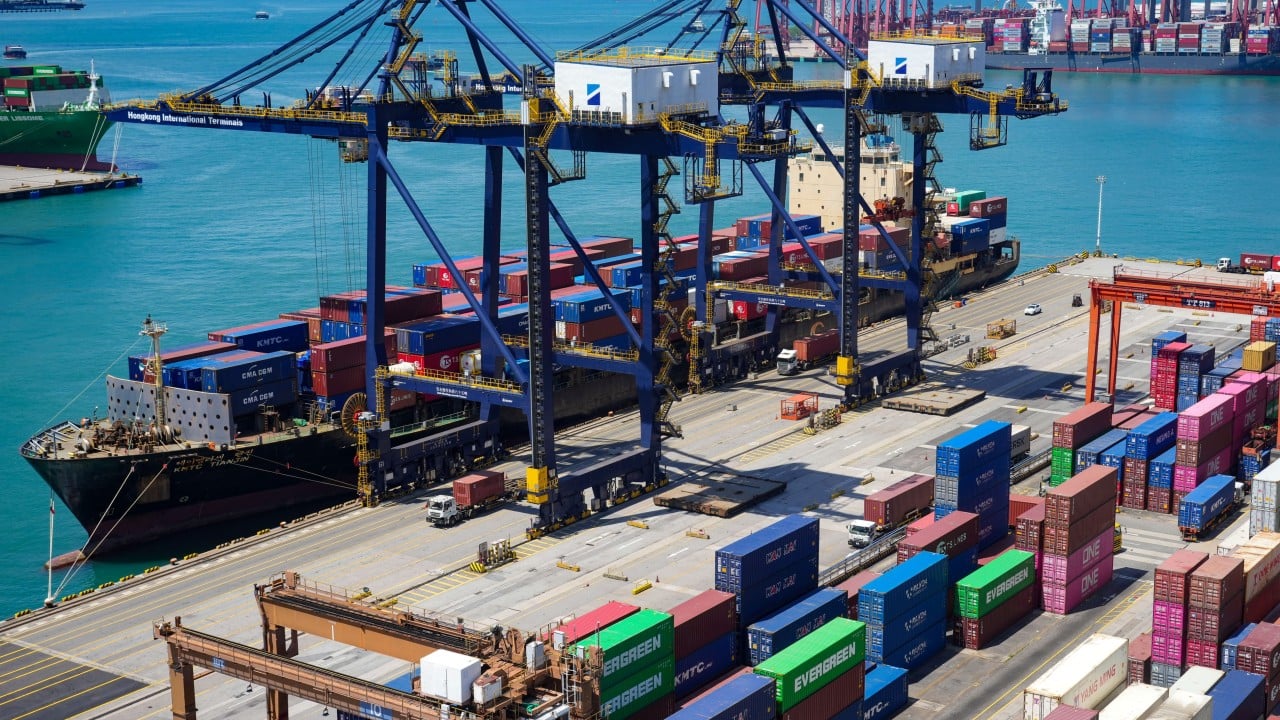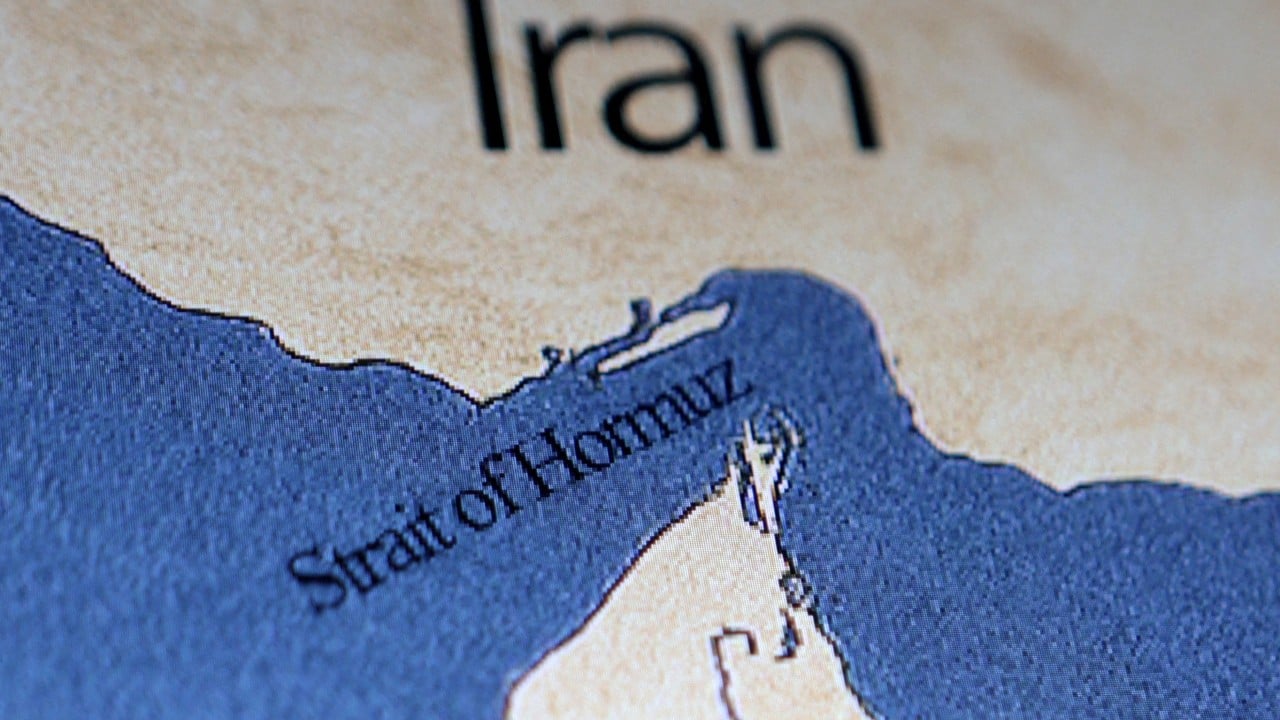
The headlines are predictable. The moment a drone buzzes near the Persian Gulf or a politician in Tehran mentions the word "chokehold," the financial press enters a state of controlled hysteria. They point to the map. They circle the 21-mile-wide ribbon of water known as the Strait of Hormuz. They tell you that if Iran closes the gate, the global economy collapses, oil hits $250 a barrel, and Asia goes dark.
They are wrong.
This "oil shock" narrative is a relic of 1970s geopolitical anxiety, recycled by analysts who prefer map-staring to market mechanics. The idea that the Strait of Hormuz is an off-switch for the world’s energy supply is a myth. It ignores the reality of strategic reserves, the shifting geography of demand, and the cold, hard fact that Iran needs that water open more than the West does.
The Geography of Fear vs. The Reality of Flow
The standard argument relies on a single, terrifying statistic: roughly 20 to 30 percent of the world’s total liquid petroleum consumption passes through that narrow passage daily. If the flow stops, the math says we starve.
But markets don't work on static math. They work on elasticity and anticipation.
First, let’s address the physical impossibility of a permanent "closure." You don't just "close" a body of international water like a garage door. To actually stop transit, Iran would need to maintain a sustained, high-intensity naval blockade against the combined naval power of the U.S. Fifth Fleet and its allies. History shows that "Tanker Wars" (like those in the 1980s) result in higher insurance premiums and diverted routes, not a total cessation of trade. Even at the height of the 1984–1988 conflict, oil exports from the Gulf dropped by only about 25 percent, and that was before the advent of modern pipeline workarounds.
The Pipeline Escape Hatch
The "Hormuz is the only way out" crowd conveniently forgets that the Middle East has spent the last four decades building back doors.
- The East-West Pipeline (Petroline): Saudi Arabia can move roughly 5 million barrels per day (mb/d) across its landmass to the Red Sea, bypassing Hormuz entirely.
- The Abu Dhabi Crude Oil Pipeline: The UAE can bypass the Strait to deliver 1.5 mb/d to the port of Fujairah on the Gulf of Oman.
- The Iraq-Turkey Pipeline: While often plagued by regional politics, the capacity exists to shift northern flows toward the Mediterranean.
When you factor in these bypasses, the "unreachable" oil trapped behind the Strait shrinks significantly. We aren't looking at a total blackout; we are looking at a logistical headache. A headache isn't a heart attack.
The Asian "Victim" Fallacy
The competitor's piece argues that Asia—specifically China, India, and Japan—faces an existential threat because they are the primary customers of Gulf crude. This ignores the most basic rule of 21st-century energy: the buyer has the leverage.
China is not a passive victim. It is the world’s largest opportunistic buyer. In the event of a Hormuz disruption, Beijing wouldn't just sit and watch its factories stop. It would do two things:
- Tap the SPR: China’s Strategic Petroleum Reserve is a black box, but estimates suggest it holds enough to cover 90 days of imports.
- Pivot to Russia and Central Asia: A Gulf crisis is a windfall for Moscow and the "Stans." Pipelines like the ESPO (Eastern Siberia-Pacific Ocean) would run at absolute maximum capacity.
India, similarly, has become a master of navigating "sanctioned" or "distressed" oil. If Middle Eastern supply is choked, the arbitrage opportunities elsewhere become too lucrative to ignore. The "shock" is absorbed by a global grid that is far more interconnected and redundant than it was during the Carter administration.
Why Iran Can’t Afford to Win
Here is the part the "insiders" won't tell you: A closed Strait of Hormuz is a suicide note for the Iranian economy.
Iran’s budget is a house of cards held together by oil and condensate exports. While they’ve become experts at "ghost fleet" shipping to circumvent sanctions, they still rely on the very waters they threaten to block. If the Strait is impassable, Iran cannot export its own product.
Furthermore, closing the Strait is an act of war not just against the U.S., but against China—Iran’s only significant economic lifeline. You don't bite the hand that buys your sanctioned oil. Tehran uses the threat of closure as a geopolitical lever precisely because the act of closure would destroy them. It is a weapon that breaks the moment you use it.
The "New Oil" Buffer
We also have to talk about the Permian Basin. In 1973, the U.S. was a desperate importer. Today, the U.S. is the world’s largest producer.
When prices spike due to "geopolitical risk premiums," the response from American shale is mechanical. The "drilled but uncompleted" (DUC) well inventory acts as a global shock absorber. High prices don't just hurt consumers; they act as a massive subsidy for U.S. production, incentivizing a surge in supply that eventually crashes the price back down.
The market has a "memory" of these threats. This is why, in recent years, when tankers are seized or refineries are attacked, the "Hormuz Premium" on a barrel of Brent usually lasts about 48 hours before traders realize the world isn't actually ending.
The Real Risk Nobody Is Talking About
If you want to worry about something, stop looking at the Strait of Hormuz and start looking at the Strait of Malacca or the Bab el-Mandeb.
The Strait of Hormuz is a "point of origin" problem. If it closes, the oil is still in the ground; it just takes a different, more expensive path to get out. But the Bab el-Mandeb (off the coast of Yemen) and the Strait of Malacca (near Singapore) are "point of transit" bottlenecks. A disruption there creates a global shipping backlog that affects not just oil, but the entire containerized supply chain—semiconductors, car parts, grain, and medicine.
The obsession with Hormuz is a symptom of "Generational Lag." We are fighting the last war’s energy crisis. In a world of renewables, EVs, and American energy independence, the Middle East's ability to hold the world hostage is at an all-time low.
Dismantling the "People Also Ask" Nonsense
"Will oil hit $200?"
Only in a vacuum where supply is static and demand is infinite. In the real world, $200 oil triggers an immediate global recession, which destroys demand, which causes prices to crater. The "cure" for high prices is high prices.
"Can the U.S. Navy keep it open?"
The U.S. Navy doesn't need to keep the whole Strait "open" in a traditional sense. They only need to keep a narrow corridor clear and provide aegis for convoys. Modern electronic warfare and mine-sweeping tech make a 1915-style blockade impossible.
"What about the impact on the dollar?"
Petrodollar doomsayers have predicted the end of the greenback every time a Middle Eastern king sneezes. The dollar’s strength isn't tied to the Strait; it’s tied to the lack of a viable alternative. You aren't going to see the world switch to the Yuan because a tanker got stuck in Bandar Abbas.
Stop listening to the "shocks" and "chokeholds" rhetoric. It’s designed to sell newsletters and pump volatility. The Strait of Hormuz is a narrow, dangerous piece of water, but it is no longer the jugular of the world economy. It’s a limb. And the world has learned how to use a tourniquet.
The next time you see a "Hormuz Crisis" headline, look at the spread between spot prices and futures. If the smart money isn't panicking, you shouldn't either. The real power in the energy market has moved from the guys who control the water to the guys who control the tech.
Sell the fear. Buy the flow.