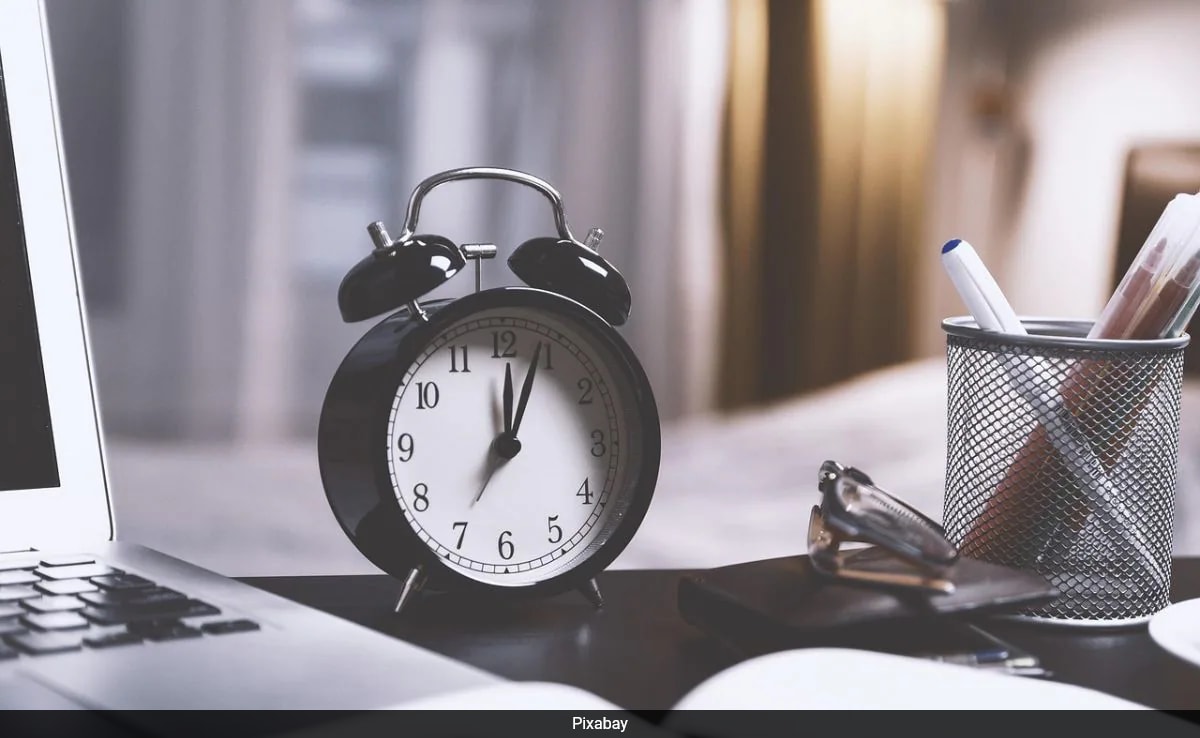
The alarm clock on Sarah’s bedside table doesn't care about the Earth’s rotation. At 6:30 a.m., it shrieks with the same digital indifference it showed forty-eight hours ago. But today, the room is a tomb. Two days after the clocks "sprang forward," Sarah is navigating a phantom limb of time. She reaches for a glass of water, her coordination frayed by a sixty-minute theft she never agreed to. Outside, the world is draped in a stubborn, pre-dawn ink.
She isn't alone in this haze. Across the United States, millions of people are currently participating in a massive, biannual experiment in sleep deprivation. We treat the transition to Daylight Saving Time (DST) as a quirky calendar event—a minor tax paid for the promise of sun-drenched summer evenings. In reality, it is a violent disruption of the biological clock, a relic of wartime industry that has outlived its purpose and started collecting a debt in human health.
The debate in Congress "ticks on," as the headlines say, but for Sarah and the rest of us, the debate isn't about policy. It’s about the heart.
The Ghost of a War Effort
We often blame Benjamin Franklin for this. We shouldn't. While he once jokingly suggested Parisians get out of bed earlier to save on candles, the actual machinery of DST was forged in the desperation of World War I. Germany first adopted the shift to conserve coal; the United Kingdom and the United States followed suit to power the engines of industry.
It was a math problem. If the sun stayed up longer while the factories were open, we used less artificial light. Simple. Logical. Efficient.
But the math changed. Our modern lives are illuminated by LEDs and powered by air conditioners that hum louder as the afternoon sun lingers. The energy savings that once justified the shift have dwindled to almost nothing. In some studies, the shift actually increases energy consumption because we spend those extra "light" hours cooling our homes or driving to the park. We are clinging to a fossilized solution for a problem that no longer exists.
The Body’s Internal Rebellion
Inside Sarah’s brain, a tiny cluster of cells called the suprachiasmatic nucleus is screaming. This is the master clock. It relies on the blue-white light of dawn to reset itself every single day. When we lurch the clocks forward in March, we aren't just changing the time on the microwave. We are desynchronizing the body from the solar cycle.
Consider the data, stripped of its clinical coldness. On the Monday following the "spring forward," hospitals consistently report a spike in heart attacks. Not a gentle increase. A measurable, terrifying jump.
Why? Because the human heart is sensitive to the stress of sudden circadian shifts. Sleep isn't just "rest." It is a neurological car wash. When we shave off an hour, the brain’s cleaning process is interrupted. Blood pressure spikes. Cortisol levels rise. In the courtrooms, judges have been found to hand out harsher sentences on the Monday after the time change. On the highways, fatal car accidents increase as drowsy drivers drift across center lines.
Sarah feels this as a "brain fog," but for some, it is a literal life-or-death transition. We are forcing the entire population into a state of jet lag without ever leaving the ground.
The Sunshine Protection Act and the Permanent Trap
There is a movement to stop the switching. You’ve likely heard of the Sunshine Protection Act. It sounds poetic, doesn't it? It promises a world where the sun never sets before 5:00 p.m. in the winter. In 2022, the Senate passed it with a rare, unanimous shout.
But there is a catch. The bill doesn't propose staying on Standard Time—the time that actually aligns with our biology. It proposes making Daylight Saving Time permanent.
This is where the human element gets dark. Literally.
Imagine a Tuesday in January in a city like Indianapolis or Detroit. If we move to permanent DST, the sun wouldn't rise until nearly 9:30 a.m. Picture a seven-year-old child standing at a bus stop in total, pitch-black darkness. Picture the morning commute happening in the dead of night for months on end.
The American Academy of Sleep Medicine has been waving a frantic red flag about this for years. They argue that if we must pick one, it has to be Permanent Standard Time. Our bodies need light in the morning to wake up and darkness in the evening to wind down. Permanent DST gives us the opposite: a dark morning that keeps us groggy and a light evening that keeps us wired.
We tried this once. In 1974, during the energy crisis, the U.S. implemented permanent DST. It lasted only a few months. Public approval plummeted as parents grew terrified of sending their children into the dark morning streets. The experiment was scrapped before the year was out. We are currently flirting with a mistake we’ve already made.
The Invisible Stakes of the Afternoon
The pro-DST camp has a compelling argument, though. It’s the "afternoon economy." Grill manufacturers, golf course owners, and outdoor retailers love the extra hour of evening light. It encourages people to stop at the store on the way home, to hit a bucket of balls, to linger over a patio dinner.
There is a psychological lift to leaving the office and seeing the sun. It feels like a gift. It feels like freedom.
This is the tension at the heart of the debate. Do we prioritize the "feel-good" evening sun and the economic boost it brings, or do we prioritize the invisible, internal health of the citizenry? It is a choice between the commerce of light and the biology of sleep.
For Sarah, that evening sun feels like a lie. By 4:00 p.m., her energy is spent. She has been running on adrenaline and caffeine since the alarm went off. The sunlight hitting the pavement at 7:00 p.m. doesn't feel like a gift; it feels like a taunt. It’s an hour she can’t use because her body is already signaling for a collapse that won't come until the sun finally yields.
A Better Way to Wake Up
The solution isn't hidden in a complex algorithm. It’s written in our DNA. We are biological creatures living in a digital world, and we are losing our connection to the most basic rhythm of existence: the rising and setting of the sun.
If we abolished the switch and settled into Permanent Standard Time, the "stolen hour" would return. We would trade a few late-August sunset photos for a significant decrease in heart attacks, strokes, and workplace injuries. We would trade "afternoon commerce" for "morning clarity."
The debate in Washington often stalls because it treats time as a political football. Senators argue about tourism in Florida versus the dairy farmers in Wisconsin. But they rarely talk about the person lying awake at 2:00 a.m. because their internal clock is spinning, or the driver who blinks just a second too long on a Monday morning in March.
Sarah finally stands up. She opens the curtains. The sky is a bruised purple, slowly giving way to a pale, reluctant orange. She feels the weight in her limbs, the slight tremor in her hands. She wonders how many other people are looking out their windows right now, waiting for their internal gears to catch up with the numbers on the wall.
We have spent a century pretending we can command the sun. We’ve carved up the day to suit factories and fairways, convinced that we can ignore the ancient pulse of our own blood. But the body doesn't negotiate. It simply waits for us to stop playing with the clock and remember that light is not a commodity—it is a signal.
The sun finally clears the horizon, flooding Sarah’s kitchen with a sharp, cold light. She squinted against the glare. It is 7:15 a.m. according to the government. It is 6:15 a.m. according to her bones.
And the bones never lie.