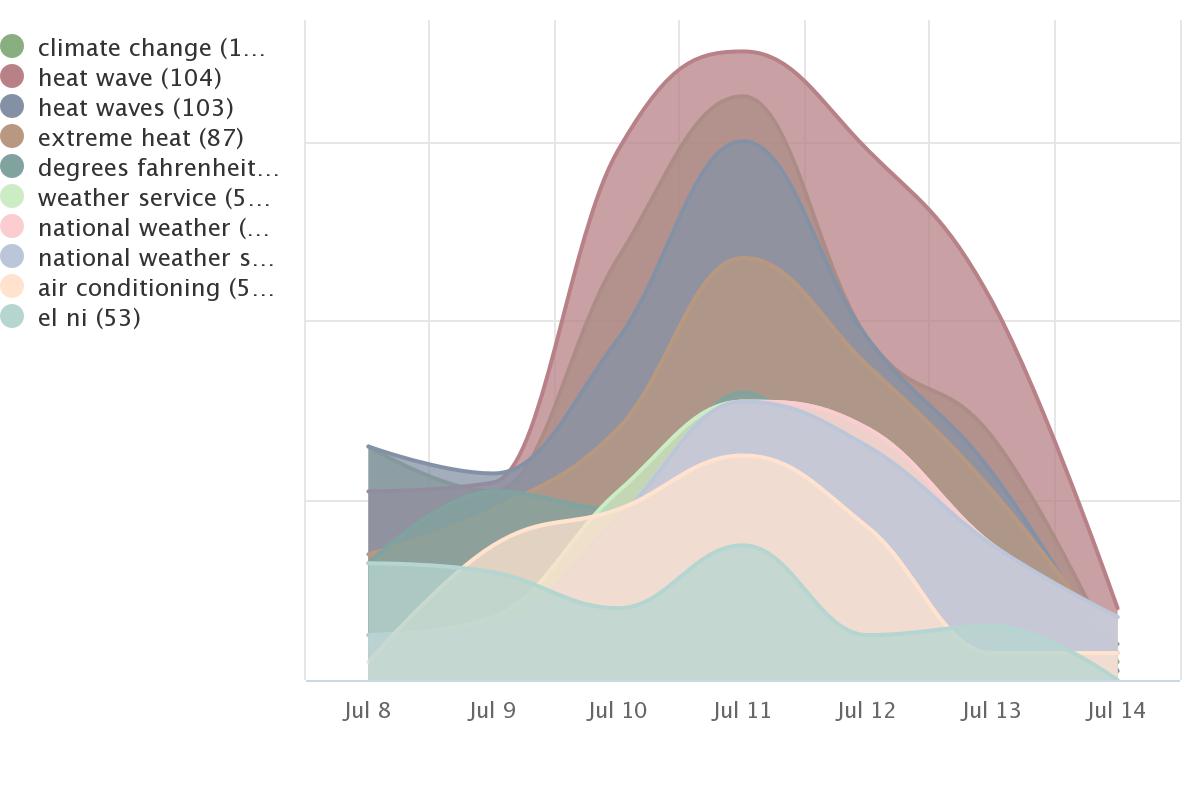
You probably didn't have "110 degrees in March" on your 2026 bingo card. Yet here we are. The American Southwest is currently baking under a heat dome that isn't just unusual—it’s historically defiant. On Thursday, parts of the Arizona desert hit 110°F, a temperature that didn't just nudge the record but absolutely shattered it. This isn't just a "hot spring day." It’s a wake-up call that the seasonal boundaries we used to rely on have officially dissolved.
We’re seeing records fall across Arizona and Southern California, with preliminary readings hitting 109°F in multiple spots. These numbers are roughly 30 degrees above what’s normal for this time of year. If you feel like the weather is gaslighting you, you’re right. The systems we built to handle heat are designed for June, July, and August. They aren't ready for triple digits while the spring flowers are still blooming.
Why the Seasonal Playbook is Broken
For decades, emergency management relied on a predictable rhythm. You prepare for floods in the spring, fires and heat in the summer, and storms in the fall. That playbook is now trash.
According to World Weather Attribution, a group of scientists who specialize in rapid climate analysis, this specific March heat wave was "virtually impossible" without human-induced warming. Their flash analysis shows that burning fossil fuels added between 4.7°F and 7.2°F to the temperatures we're feeling right now. Without that extra push, this would have been a warm, slightly uncomfortable week. Instead, it’s a public health emergency.
Former FEMA Director Craig Fugate has noted that we’re operating outside the "historical envelope." Our flood maps, heat records, and surge models are based on a world that no longer exists. When a heat dome like this parks itself over a region in March, it doesn't just make people sweat. It starts a chain reaction.
- Snowpack Erosion: In states like Colorado and Utah, this heat is eating the snowpack. That’s our water bank for the summer. When it melts too early, it runs off before we can capture it, leading to summer droughts.
- Dry Fuels: Vegetation that should be moist and growing is drying out. This sets the stage for an earlier and more aggressive wildfire season. We saw this in 2025 with the Palisades and Eaton fires, which became some of the costliest disasters on record.
- Human Adaptation: Our bodies haven't acclimated to the heat yet. In July, you know how to handle 110°F. In March, you’re still in "spring mode," making you more susceptible to heatstroke and exhaustion.
The Rising Cost of Extremes
It’s not just your imagination—the weather is getting weirder and more expensive. Data from NOAA shows the U.S. is breaking 77% more hot weather records now than we did in the 1970s. But it’s the "billion-dollar disaster" stat that should really grab you. The number of these massive, high-cost events has doubled in the last decade alone.
Last year, the Palisades and Eaton wildfires were the headline acts in a parade of disasters. This year, the Southwest heat wave is the early front-runner. We're no longer talking about "future" problems. We’re talking about infrastructure that can't keep up. In Phoenix, 2024 was the hottest summer on record, yet they actually managed to bring heat-related deaths down for the first time in a decade. How? By treating heat as a predictable disaster and moving resources—like cooling centers and hydration stations—into place before the sun came up.
But that success is fragile. In 2024, Maricopa County still saw over 600 confirmed heat deaths. A staggering 70% of indoor heat deaths happened in homes where the air conditioning was broken. This isn't just a weather problem; it’s a poverty and infrastructure problem.
The Nighttime Trap
One of the most dangerous parts of this new reality is what happens after the sun goes down. Usually, the desert provides a "nighttime reset" where temperatures drop and bodies can recover. Climate change is killing that reset.
Recent studies show that nighttime highs are becoming 200 times more likely due to global warming. When it stays 85°F or 90°F at night, your heart never gets a break. It has to keep working overtime to cool you down. This "cumulative heat stress" is what actually kills people, especially the elderly and those without functional cooling.
What You Need to Do Now
Waiting for June to "get ready" for summer is a losing strategy. If you live in the Southwest or any region seeing these early spikes, you need to pivot your planning today.
- Audit Your AC Now: Don't wait for the first 110-degree day in June to see if your unit works. Test it today. If it needs repairs, get them done while technicians aren't backlogged with emergency calls.
- Hydrate Before You’re Thirsty: This sounds like a cliché, but in early-season heat, your thirst mechanism often lags behind your actual hydration needs. If you’re hiking or working outside in this March heat, you need double the water you think you do.
- Check Your Neighbors: Most heat deaths are discovered during "welfare checks." If you know an elderly neighbor or someone living alone, a two-minute text or knock on the door can literally be life-saving when a heat dome hits.
- Watch the Snowpack: If you’re in a region dependent on runoff, start looking at water conservation measures now. This March heat is essentially "spending" our summer water early.
The "new normal" isn't a plateau; it’s a staircase, and we’re still climbing. This March heat isn't a one-off anomaly. It’s the new baseline for a world that is fundamentally warmer than the one your parents grew up in. Adjust your expectations and your preparation accordingly.