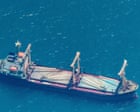
Somali piracy never actually died. It just went into a long, quiet hibernation while the world looked the other way. If you thought the waters off the Horn of Africa were safe because of a few years of quiet, the last seven days just shattered that illusion. Three vessels hijacked in a single week isn't a fluke. It's a coordinated resurgence that proves the pirates are back, they're hungry, and they've found the perfect window of opportunity to strike.
The shipping industry is currently a mess. Between the chaos in the Red Sea and the diversion of naval assets, the Indian Ocean has become a massive, unguarded playground for criminal networks. You can't just ignore three major incidents in such a short window. This is a systemic failure of maritime security that’s going to cost lives and billions in ransom money if we don't wake up immediately.
Why the Indian Ocean is Burning Again
For years, the narrative was that Somali piracy was "suppressed." We had international task forces like Operation Atalanta and the Combined Maritime Forces (CMF) patrolling the coast. Armed guards became standard on most merchant ships. But security is expensive. Companies started getting lazy. They stopped hiring private security teams to save on margins. They started taking closer routes to the coast to save on fuel.
Then the Houthi rebels started firing missiles in the Red Sea.
This created a massive vacuum. Most of the heavy-hitting naval vessels that used to keep an eye on the Somali basin were pulled north to deal with drone strikes and ballistic missiles. The pirates aren't stupid. They watched the monitors, saw the warships leave, and realized the "policemen" were gone. What we're seeing now is a classic opportunistic strike. They know the response times are slower. They know the focus is elsewhere.
Three Hijackings in Seven Days is a Crisis
Let’s look at the numbers because they’re terrifying. We went from almost zero successful hijackings for years to three in a week. That isn't a gradual increase; it's an explosion. These aren't just small fishing boats being harassed for food or fuel. These are coordinated boardings of significant vessels.
The pirates are using "mother ships"—usually hijacked dhows or fishing vessels—to launch smaller skiffs hundreds of miles away from the Somali coast. This allows them to strike deep in the Indian Ocean where merchant ships feel a false sense of security. If you're a captain out there right now, you aren't just looking for missiles from the north. You’re looking for fast-moving skiffs appearing out of the blue in the middle of nowhere.
The psychological impact on crews is massive. Most sailors today haven't lived through the 2008-2011 era when hundreds of hostages were held in horrific conditions on the Somali coast. We’re about to see a whole new generation of mariners traumatized because shipping companies didn't want to pay for extra security.
The Myth of the Desperate Fisherman
One of the biggest mistakes people make when talking about Somali piracy is romanticizing it. You’ll hear stories about poor fishermen protecting their waters from illegal trawlers. While illegal fishing is a real problem in Somalia, these hijackers aren't humble fishermen.
These are sophisticated criminal syndicates. They have investors in Dubai, Nairobi, and London. They have negotiators who understand maritime law and insurance better than most lawyers. They have high-end GPS equipment, satellite phones, and heavy weaponry.
This is a business model. A hijacked ship is a multi-million dollar asset. The "investors" put up the money for the fuel, the weapons, and the khat (a local stimulant) for the boarders. If the hijacking is successful, they get a massive return on their investment when the ransom is paid. It's venture capital for criminals. When you have three successful hits in a week, the word gets out. Every warlord and financier in central Somalia is currently looking for a boat and a crew to get in on the action.
Security Failures and the High Cost of Greed
The shipping industry has a short memory. We saw the Best Management Practices (BMP5) guidelines get treated as optional suggestions rather than life-saving rules.
- Vessel Hardening: Many ships aren't even using razor wire anymore.
- Speed: To save fuel, ships are slowing down, making them sitting ducks for skiffs that can do 30 knots.
- Low Freeboard: Smaller ships with low decks are being sent through high-risk areas without any additional protection.
I've talked to security consultants who say their phones are finally ringing again, but it might be too late for the crews currently being held. Once a ship is anchored off the coast of Puntland or Galmudug, you can't just send in the Marines. You’re looking at months, sometimes years, of grueling negotiations while the crew rots in the heat.
Somalia's Internal Chaos is Fueling the Fire
You can't separate what happens at sea from what happens on land. Somalia is currently dealing with a massive offensive against Al-Shabaab, political infighting between the federal government and regional states, and a persistent drought.
The local authorities in places like Eyl and Harardhere—traditional pirate dens—don't have the resources or the will to stop the pirates. In some cases, the pirates are the only people bringing money into these towns. They pay "taxes" to local leaders. They buy supplies from local shops. They are the local economy.
When the central government is busy fighting a civil war and the international community is distracted by Ukraine and Gaza, the pirates have a free hand. They can bring a hijacked ship right to the shore, drop anchor, and start the clock on a ransom demand with zero fear of a ground raid.
What Happens When Ransoms Start Flowing
The danger of these three recent hijackings isn't just the immediate loss of the ships. It's the "proof of concept." If these groups get paid, it triggers a gold rush.
In the late 2000s, we saw ransoms go from $50,000 to $5 million or $10 million per ship. That kind of money buys a lot of loyalty and a lot of weapons. It also funds other illicit activities, including terrorism. There’s a very thin line between the pirate gangs and the extremist groups operating in the region. They might not share the same ideology, but they definitely share the same bank accounts when it suits them.
We’re also looking at a massive spike in insurance premiums. The "Kidnap and Ransom" (K&R) insurance market is about to get much more expensive. Those costs don't stay with the shipping companies. They get passed down to you. Every gallon of gas and every plastic toy shipped through the Indian Ocean is about to get a "piracy tax" added to the price tag.
The Red Sea Distraction is a Deadly Trap
The world's naval power is currently bottlenecked in the Bab el-Mandeb strait. Everyone is terrified of Houthi drones hitting a tanker and causing an environmental disaster. This is a legitimate fear, but it’s created a "blind spot" in the wider Indian Ocean.
We need a multi-layered approach. You can't just protect the entrance to the Red Sea and leave the rest of the ocean to the wolves. The international community needs to re-establish the High Risk Area (HRA) boundaries that were prematurely shrunk a few years ago.
The Reality of Private Maritime Security
For a while, the presence of Private Maritime Security Companies (PMSCs) was the single biggest deterrent. Not a single ship with a four-man armed team was ever successfully hijacked. Not one.
But then the "quiet years" happened. Ship owners started looking at the $30,000 to $50,000 cost per transit for a security team and decided it wasn't worth it. They gambled. And this week, three of them lost that gamble.
If you're operating a vessel in these waters, you need to stop waiting for a destroyer to save you. It’s not coming. The navies are busy. You have to take responsibility for your own deck. That means armed guards, strict adherence to BMP5, and staying as far away from the Somali coast as possible, even if it adds three days to your voyage and costs more in fuel.
Immediate Steps for Maritime Safety
If you're involved in maritime logistics or ship management, the "wait and see" approach is officially dead. The resurgence is here.
- Re-evaluate the High Risk Area: Don't follow the outdated maps. If you're within 500 nautical miles of the Somali coast, you're in the red zone.
- Bring Back the Guards: The cost of an armed security team is a fraction of the cost of a hijacked hull and a multi-million dollar ransom.
- Drill the Crew: Most crews are rusty. They need to know exactly what to do when a skiff is spotted—getting to the citadel (the armored safe room) within seconds is the difference between freedom and years in a Somali cage.
- Monitor Intelligence Feeds: Use services like the UKMTO (United Kingdom Maritime Trade Operations) and MSCHOA (Maritime Security Centre – Horn of Africa). Don't ignore the warnings.
The pirates have shown their hand. They've proven that the Indian Ocean is open for business again. The only question now is whether the shipping industry is going to keep making it easy for them or if we’re going to lock the doors before the next ship disappears. Stop treating this like a minor spike in crime. It's a full-scale return of a maritime nightmare.