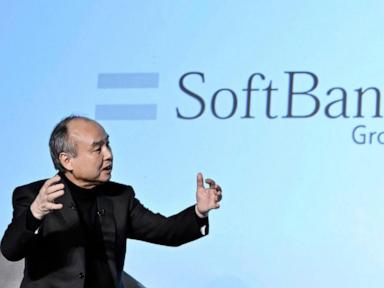
Masayoshi Son isn't just back; he’s currently rewriting the playbook on how to survive a tech winter and emerge as the dominant force in the next era of computing. If you thought SoftBank was a relic of the WeWork era, the latest fiscal results should shut that conversation down.
The Tokyo-based conglomerate just posted a staggering 5 trillion yen ($32 billion) annual net profit. That's a nearly five-fold jump from the previous year’s 1.15 trillion yen. While most investors are still trying to figure out how to spell "LLM," SoftBank is sitting on a gold mine. The secret? They didn’t just bet on AI. They effectively cornered the most important parts of its supply chain.
The OpenAI Bet That Changed Everything
Most of the noise right now centers on a single, massive win. SoftBank’s Vision Fund reported an annual profit of $46 billion, almost entirely fueled by its aggressive entry into OpenAI.
Let’s look at the math because it’s wild. SoftBank has committed over $64 billion to the ChatGPT creator. By March 2026, OpenAI’s valuation hit $852 billion. SoftBank’s stake, which sits around 13%, generated roughly $45 billion in unrealized gains this past fiscal year alone.
It’s hard to overstate how much this one company is carrying the entire portfolio. In the final quarter of the fiscal year, the Vision Fund notched $20 billion in gains. OpenAI accounted for basically all of that. Meanwhile, other older bets like Grab, Coupang, and Didi are still struggling or losing money. SoftBank is essentially an OpenAI tracker fund with a side of semiconductors.
Arm Holdings is the Real Power Move
While OpenAI gets the headlines, Arm Holdings is the engine room. SoftBank owns about 90% of the British chip designer, and that’s looking like the smartest move Son ever made. Arm’s market cap has crossed the $220 billion mark.
If you’re wondering why, it’s simple. You can't run these massive AI models without power-efficient chips. Whether it’s data centers in France or the next generation of smartphones, Arm’s architecture is the foundation. SoftBank’s strategy isn't just about the software (OpenAI); it’s about owning the "toll booth" for the hardware those programs run on.
Risk is Part of the Design
It’s not all sunshine and rising charts. S&P Global Ratings recently shifted SoftBank’s outlook to negative. Why? Because the company’s debt levels are ballooning. Son is borrowing heavily to fund these multi-billion dollar swings.
- Liquidity Concerns: When 98% of your fund's returns depend on one unlisted startup (OpenAI), things get dicey if the IPO market stays cold.
- Concentration Risk: If OpenAI hits a regulatory wall or loses its lead to Google or Anthropic, SoftBank’s balance sheet will look very different next year.
- Debt Load: SoftBank’s financial strength is currently rated around 4/10 by analysts, reflecting the "all-in" nature of their current strategy.
Building the Infrastructure of 2030
Son isn't stopping at software and chips. He’s currently in talks with French President Emmanuel Macron about a $100 billion AI data center initiative in France. This is about physical infrastructure.
AI requires an ungodly amount of electricity and cooling. By investing in data centers and even next-generation battery businesses in Japan, SoftBank is trying to own the entire stack. From the chip design to the model training and the physical building where the servers sit.
What This Means for Your Portfolio
You don't have to be a billionaire to see the pattern. SoftBank is pivoting away from the "growth at all costs" consumer apps that defined the first Vision Fund. They're moving toward the "picks and shovels" of the AI revolution.
If you're watching this from the sidelines, don't just look at the net profit. Look at the shift in where the money is going. SoftBank is divesting from Alibaba and Intel to double down on the specialized hardware and foundational models that make AI possible.
They’ve moved from being a venture capital firm to being an infrastructure play for the future of intelligence. It's high-risk, high-reward, and classic Masayoshi Son. Just don't expect a smooth ride—with this much concentration in OpenAI and Arm, volatility is the only guarantee.
Start by tracking the "loan-to-value" ratio of SoftBank’s holdings. If that climbs too high while OpenAI's valuation plateaus, that's your signal that the party might be over. For now, Son is the only person in the room who actually put his money where his mouth is regarding the "Singularity."
Keep an eye on the upcoming IPO for PayPay. It’s a domestic win in Japan that could provide the cash cushion SoftBank needs if their AI bets take longer to monetize than expected.
Don't mistake this for a safe bet. It’s a massive, leveraged wager on the future of humanity. If Son is right, $32 billion in profit is just the beginning. If he's wrong, it’s the biggest bubble in financial history. Either way, you can't afford to ignore it.