New Delhi finds itself backed into a geopolitical corner. For over two months, the Indian government has hosted ousted Bangladeshi Prime Minister Sheikh Hasina in an undisclosed safe house, turning a temporary transit stop into a permanent diplomatic nightmare. As the interim government in Dhaka formally signals its intent to seek her extradition, India is no longer just balancing ties with a neighbor; it is weighing the survival of its regional influence against the cold letter of a 2013 extradition treaty.
The request is being examined. That is the official line from the Ministry of External Affairs. But behind the bureaucratic phrasing lies a high-stakes gamble. If New Delhi hands Hasina over, it betrays a lifelong ally and sends a chilling message to other regional leaders who look to India for security. If it refuses, it risks alienating a new Bangladeshi leadership and a vengeful public, potentially pushing Dhaka straight into the arms of Beijing or Islamabad.
The Treaty That Became a Noose
The legal framework at the heart of this crisis is the 2013 Extradition Treaty between India and Bangladesh, ironically championed and amended by Hasina herself in 2016 to simplify the handover of criminals. Under the current terms, the "political nature" of an offense is not a valid ground for refusing extradition if the charges involve murder, internal security threats, or explosive substances.
Dhaka’s International Crimes Tribunal has already issued arrest warrants for Hasina and 45 others, citing "crimes against humanity" committed during the student-led uprising in July and August. This creates a specific legal trigger. Article 10 of the treaty states that the requested party "shall" extradite the individual if the offense is extraditable.
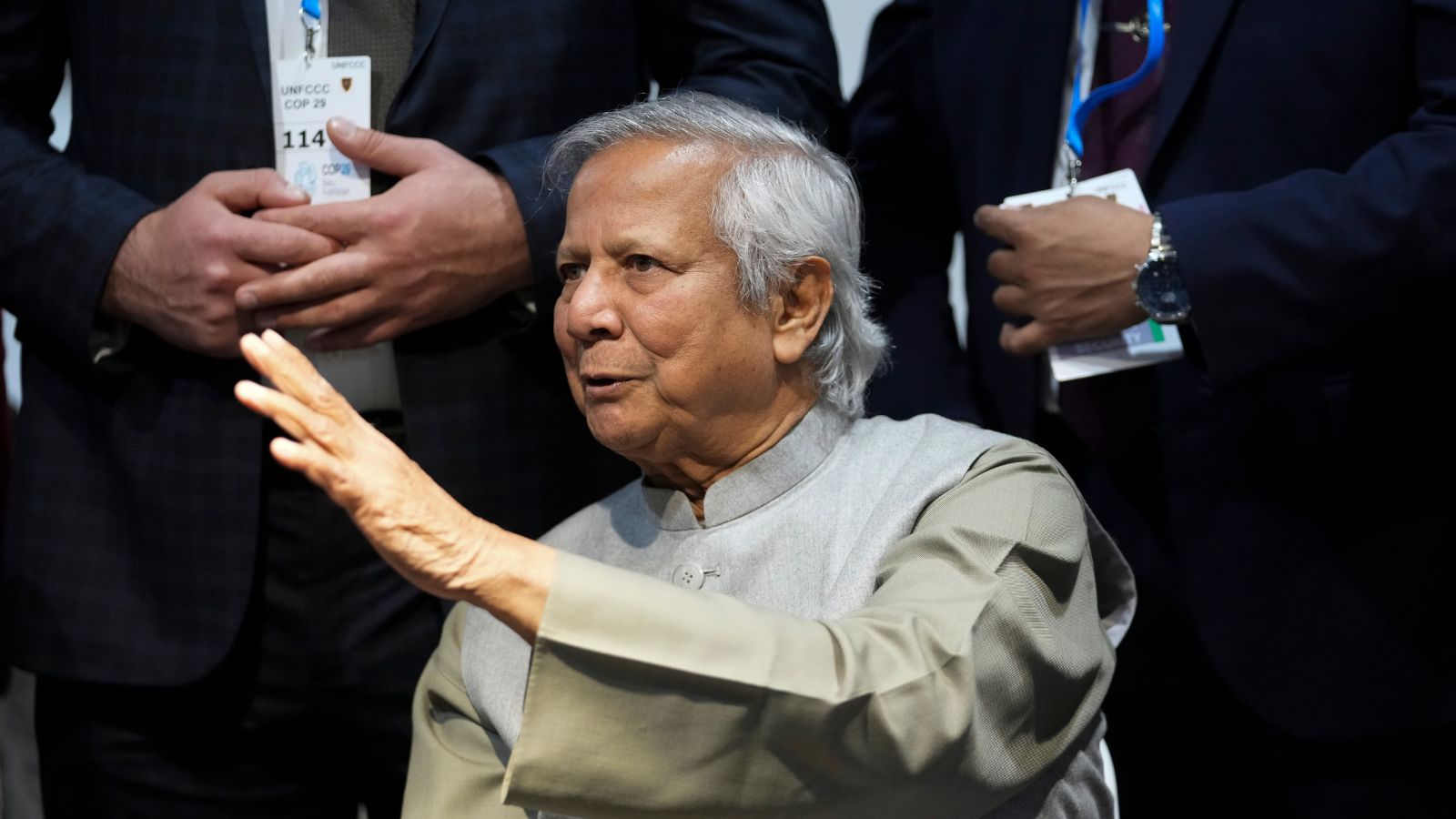
India’s only real exit ramp is a clause allowing refusal if the charges are "made in the interest of justice" or for "political reasons." However, invoking this is a public relations minefield. To claim the charges against Hasina are purely political is to openly challenge the legitimacy of the interim government led by Nobel laureate Muhammad Yunus. It is a direct insult to the movement that ended 15 years of Awami League rule.
Why India Cannot Let Go
Loyalty in geopolitics is rarely about sentiment; it is about credibility. Sheikh Hasina was the cornerstone of India’s "Neighborhood First" policy. Under her watch, Bangladesh saw off insurgent groups that previously used its soil to launch attacks into India’s Northeast. She allowed Indian goods to transit through Bangladeshi ports, a move that fundamentally changed the economic outlook for landlocked Indian states like Tripura and Assam.
If India surrenders Hasina to face a tribunal that many in New Delhi view as a mechanism for political vendetta, it signals to every other leader in the neighborhood—from Bhutan to Mauritius—that Indian protection has an expiration date. This loss of "strategic trust" would be irreparable.
Yet, the cost of keeping her is rising. The anti-India sentiment in Bangladesh is not a fringe phenomenon; it is a mainstream fire. The perception that New Delhi propped up an increasingly autocratic regime for over a decade has turned the Bangladeshi street against India. Every day Hasina remains on Indian soil, she serves as a symbol of that perceived interference.
The Shadow of China and the Border Reality
The stakes extend far beyond the courtroom in Dhaka. India shares a 4,096-kilometer border with Bangladesh, the longest it has with any neighbor. This border is porous, sensitive, and vital for national security. A hostile government in Dhaka could easily look the other way as cattle smuggling, human trafficking, or insurgent movements resume.
More pressingly, there is the China factor. Beijing has stayed remarkably quiet during this transition, a classic move of patient observation. China is Bangladesh's largest trading partner and a massive investor in infrastructure. Unlike India, China did not tie its fortunes exclusively to the Awami League. By refusing to extradite Hasina, India provides the interim government with a perfect justification to pivot more aggressively toward Chinese investment and security cooperation.
New Delhi is essentially fighting a two-front war of influence. It must convince the new authorities in Dhaka that it is a reliable partner for the future while simultaneously protecting the woman who was the face of the past.
The Judicial Loophole Strategy
Government legal experts are likely hunting for a middle ground that buys time. The treaty allows for the refusal of a request if the person to be extradited will not receive a fair trial. India could theoretically argue that the current environment in Bangladesh, characterized by high emotions and a dismantled judiciary, makes a fair trial for Hasina impossible.
This is a weak shield. Using this argument essentially tells the Yunus administration that their legal system is a sham. It would be a diplomatic hand grenade.
Another option is the "third-country" solution. There have been persistent rumors of Hasina seeking asylum in the United Kingdom, the United Arab Emirates, or even Eastern Europe. So far, these avenues appear blocked. Most Western nations are hesitant to take in a leader accused of mass killings during a popular uprising, especially when they are trying to build bridges with the new administration in Dhaka.
If no third country steps up, India is stuck with a guest it cannot hide and a neighbor it cannot ignore.
Economic Leverage vs. Sovereign Pride
India holds significant economic cards, but playing them would be a mistake. Bangladesh relies heavily on India for electricity imports and essential commodities like onions, rice, and sugar. In a moment of crisis, New Delhi could tighten the screws.
However, using trade as a weapon often backfires. It reinforces the "Big Brother" narrative that has plagued Indo-Bangla relations for decades. Instead of forcing Dhaka to drop the extradition request, economic pressure would likely galvanize the Bangladeshi public, making the demand for Hasina's return a matter of national sovereign pride.
The interim government is also dealing with its own internal pressures. Students and activists are demanding immediate results. For Yunus, the extradition of Hasina is not just about justice; it is about political survival. He needs to show that the revolution has teeth. If he fails to bring her back, his detractors will claim he is a puppet of foreign powers—either the US or India.
The Intelligence Failure
This crisis also exposes a significant gap in Indian intelligence and long-term planning. For years, analysts warned that New Delhi was "putting all its eggs in the Hasina basket." The lack of a robust relationship with the opposition Bangladesh Nationalist Party (BNP) or other civil society groups has left India with no channels to navigate the current power vacuum.
The rapid collapse of the Awami League caught the Indian security establishment off guard. The scramble to secure Hasina and get her out of Dhaka was a tactical success but a strategic disaster. It left India responsible for her safety without a clear exit strategy.
A New Type of Border Management
While the extradition debate rages, the situation on the ground is deteriorating. There have been reported incidents of friction between the Border Guard Bangladesh (BGB) and India’s Border Security Force (BSF). Minor skirmishes that were once handled with a phone call between Dhaka and New Delhi are now becoming flashpoints for nationalist rhetoric on social media.
The narrative within Bangladesh has shifted. The focus is no longer on regional cooperation but on "reciprocity." In the eyes of many in Dhaka, if India wants security cooperation, it must first respect the Bangladeshi judicial process. This transactional approach to diplomacy is a radical departure from the "Golden Chapter" of ties celebrated by Modi and Hasina just a year ago.
The Deadlock of the Safe House
As it stands, the request is not just being "examined"—it is being buried in a stack of "pending" files. New Delhi’s strategy is clearly to delay. The hope is that as the interim government moves toward elections, the fervor for Hasina’s trial will be replaced by the complexities of domestic politics and economic management.
But time is not a neutral factor here. The longer the delay, the more the resentment festers. India is currently hosting a ghost of the old order, and that ghost is haunting every attempt to build a relationship with the new one.
There is no elegant way out of this. India must eventually choose between its reputation as a protector of allies and its necessity as a regional partner. Every day that a decision is avoided, the cost of that eventual choice goes up. The extradition request is a legal document, but for New Delhi, it is a test of whether it can lead South Asia through a crisis it helped create by ignoring the warning signs of a regime in decline.
The silence coming from the safe house in India is deafening, and in Dhaka, it is being interpreted as a confession.
The Indian government needs to stop hiding behind treaty interpretations and start formulating a post-Hasina regional strategy that accounts for a neighbor that is no longer willing to be a junior partner. If they continue to wait for the storm to blow over, they will find that the landscape has changed so much that they no longer recognize the terrain.
Grounding a foreign policy in a single individual was the original sin. Hosting her indefinitely is the penance. Whether that penance ends in a trial in Dhaka or a permanent rupture in ties depends on whether New Delhi values a fallen friend more than a future neighbor.
The file is on the desk. The examination must eventually end. When it does, the answer will redefine the geopolitics of the Bay of Bengal for the next twenty years. India's move will tell the world if it is a confident power capable of admitting a shift in reality, or a stagnant one clinging to the wreckage of a failed status quo.