The air in Islamabad during the spring shift doesn't just get warmer; it thickens. It carries the scent of diesel, jasmine, and the heavy, invisible weight of geography. For a pilot staring at the flickering avionics of a U.S. military transport plane, that geography isn't a map. It is a series of pressurized decisions. When that aircraft banked toward a Pakistani runway recently, it wasn't just a landing. It was a puncture in a very thin, very tense silence.
Reports of American military assets touching down on Pakistani soil are never just about logistics. They are about the ghost of a relationship that has spent the last decade flickering like a dying bulb. We are told the landing was a "technical" necessity—a phrase that in the world of high-stakes diplomacy usually means "nothing to see here."
But there is always something to see.
To understand why a single plane landing in Pakistan makes tea go cold in Tehran and brows furrow in Mar-a-Lago, you have to look past the steel and the flight logs. You have to look at the corridor. Pakistan sits in the throat of Asia. To its west lies Iran, a nation currently locked in a digital and kinetic staring match with the West. To its north and west lies the memory of Afghanistan, a scar that hasn't quite healed for the American psyche.
When a U.S. plane lands there now, it isn't 2001. The leverage has shifted.
The Sound of an Empty Hangar
Consider the perspective of a local observer near the tarmac. For years, the roar of American engines was the ambient soundtrack of the region. Then came the silence. The withdrawal from Kabul didn't just end a war; it recalibrated the value of every runway from Karachi to Peshawar. For Donald Trump, watching from across the Atlantic, these movements are data points in a larger, more aggressive thesis on Iranian containment.
Iran isn't just a country in this narrative. It is a pressure cooker.
The Iranian leadership looks at a U.S. plane in Pakistan and they don't see a "technical landing." They see a chess piece sliding into a square that was supposed to be vacant. They see the potential for "over-the-horizon" capabilities—the ability for the U.S. to strike or surveil without keeping a permanent, vulnerable footprint on the ground.
This is the invisible stake. It isn't about whether the U.S. is building a new base. It’s about the uncertainty of whether they could.
A Friction of Intent
The technology of modern warfare has made physical distance a lie. A drone piloted from a trailer in Nevada or a sensor array positioned on a "temporarily" landed transport plane can peer into the heart of a neighboring state’s nuclear program or military troop movements.
Think of it as a neighborhood where everyone has a doorbell camera, but one neighbor just parked a van with tinted windows right on the property line.
Pakistan finds itself in the most uncomfortable seat in the house. The civilian government is balancing on a wire made of Chinese investment and the desperate need for American-backed IMF loans. Every time an American wingtip catches the Pakistani sun, the wire vibrates.
If Islamabad leans too far toward Washington, they risk the wrath of a neighbor (Iran) that has shown it is willing to fire missiles across the border to make a point. If they shut the door completely, they lose the only superpower capable of balancing the scales against their other neighbor, India.
It is a claustrophobic reality.
The Trump Variable and the Tehran Reaction
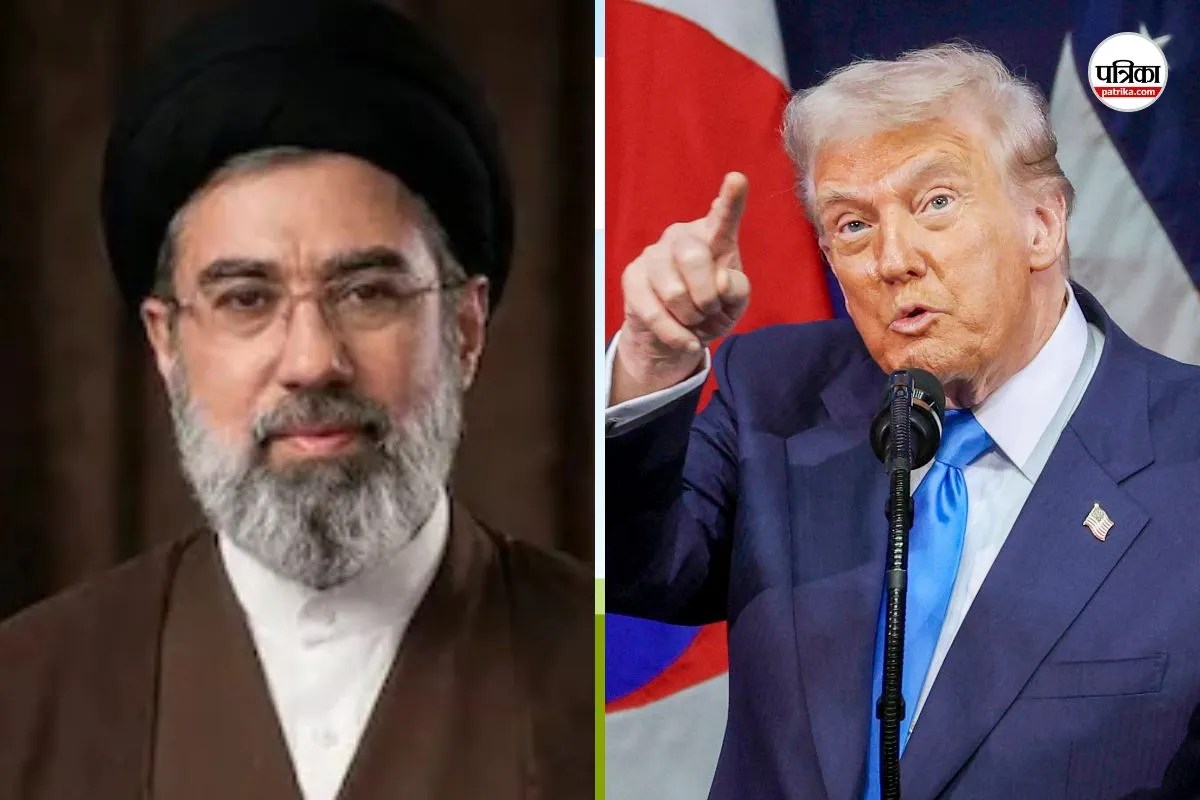
Inside the marble halls of Tehran, the return of Trump to the political foreground isn't a hypothetical. It is a looming storm. His previous "Maximum Pressure" campaign wasn't just a policy; it was an attempt to starve a regime into submission.
When Trump sees news of U.S. assets in Pakistan, he doesn't see a diplomatic headache. He sees a tool. He sees the potential to tighten the noose. The tension isn't just about what is happening on that runway today; it is about the permission structure being built for next year.
The Iranian response to these "technical" movements is rarely a press release. It is a proxy movement. It is a cyber-probe. It is a quiet reminder in the form of naval drills in the Strait of Hormuz. They are communicating through the language of friction.
The Human Weight of the Logistics
We often talk about these events in terms of "geopolitics," a cold word that strips away the sweat. But imagine the technician on that plane. Imagine the Pakistani air traffic controller. They are the ones holding the physical reality of a conflict that the rest of the world debates in abstract terms.
One wrong word, one misunderstood flight path, and the "technical landing" becomes an "international incident."
The world is currently obsessed with the "Big Tech" of war—hypersonic missiles, AI-driven targeting, and satellite arrays. But the most important technology in this conflict remains the oldest one: the human ability to read a room. Or, in this case, a region.
The U.S. is testing the air. They are seeing how much the Pakistani soil can still hold. They are gauging how loudly Iran will scream.
This isn't a story about a plane. It is a story about the return of a presence that many thought was gone for good. It is the sound of a key turning in a lock that hasn't been oiled in years.
As the sun sets over the Indus River, the shadow of that aircraft stretches long and thin. It points toward the west, toward the mountains of Iran, where the lights are burning late in command centers we will never see. The landing was successful. The wheels touched down. The engines cooled. But the heat in the room—the literal and metaphorical room of Middle Eastern security—just went up by five degrees.
The plane will eventually take off and disappear into the clouds. The silence it leaves behind, however, will be much louder than the roar of its departure. It is the silence of a region waiting for the other shoe to drop.
Deep in the borderlands, a shepherd watches the lights of the runway flicker. He doesn't know about the IMF, or the "Maximum Pressure" campaign, or the avionics of a C-130. He only knows that when the big planes come back, the peace usually leaves.

:strip_icc()/pic2513216.jpg)