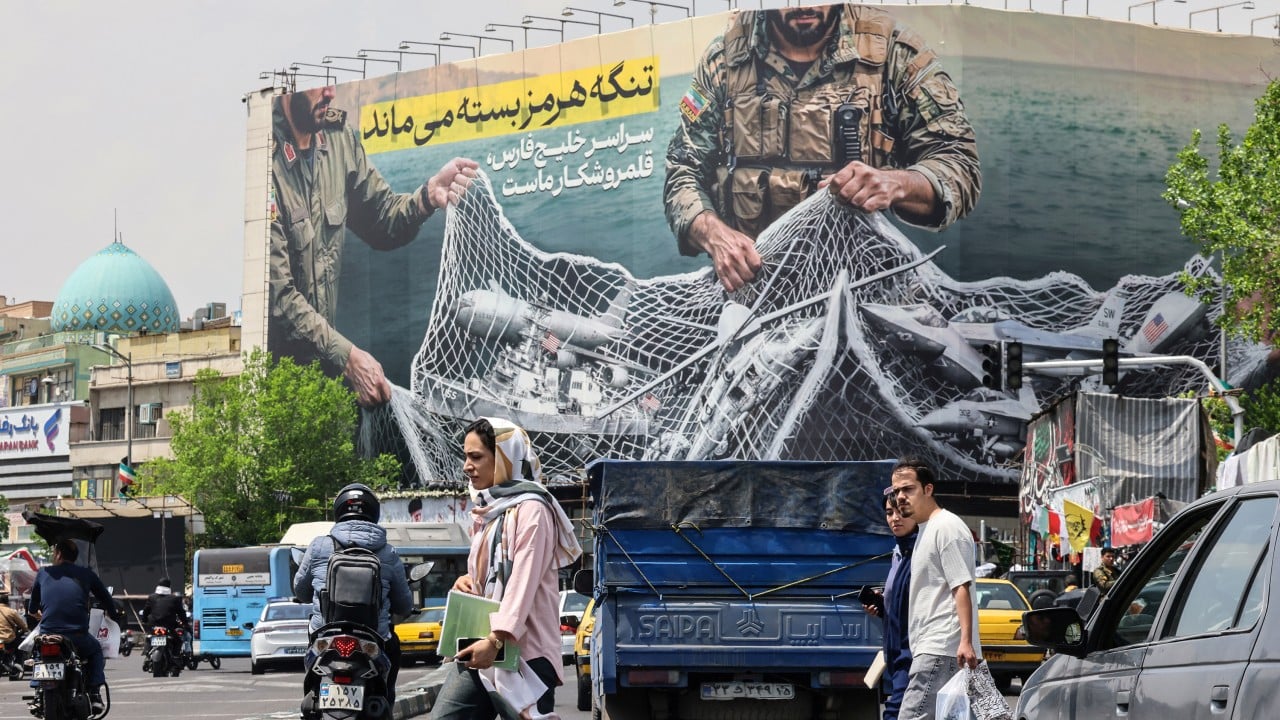
The sea does not care about sanctions. To a merchant sailor standing on the bridge of a rusted Aframax tanker, the water is merely a vast, indifferent highway of turquoise and grey. But beneath that surface, and high above it in the invisible digital ether, a high-stakes game of hide-and-seek is currently dictating the price of the fuel in your car and the temperature of the geopolitical climate.
When news broke that the United States intercepted three Iranian tankers near the coastlines of India, Malaysia, and Sri Lanka, it wasn't just a military maneuver. It was a puncture in a multi-billion-dollar ghost economy.
The Ghost in the Machine
Consider a hypothetical captain. We’ll call him Elias. Elias isn't a villain in a spy novel; he is a man with a mortgage and a tired crew. His ship, however, is a phantom. On official maritime maps, the vessel he commands might appear to be bobbing peacefully in the middle of the South China Sea. In reality, Elias is thousands of miles away, hugging the coast of Sri Lanka with his Automatic Identification System (AIS) transponder switched off.
This is "going dark."
The tankers—the Fortune, the Horse, and the Forest—don't just carry oil. They carry the desperate hopes of a sanctioned nation and the calculated risks of a global "shadow fleet." When the U.S. moved to intercept these vessels, they weren't just stopping ships. They were disrupting a sophisticated choreography of ship-to-ship transfers, forged documents, and digital deception that spans the Straits of Hormuz to the Malacca Strait.
The Geography of Friction
The Indian Ocean is often viewed as a scenic backdrop for luxury resorts in the Maldives or surfing in Sri Lanka. It is actually the jugular vein of global energy. Every day, millions of barrels of oil pass through these waters. When the U.S. Navy or Coast Guard assets move in near India and Malaysia, the ripples are felt in boardrooms in London and refineries in Texas.
Why these locations?
Malaysia and the waters off Sri Lanka have become the world’s preferred "waiting rooms" for illicit cargo. Here, the water is deep, the traffic is dense, and it is easy for a tanker to blend into the crowd. A ship can pull alongside another, throw over the hoses, and pump millions of dollars of crude from one hull to another under the cover of night. By the time the oil reaches its final destination, its origin has been scrubbed clean. It is no longer "Iranian oil." It is "Malaysian blend."
The interception of these three vessels suggests a shift in the American surveillance net. It is no longer enough to watch the Persian Gulf. The net has stretched thin and wide, reaching into the backyard of emerging superpowers like India.
The Invisible Stakes
We often talk about sanctions as if they are abstract legal filings. They aren't. They are heavy steel. They are the sound of a boarding party’s boots on a metal deck at 3:00 AM.
The tension in the Strait of Hormuz acts as a pressure cooker. When the U.S. squeezes the valve there, the steam has to escape somewhere else. In this case, it escaped into the Bay of Bengal and the Laccadive Sea. The tankers were intercepted because they represent the lifeblood of the Iranian economy—an economy that has learned to survive in the shadows by utilizing a fleet of aging, poorly maintained vessels that pose a massive environmental risk to the very countries whose waters they haunt.
Imagine the Fortune hitting a reef off the coast of Sri Lanka.
The resulting oil spill would be a generational catastrophe for the local fishing industry and the delicate coral ecosystems. This is the hidden cost of the shadow fleet. Because these ships operate outside the law, they often lack proper insurance. They skip essential maintenance. They are floating environmental time bombs, and the U.S. interceptions are, in a very real sense, a form of high-stakes bomb disposal.
A Game of Digital Mirrors
The technology used to catch these ships is as fascinating as the ships themselves. It involves a "pattern of life" analysis. Analysts in windowless rooms in Virginia or Bahrain look at satellite imagery and compare it to reported radio signals. When a ship’s "electronic signature" vanishes in one place and a "new" ship with a different name but the same physical dimensions appears three days later, the red flags go up.
It is a digital cat-and-mouse game.
The tankers use "spoofing" technology to broadcast false GPS coordinates. They can make themselves appear to be in a safe, neutral port while they are actually loading oil at an Iranian terminal. The U.S. interceptions near India and Malaysia prove that the "cloaking devices" of the shadow fleet are failing. The hunters have better eyes now. Synthetic Aperture Radar (SAR) can see through clouds and darkness, capturing the distinct silhouette of a loaded tanker regardless of what its transponder says.
The Human Toll on the High Seas
Behind the headlines of "intercepted tankers" are hundreds of sailors who are often caught in the middle of a geopolitical war they didn't sign up for. These crews frequently come from developing nations. They are often working on expired contracts, their passports held by manning agencies, sailing on ships that officially do not exist.
When a ship is seized, these men enter a legal limbo. They aren't combatants, yet they are treated as part of a hostile supply chain. They sit on anchored ships for months, watching the horizon, waiting for a diplomatic resolution that may never come. Their families back home wait for wire transfers that are blocked by the very sanctions the ship was trying to evade.
The capture of these three tankers is a victory for the enforcement of international policy, but it is also a reminder of how brittle the global order has become. We rely on a system of trust—trust that ships are who they say they are, and that they are carrying what they claim to carry. When that trust evaporates, the ocean becomes a forest of suspicion.
The Ripple Effect
India finds itself in a delicate position. As a massive consumer of energy, it needs cheap oil. As a growing strategic partner of the West, it must respect the blockade. The fact that these interceptions happened so close to Indian territory is a silent message. It signal's that the Indian Ocean is no longer a safe harbor for those looking to bypass the global financial system.
The price of oil reacted with its usual jittery sensitivity. But the real story isn't the price per barrel. It is the exhaustion of a system.
The "shadow fleet" is growing older. The ships are getting rustier. The maneuvers to hide them are becoming more desperate. Each interception is a tactical win for the U.S., but each one also drives the trade deeper into the dark, forcing smugglers to take even greater risks with the environment and human lives.
The sea remains indifferent. The waves continue to hit the hulls of the Fortune, the Horse, and the Forest as they are diverted under armed guard.
Somewhere in a coastal village in Sri Lanka, a fisherman prepares his nets, unaware that a few miles past the horizon, the giants of the world are locked in a struggle over a liquid that was buried beneath the earth for millions of years, and which now threatens to set the very water on fire. The tankers are silent. The engines are throttled back. The ghost ships have finally been forced to keep their names.
The ocean is crowded with secrets, but for these three, the sun has finally come out. Empty horizons are becoming a luxury of the past. High above, the satellites are always watching, and they never blink.