The press release was written before the first chord even rang out at Racket NYC. You saw the headlines. "It kicks ass." "Energy of a band half their age." "The return of the Glimmer Twins."
It is a tired script. It is a comfortable lie. Meanwhile, you can find similar stories here: Why the Baldoni Lively Settlement Leaves Fans Grumpy.
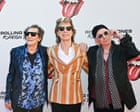
When the Rolling Stones staged their star-studded New York event to launch Hackney Diamonds, the media didn’t cover a musical milestone. They covered a masterclass in brand preservation. They celebrated the fact that Mick Jagger can still move, not that the music moved them.
The "lazy consensus" among critics is that we should be grateful the Stones are still here. We are told to view their continued existence as a triumph of the human spirit. In reality, it is a triumph of a ruthless corporate machine that has successfully turned rock and roll—once the ultimate tool of rebellion—into the world’s most expensive security blanket. To understand the bigger picture, check out the excellent report by The Hollywood Reporter.
The Myth of the Eternal Youth
Let’s stop pretending that a 30-minute set in a 650-capacity club for a room full of celebrities and industry insiders is "raw" or "gritty."
True grit is a band in a van with nothing to lose. The Stones have everything to lose: a touring legacy worth billions, a catalog that serves as the bedrock of Universal Music Group’s valuation, and a carefully curated image of immortality.
The New York launch was a controlled environment. Bringing Lady Gaga out for "Sweet Sounds of India" wasn't a spontaneous moment of musical alchemy. It was a strategic cross-pollination of fanbases. It was a way to ensure that the social media clips had the necessary "viral" ingredients to satisfy algorithms that don't care about a blues riff unless a pop star is attached to it.
When we praise the Stones for "still having it," we are actually lowering the bar for what art should do. We are saying that as long as the icons don't fall over, the work is a success. That is a dangerous precedent. It prioritizes longevity over innovation.
The Sound of Perfection is Boring
If you listen to the production on the new material, you aren't hearing the messy, drug-fueled, telepathic weaving of Keith Richards and Ronnie Wood. You are hearing the heavy hand of Andrew Watt.
Watt is the industry’s favorite "legend polisher." He did it for Ozzy Osbourne. He did it for Iggy Pop. He creates a version of "rock" that is compressed, quantized, and polished until every human imperfection is scrubbed away.
The competitor's coverage raved about the sound. But they missed the point. The Rolling Stones were great because they were dangerous. They were the band that might fall apart at any second. Exile on Main St. sounds like it was recorded in a basement filled with smoke and desperation. Hackney Diamonds sounds like it was recorded in a boardroom.
By chasing modern radio fidelity, the Stones have abandoned the very thing that made them the Greatest Rock and Roll Band in the World: the swing. You can’t quantize a Charlie Watts swing. You can’t autotune the soul of a Richards riff. When you try, you end up with high-end product, not art.
The Economics of the Legacy Loop
Why does the industry participate in this charade? Because the "Legacy Loop" is the only thing keeping the lights on in the recorded music business.
- The Announcement: Use a "secret" show to create artificial scarcity and FOMO.
- The Validation: Feed the nostalgia-hungry press a narrative of "returning to form."
- The Monetization: Use the buzz to justify $600 "cheap" seats for the inevitable stadium tour.
I have seen this play out for decades. The goal isn't to find new fans; it's to squeeze every last cent out of the Boomer and Gen X demographics before they aged out of the concert market. The New York event was the "top of the funnel." It wasn't about the music; it was about the stock price.
If we actually cared about the health of rock music, we would stop treating 80-year-old billionaires like underdogs. We would stop letting nostalgia dictate the cultural conversation.
The False Premise of "Kicking Ass"
The most common question asked after the NYC launch was: "Can you believe they’re still doing this?"
That is the wrong question. The right question is: "Why are we still asking them to?"
We are addicted to the familiar. We want to see Mick Jagger do the strut because it reminds us of a time when the world felt wide open. But by demanding the Stones remain frozen in 1972, we are suffocating the bands that should be the next Rolling Stones.
There are artists in Brooklyn, London, and Nashville right now who are actually dangerous. They are making music that reflects the chaos of 2026. But they can’t get a look-in because the cultural oxygen is being sucked up by a band that released their best work before the moon landing.
The Truth About Hackney Diamonds
Is the album bad? No. It’s a competent, professional piece of work. But "competent" is a devastating insult for a band that once defined the zeitgeist.
The contrarian truth is that the Rolling Stones have become a tribute act to themselves. They are performing a ritual. The New York launch was a high-budget church service for the religion of "The Way It Used To Be."
We celebrate their "energy" because the alternative is admitting that the era of the monoculture rock star is dead and buried. We cling to Jagger because we are terrified of what comes after him.
But if rock and roll is about anything, it is about moving forward. It’s about burning the past to light the way for the future. The Stones used to know that. Now, they are just the ones holding the fire extinguisher, making sure nothing actually catches fire.
Stop buying the narrative that this is a "rebirth." It’s a victory lap that has been going on for forty years. It’s time to stop applauding the fact that they’re still standing and start asking why we’re still sitting in the audience, waiting for a ghost to tell us a story we already know by heart.
Go find a band that makes you feel uncomfortable. Go find a singer who doesn't have a corporate sponsorship. Leave the museum to the tourists.