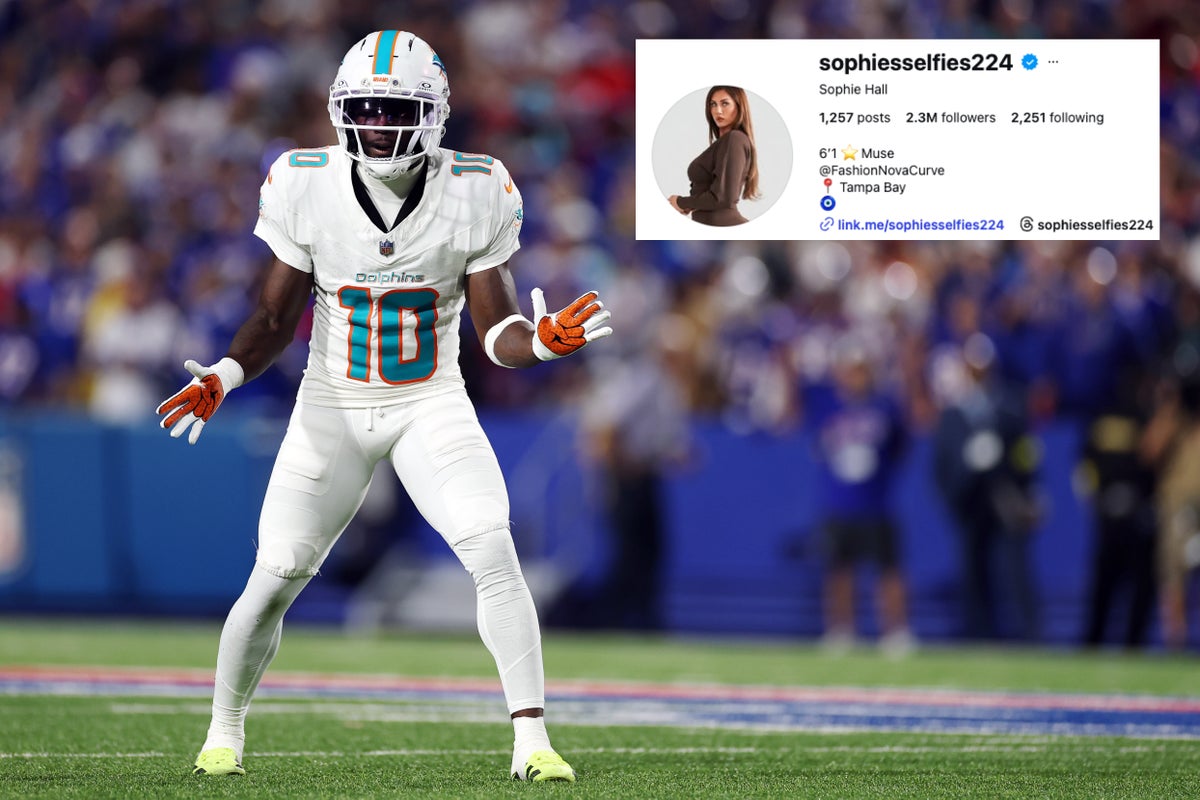
The resolution of the legal dispute between NFL wide receiver Tyreek Hill and Sophie Hall, an influencer and model, serves as a definitive case study in the mechanics of private settlement under the pressure of reputational volatility. While the public discourse centers on the sensationalism of the "broken leg" narrative, the actual strategic landscape involves a sophisticated calculation of legal exposure, insurance indemnification, and the preservation of brand equity within the framework of the NFL’s Personal Conduct Policy.
The Liability Matrix: Physicality vs. Intent
The core of the litigation rested on the distinction between athletic participation and tortious battery. According to the initial complaint, the injury occurred during a football drill at Hill's residence. In personal injury law, the "assumption of risk" doctrine often shields participants in contact sports from liability for injuries that are inherent to the game. However, Hall’s legal team argued that Hill’s conduct exceeded the bounds of the activity.
The litigation logic followed a three-tiered risk assessment:
- The Provocation Variable: Hall claimed Hill was "humiliated" after she knocked him backward during a drill, leading to a forceful, retaliatory charge. In legal terms, this shifts the incident from an accidental collision to an intentional tort.
- The Duty of Care: As the host and the professional athlete in the scenario, Hill held a heightened duty of care to ensure the safety of a guest who was not a trained professional.
- The Damages Calculus: A fractured leg, requiring surgery and hardware (plates and screws), represents a quantifiable physical "special damage," but the "general damages"—pain, suffering, and the loss of career opportunities for a model—create an uncapped financial risk.
The Economic Logic of Confidential Settlements
Settling a case of this magnitude before a jury trial is rarely an admission of guilt; it is a clinical exercise in cost-benefit analysis. For a high-net-worth individual (HNWI) like Hill, whose contract value exceeds $100 million, the cost of litigation is not merely the legal fees or the potential judgment. The real cost is the reputational discount.
The Discovery Bottleneck
Continuing the litigation would have triggered the discovery phase, a process where a defendant’s private communications, financial records, and historical behavioral patterns are made part of the public record. For an NFL player with a history of off-field incidents, discovery represents a catastrophic risk to current and future endorsement contracts. By settling, Hill’s legal team effectively "bought" a non-disclosure agreement (NDA), terminating the flow of potentially damaging information.
The NFL Personal Conduct Policy Overlay
The NFL operates as a private disciplinary body that does not require a criminal conviction to levy sanctions. The league’s "Standard of Conduct" allows for suspensions based on behavior that is "detrimental to the integrity of, or public confidence in, the NFL." A protracted trial with graphic medical testimony and character witnesses provides the league office with the ammunition needed to justify a multi-game suspension.
- Suspension Cost: A four-game suspension for a player with a $20 million base salary results in a direct loss of $4.7 million in game checks.
- Settlement Cost: While the specific figures of the Hill-Hall settlement are confidential, they likely represent a fraction of the potential lost wages and endorsement clawbacks triggered by a suspension.
Structural Incentives for Plaintiff Cooperation
From the perspective of the plaintiff, a settlement offers immediate liquidity and eliminates "litigation fatigue." The American legal system’s "at-will" nature for civil suits means a trial could take years, with no guarantee of a payout if a jury finds the injury was a result of mutual participation.
The settlement structure likely involved:
- Lump-Sum Indemnification: Immediate payment covering medical expenses and legal fees.
- Structured General Damages: Compensation for the intangible elements of the claim.
- Strict Confidentiality Clauses: Liquidated damages provisions that require the plaintiff to return the settlement money if the terms of the agreement are breached.
The Mechanics of Brand Protection
Hill’s brand is built on the "Cheetah" persona—speed, aggression, and dominance. However, there is a narrow corridor between "aggressive competitor" and "liability risk." The strategy employed here was a pivot toward silence. By removing the story from the news cycle through a private resolution, the defense team prevents the narrative from hardening into a permanent brand attribute.
The second-order effect of this settlement is the signaling to the league and sponsors. It demonstrates a desire to minimize "noise," a critical metric for front offices when considering roster stability. The NFL’s lack of immediate intervention following the settlement suggests that the league is satisfied with the private resolution, provided no new evidence of egregious misconduct emerges.
The Architecture of Defensive Social Engineering
High-profile athletes increasingly utilize a "Protective Perimeter" strategy to avoid these specific legal entanglements. The failure in this instance was the breakdown of the perimeter—allowing a guest into a high-intensity physical environment without a pre-signed liability waiver or a structured supervised setting.
The "Three-Point Defense" for HNWIs in physical environments:
- Exculpatory Agreements: Requiring guests to sign waivers that explicitly acknowledge the risks of physical activity, even in a social or "friendly" context.
- Surveillance and Documentation: Using home security footage not just for protection, but as a factual record to counter exaggerated claims of "retaliatory force."
- Third-Party Intermediation: Ensuring that physical drills or training sessions involving non-professionals are managed by a third-party trainer who assumes the primary duty of care.
The Hill-Hall settlement is a tactical retreat designed to secure a broader strategic victory. By neutralizing the civil suit, Hill has successfully closed the door on the discovery process, mitigated the risk of NFL intervention, and capped his financial exposure. The case serves as a reminder that in the intersection of sports, celebrity, and law, the truth is often less important than the cost of proving it.
The immediate strategic priority for any athlete in a similar position is the immediate audit of "social-physical" boundaries. Any activity that mirrors professional work—such as football drills—conducted in a private, unregulated space with non-contracted individuals creates a massive, unhedged liability. The play is to move all such activities to professional facilities or under the umbrella of a corporate entity that provides a layer of corporate veiling between the athlete’s personal assets and the incident.