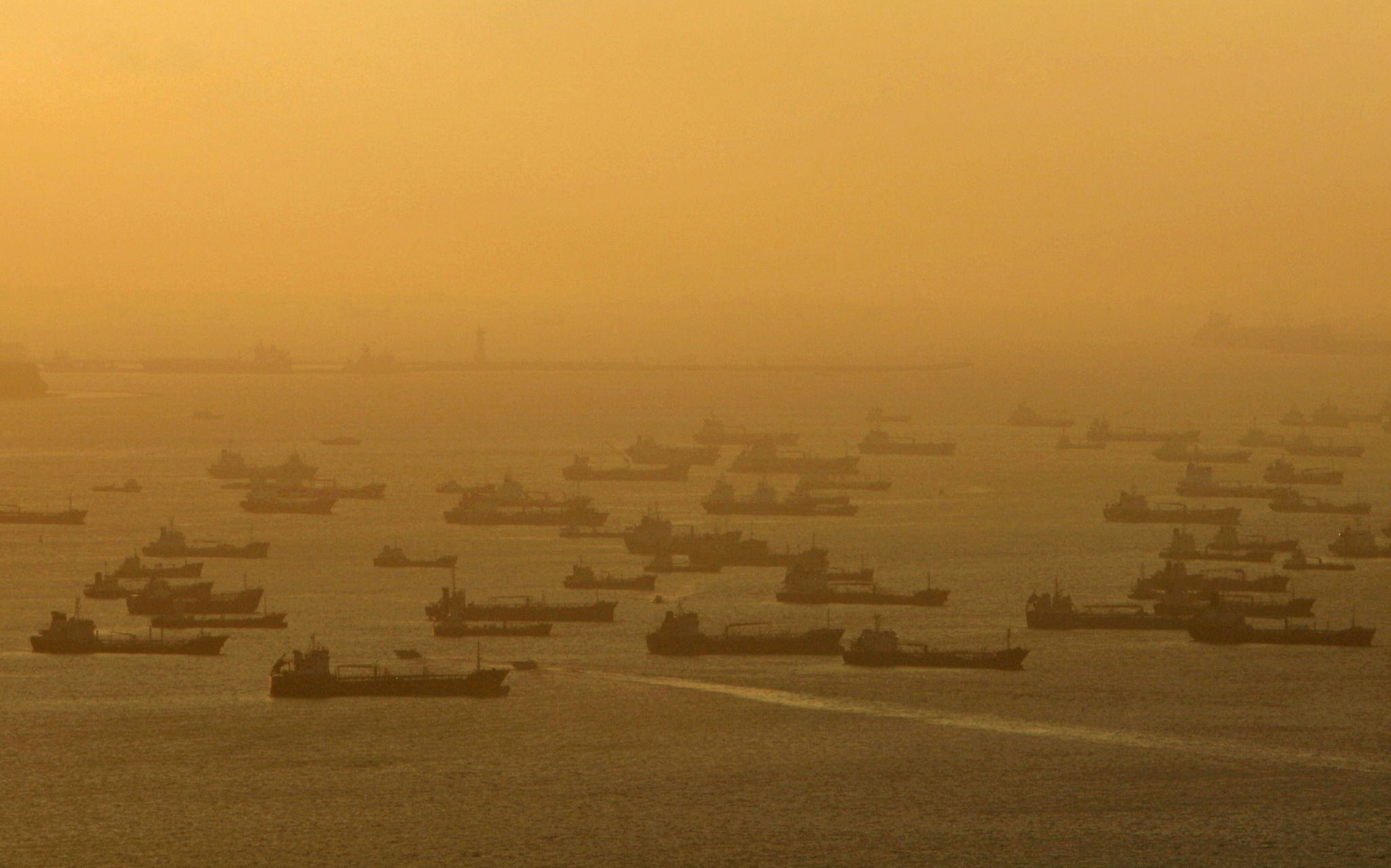
The Kinetic Threshold of the Bab el-Mandeb
Direct Iranian intervention in the Red Sea represents a fundamental transition from proxy-managed harassment to state-level kinetic warfare. While Houthi-led operations primarily function as a tax on global logistics—increasing insurance premiums and fuel consumption via the Cape of Good Hope—a direct strike by Tehran would invalidate the current risk-mitigation models used by global shipping firms and energy markets. This shift moves the crisis from a localized maritime security issue to a systemic failure of the "Just-in-Time" global inventory model.
The strategic gravity of the Red Sea lies in its status as a non-substitutable maritime artery. Approximately 12% of global trade and 30% of global container traffic transit through this corridor. A direct escalation by Iran targeting tankers or naval assets would force a binary choice for the maritime industry: total suspension of the route or reliance on a naval convoy system that currently lacks the scale to protect the total volume of daily transit.
The Three Pillars of Maritime Chokepoint Risk
To quantify the impact of an Iranian strike, one must analyze the risk through three distinct dimensions: operational viability, financial friction, and physical destruction.
1. The Breakdown of Operational Viability
The current Houthi-led disruption is manageable through rerouting. However, direct Iranian involvement introduces advanced missile technology and sophisticated drone swarms that can saturate existing Aegis-class defense systems. The primary operational constraint is no longer the risk of a single strike, but the exhaustion of interceptor inventories.
When a state actor enters the fray, the engagement envelope expands. Iran possesses long-range anti-ship ballistic missiles (ASBMs) that could target vessels far outside the immediate Bab el-Mandeb strait. This expands the "danger zone" from a specific geographic chokepoint to the entire northern Indian Ocean, rendering the traditional rerouting strategies around the Cape of Good Hope vulnerable at their point of origin or destination.
2. The Mechanics of Financial Friction
Shipping costs are not merely a reflection of fuel and labor; they are a function of the War Risk Premium. Current premiums for Red Sea transits have fluctuated between 0.5% and 1.0% of the vessel's hull value. A direct Iranian strike would likely push these premiums toward the "uninsurable" threshold, where commercial underwriters refuse coverage entirely regardless of the rate.
- P&I Club Exposure: Protection and Indemnity (P&I) clubs, which provide mutual insurance for 90% of the world's ocean-going tonnage, would face a liquidity crisis if multiple Suezmax or VLCC (Very Large Crude Carrier) tankers were lost in a single week.
- The Surcharge Spiral: We are seeing the implementation of "Emergency Risk Surcharges." If Iran escalates, these surcharges will decouple from actual costs and become speculative instruments, driving up the landed cost of goods in Europe and the Mediterranean by an estimated 15% to 20% within a 30-day window.
3. Physical Destruction and Environmental Externality
Unlike drone-based harassment, a direct strike involves heavy ordnance designed to sink vessels. The environmental impact of a VLCC breach in the Red Sea—a semi-enclosed basin with unique coral ecosystems—would create a multi-billion dollar cleanup liability and physically obstruct the narrow shipping lanes with wreckage and hazardous spills. This "physical blockage" scenario is the ultimate bottleneck, as salvage operations in an active war zone are functionally impossible.
The Crude Oil Supply Chain Cost Function
The global energy market functions on the margin. The Red Sea carries roughly 8 million to 9 million barrels per day (bpd) of crude and refined products. The cost of a Red Sea closure can be modeled by the following variables:
- Vessel Availability (V): Rerouting around Africa adds 10 to 14 days to a round trip. This effectively removes 20% of global tanker capacity from the market by increasing the time required for a single delivery.
- Bunker Fuel Consumption (F): The extra 3,500 nautical miles increase fuel costs by approximately $1 million per voyage for a large tanker.
- Inventory Float (I): The "oil on water" volume increases, creating a temporary supply shock at the delivery port as the first wave of rerouted ships takes longer to arrive.
The resulting price increase in Brent Crude would likely feature a $10 to $15 "geopolitical premium" almost instantly. This is not due to a lack of physical oil—global spare capacity exists—but due to the logistical inability to move that oil to European refineries that are configured for specific Middle Eastern grades.
The Asymmetry of Interdiction
Iran’s strategic advantage in the Red Sea is rooted in the "Cost-to-Kill" ratio. A single Iranian-manufactured Shahed-type drone costs approximately $20,000 to $50,000. To intercept this, a naval destroyer must fire an SM-2 or Aster-15 missile costing upwards of $2 million.
This asymmetry creates a Defense Depletion Bottleneck. A sustained campaign by a state actor like Iran would not seek to win a naval battle, but to bankrupt the operational capacity of the defending coalition. Once a carrier strike group or a multi-national task force depletes its high-end interceptors, the "shield" over the shipping lanes vanishes. This is the point at which commercial shipping ceases entirely.
Logical Fallacies in Current Market Projections
Many analysts assume that China’s dependence on the Red Sea for its exports to Europe will act as a deterrent to Iran. This assumes a rational-actor model that prioritizes economic stability over regional hegemony. However, if Iran’s objective is to force a fundamental realignment of Western presence in the Middle East, the localized economic damage to its partners may be viewed as an acceptable externality.
Furthermore, the assumption that the U.S. and its allies can "secure" the waterway is a fallacy of scale. The Red Sea is too large to patrol comprehensively. A state actor can utilize "stealth by volume"—using civilian-appearing fishing dhows or commercial vessels to launch mines or short-range missiles. This makes the identification of hostile intent nearly impossible until the moment of kinetic release.
Strategic Pivot: The Shift to Land-Based and Alternative Corridors
If the Red Sea becomes a "No-Go" zone due to Iranian escalation, the global economy will be forced into a rapid, inefficient restructuring:
- The Rail Alternative: The Eurasian Land Bridge (rail through Central Asia) would see a 500% increase in demand. However, rail capacity is less than 5% of maritime capacity. It cannot solve the volume problem.
- Pipeline Redirection: Saudi Arabia would maximize the use of its East-West Pipeline (Petroline) to move crude to the Red Sea port of Yanbu. However, if the Red Sea itself is the combat zone, Yanbu becomes as vulnerable as Ras Tanura.
- Inventory Hoarding: Major economies would pivot from "Just-in-Time" to "Just-in-Case," leading to a massive increase in warehousing costs and a permanent step-change in inflation.
Tactical Response for Global Logistics Firms
The immediate strategic play for firms with exposure to this corridor is a Hard Decoupling from the Suez Transit. Organizations should not wait for a strike to occur.
- Contractual Renegotiation: Transition all maritime contracts to include "Total Corridor Neutrality" clauses, allowing for automatic rerouting without the need for force majeure declarations.
- Near-Shoring Acceleration: The Red Sea crisis serves as a terminal warning for European manufacturing. The cost of maintaining a supply chain through a contested chokepoint is now a permanent structural risk. Investment must shift toward North African and Eastern European production hubs.
- Liquidity Buffer: Firms must secure revolving credit lines specifically to cover the 30% increase in working capital required to fund the "Inventory on Water" during the longer Cape of Good Hope transit.
An Iranian strike is not merely a threat of escalation; it is a catalyst for the permanent balkanization of global trade routes. The era of cheap, safe, and predictable maritime transit through the Middle East has reached its functional end. Success in this new environment belongs to the actors who treat the Red Sea as a closed theater rather than a navigable path.