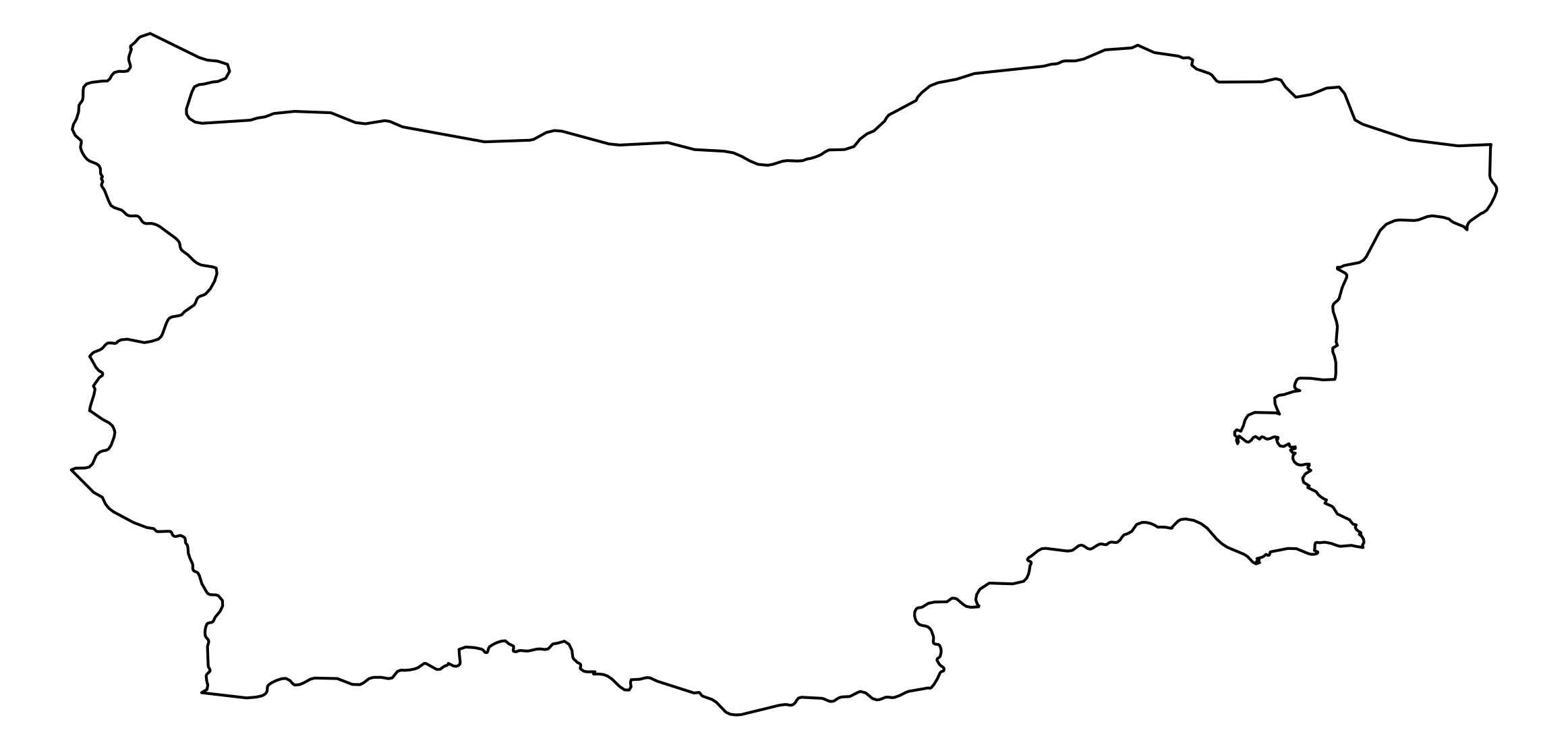
Bulgaria’s political circuit has finally closed a exhausting loop. On Sunday, exit polls confirmed that Rumen Radev, the former fighter pilot who recently resigned the presidency to jump back into the legislative trenches, has secured a commanding lead in the country’s eighth election in just five years. His Progressive Bulgaria coalition captured roughly 39% of the vote, leaving the once-dominant GERB party of Boyko Borissov trailing at a distant 15%. While Western observers often fixate on Radev’s "pro-Russian" label, the actual mechanics of this victory have more to do with a domestic exhaustion with corruption than a sudden love for the Kremlin.
The numbers tell a story of a country that has simply run out of patience. For years, Bulgaria has been stuck in a revolving door of caretaker governments and failed coalitions. This instability has allowed Radev to position himself as the only adult in the room. By stepping down from a mostly ceremonial presidency in January, he gambled that he could convert his personal popularity into a mandate for actual governance. It worked.
The General and the Oligarchs
To understand why a NATO-member country would hand the keys to a man who openly questions military aid to Ukraine, you have to look at the street level. Bulgaria remains the poorest member of the European Union. Despite officially joining the eurozone on January 1, 2024, the promised economic stability has been overshadowed by a series of scandals involving "the mafia," a shorthand Bulgarians use for the entrenched network of politicians and oligarchs.
Radev’s campaign didn't focus on Moscow. It focused on the "perverse cartel" of the old parties. He spent months railing against Delyan Peevski, the sanctioned media mogul, and Boyko Borissov, whose decade-long tenure is remembered by many for images of gold bars in a nightstand. For a 28-year-old teacher in Sofia, Radev isn't a Russian asset; he is a wrecking ball aimed at a system that hasn't worked for the average person since the 1990s.
The Foreign Policy Friction
However, the international implications are impossible to ignore. Radev has consistently argued that the EU’s approach to the war in Ukraine is "naive." He has fought against sending weapons to Kyiv, suggesting instead that Sofia should focus on its own energy security and "practical" relations with Russia. This stance puts Bulgaria at odds with the mainstream of both NATO and the EU, just as the region is attempting to solidify a unified front.
There is a deep-seated historical and cultural connection between Bulgaria and Russia that Western analysts frequently underestimate. For many older voters, Russia is the "liberator" from Ottoman rule. Radev knows this. He plays to it not necessarily out of ideological devotion to Vladimir Putin, but because it is a potent populist tool. By questioning the "green energy" mandates and defense spending, he appeals to those who feel left behind by the rapid, often painful, transitions required for EU integration.
The Mathematics of a Mandate
Winning 39% is a landslide in Bulgarian terms, but it is not an absolute majority. Radev now faces the same wall that broke his predecessors: coalition building. The Bulgarian parliament is notoriously fragmented.
| Party / Coalition | Estimated Vote Share |
|---|---|
| Progressive Bulgaria (Radev) | 39.2% |
| GERB (Borissov) | 15.1% |
| PP-DB (Reformist Alliance) | 12.4% |
| DPS (Peevski) | 7.8% |
| Vazrazhdane (Far-right) | 6.5% |
The reformist bloc, "We Continue the Change," might seem like a natural partner on anti-corruption issues, but their hardline pro-Western stance on Ukraine makes a deal with Radev radioactive for their base. If Radev cannot find a partner, the country risks sliding back into the same deadlock that necessitated this election in the first place.
The voter turnout, which jumped to over 43% from previous lows, suggests that people showed up specifically to break the stalemate. If Radev fails to form a government, that energy could quickly turn into a new wave of street protests, similar to the ones that toppled the conservative government last December.
The Eurozone Paradox
One of the strangest aspects of this election is that it happened just months after Bulgaria finally entered the eurozone. Usually, such a milestone is seen as the ultimate victory for pro-EU forces. In Bulgaria, it was met with a shrug. Inflation and the cost of living remain the primary concerns for the 6.5 million residents.
While the economy has technically grown, the distribution of that wealth is heavily skewed. Radev’s brilliance was in linking the eurozone transition—and the perceived "loss of sovereignty" that comes with it—to the failures of the local elite. He didn't campaign against the Euro directly; he campaigned against the people who were in charge when it was adopted.
This is a nuance that often gets lost in the "East vs. West" narrative. Radev is a pragmatist who uses nationalist rhetoric to shield his domestic agenda. He wants to consolidate power, and to do that, he needs to dismantle the old patronage networks. Whether he replaces them with something better or simply a different brand of the same system is the question that will define his premiership.
The next few weeks will be a test of Radev’s tactical mind. He has the votes, but he doesn't have the room to move without compromising on the very issues—like Ukraine—that made him a darling of the Eurosceptic right. For a man who spent his career flying fighter jets, the coming legislative dogfight will be the most dangerous mission of his life.
Bulgaria has signaled that it is tired of the status quo. Now it has to see if the "new" alternative is anything more than a return to an older, more complicated past. The streets are quiet for now, but in Sofia, silence is usually just a prelude to the next storm.