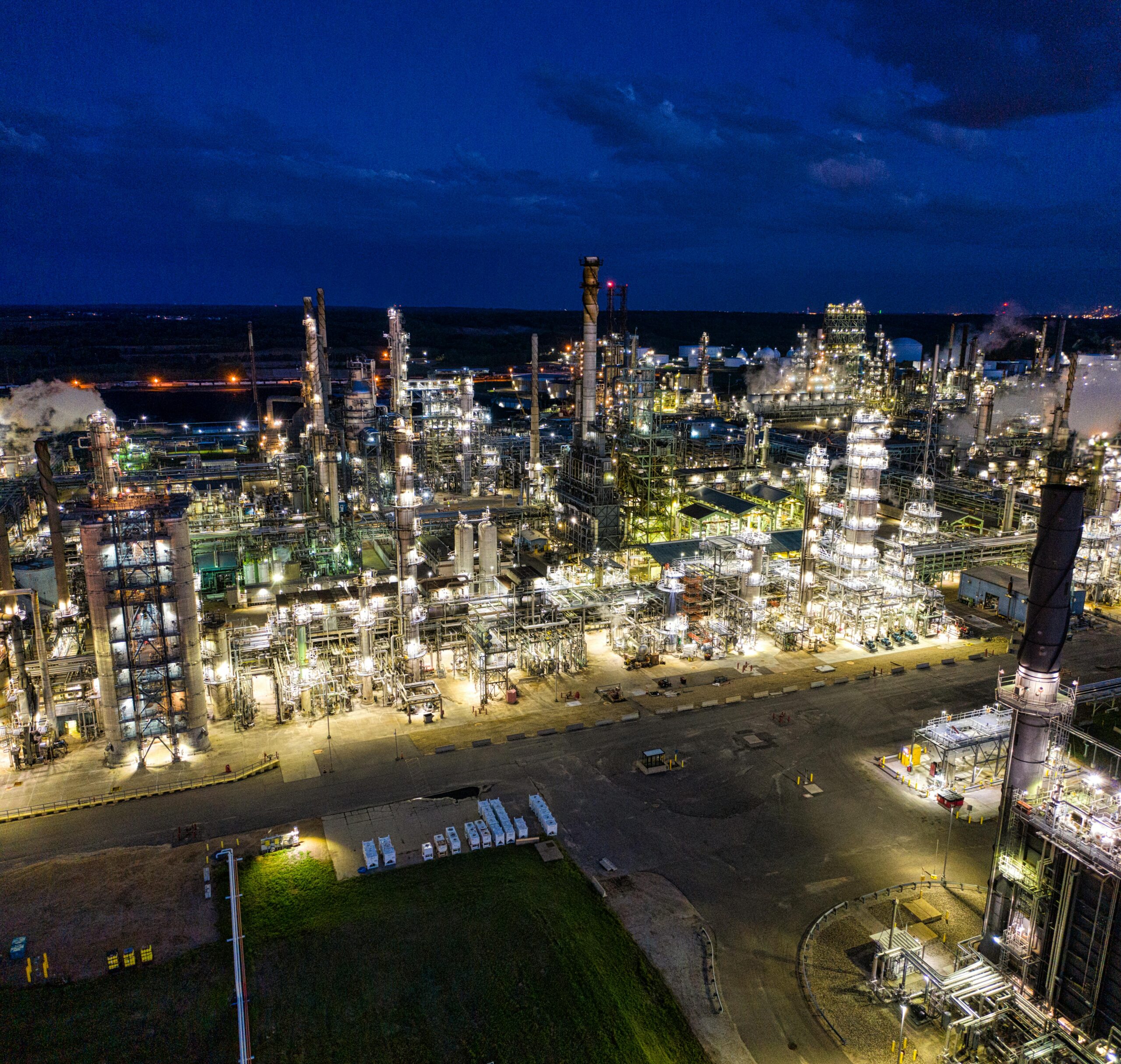
The shutdown of the Ras Tanura refinery following a drone strike is not merely a localized operational failure; it is a manifestation of the "Fragility of Centralization" in global energy markets. When a facility responsible for a significant portion of a nation's refined product output is taken offline by low-cost, asymmetric threats, the cost-to-damage ratio shifts fundamentally in favor of the aggressor. Understanding the impact of this event requires moving beyond the headline and deconstructing the specific technical and economic subsystems that govern Saudi Aramco’s downstream operations.
The Triple Constraint of Downstream Resilience
To analyze why a single strike can force a total or partial shutdown of a complex like Ras Tanura, one must examine the intersection of physical infrastructure, supply chain physics, and safety protocols. These three pillars dictate the speed of recovery and the magnitude of the market shock.
1. Thermal Inertia and Safety Interlocks
Refineries are not modular systems that can be toggled on and off like software. They are high-temperature, high-pressure chemical environments governed by thermal inertia. When an external kinetic event—such as a drone strike—breaches a containment vessel or a transport line, the immediate priority is a controlled emergency shutdown (ESD).
- Pressure Management: Rapid depressurization is required to prevent secondary explosions, but this process stresses the metallurgical integrity of the piping.
- Catalyst Poisoning: Sudden shutdowns can lead to the "coking" of catalysts in fluid catalytic cracking (FCC) units. If the temperature drops too quickly or the hydrocarbon flow is disrupted unevenly, the expensive catalyst beds can be ruined, turning a 48-hour security assessment into a multi-week mechanical overhaul.
- Sensor Saturation: Modern refineries rely on a mesh of Industrial Control Systems (ICS). A strike creates a cascade of "false" or "extreme" data points that trigger automated safety interlocks. Re-starting requires a manual "clear" of every safety loop, a process that is painstakingly slow by design.
2. The Storage Buffer Fallacy
Markets often react to refinery shutdowns by looking at crude oil inventories. This is a category error. Ras Tanura is a critical node for converting crude into usable products—gasoline, diesel, and jet fuel. While Saudi Arabia maintains massive underground crude storage, its "refined product" buffer is significantly thinner.
The immediate bottleneck is not the availability of oil, but the availability of "ullage"—the empty space in storage tanks. If the refinery stops, but the upstream wells continue to pump, the system reaches a volumetric limit. Conversely, if the refinery is the primary supplier for regional transport, the depletion of local refined stocks happens exponentially faster than the global market can re-route tankers.
3. Asymmetric Economic Attrition
The strike highlights the "Defensive Cost Paradox." A drone costing roughly $15,000 to $50,000 can successfully interrupt a facility that generates tens of millions of dollars in daily revenue and costs billions to construct. The expenditure required to defend against these threats—via Patriot missile batteries, electronic warfare jamming, and 24/7 localized air defense—represents a permanent increase in the "Security Premium" of every barrel produced. This is a tax on the efficiency of the entire Saudi energy ecosystem.
Mapping the Impact on Global Product Spreads
The shutdown of Ras Tanura triggers a realignment of "Crack Spreads"—the pricing difference between a barrel of crude oil and the petroleum products extracted from it. This realignment follows a specific logical sequence.
Primary Distortion: Middle Distillate Scarcity
Ras Tanura is a heavy-hitter in the production of diesel and jet fuel. Because global shipping and aviation operate on tight, just-in-time refueling schedules, a disruption here causes an immediate spike in regional "basis prices." Traders began pricing in the risk that tankers originally destined for Asian markets will need to be diverted to the Gulf to meet domestic demand, creating a localized supply vacuum in the Far East.
Secondary Distortion: Crude Grade Differentials
Refineries are calibrated for specific "diets" of crude oil—varying by API gravity and sulfur content. When a major refinery like Ras Tanura goes dark, the specific grade of crude it consumes (often Arab Light or Arab Extra Light) suddenly loses its primary buyer. This creates a temporary glut of that specific grade, forcing Aramco to either store it or sell it at a discount on the spot market, while the price of refined gasoline simultaneously rises. This "decoupling" of crude prices from product prices is the hallmark of a downstream-specific crisis.
The Structural Vulnerability of the Ras Tanura Complex
Ras Tanura is one of the oldest and most integrated facilities in the world. Its age provides scale, but its integration provides a "Single Point of Failure" (SPOF) risk.
- Interdependency of Utilities: The refinery shares steam, power, and water desalination assets with the neighboring terminal facilities. A strike on the power generation sector of the refinery doesn't just stop the refining process; it can theoretically paralyze the loading docks that export crude to the rest of the world.
- The Terminal Bottleneck: As the world's largest crude oil export terminal, the proximity of the refinery to the shipping berths means that kinetic activity in one area necessitates a "security stand-down" across both. This halts the flow of millions of barrels per day (bpd) of crude exports, even if the export infrastructure itself remains untouched.
The Mechanical Reality of the Recovery Timeline
A common misconception is that once the fire is out, the refinery is "back." In reality, the recovery follows a rigorous mechanical audit:
- Damage Assessment (0-24 Hours): Focused on structural integrity and the "hot zone" surrounding the strike.
- Systems Integrity Testing (24-72 Hours): Testing the ICS and SCADA networks for cyber-compromise or physical sensor damage.
- Cold Circulation (Days 3-5): Pumping unheated fluids through the system to check for leaks and ensure the pumps are operational.
- The "Heat-Up" Phase (Days 5-10): Gradually increasing temperatures in the furnaces. Increasing temperature too fast leads to "thermal shock," which can crack the very vessels being repaired.
- Product Specification Alignment (Days 10+): The first few thousand barrels produced after a restart are often "off-spec" and must be recycled back into the system, meaning the market doesn't see actual relief for nearly two weeks even in a "successful" restart scenario.
Strategic Pivot: The Shift to Distributed Downstream
The strike on Ras Tanura will likely accelerate a shift in Saudi Arabia’s long-term energy strategy. To mitigate the risk of centralized kinetic interruptions, the following structural changes are anticipated:
Hardening via Redundancy
Expect a shift toward "Micro-Refineries" or increased investment in joint-venture refineries located outside the Kingdom (e.g., in South Korea, China, or the US Gulf Coast). By refining the crude closer to the end-consumer, Aramco reduces its domestic SPOF risk. The "Value Chain" is protected even if the domestic "Production Node" is harassed.
Electronic Warfare Integration
The physical defense of assets will move away from traditional kinetic interceptors (missiles) toward high-power microwave (HPM) and electronic spoofing. The goal is to create a "digital dome" that renders GPS-guided drones useless long before they reach the perimeter of sensitive zones like the tank farms or the distillation columns.
Logistics Recalibration
The reliance on the Ras Tanura terminal as a primary exit point is a geographic liability. Further development of the East-West Pipeline—allowing crude to bypass the Persian Gulf and exit via the Red Sea—becomes a survival imperative rather than just an economic preference. This reduces the ability of regional actors to choke the Kingdom’s revenue by targeting a single coastline.
Operational Conclusion for Market Participants
The immediate strategic play for energy stakeholders is to hedge against the "Refining Margin Volatility" rather than the "Crude Price Volatility." While crude prices may retreat once the fire is extinguished, the shortage of high-quality diesel and gasoline will persist due to the mechanical realities of the restart sequence.
Organizations should prioritize the following actions:
- Inventory Auditing: Secure physical refined product volumes in the Mediterranean and Singapore hubs to bypass the Gulf supply lag.
- Basis Risk Adjustment: Re-evaluate contracts that rely on "Official Selling Prices" (OSP) as they may not reflect the localized scarcity of refined products.
- Supply Chain Diversification: Shift procurement toward non-Gulf refiners for the next 45 to 60 days to avoid the inevitable "logistical tail" of port congestion that follows a major facility restart.
The event at Ras Tanura is a signal that the era of secure, centralized energy processing is ending. The future belongs to those who can manage a fragmented and perpetually threatened supply chain.
Would you like me to perform a comparative analysis of the East-West Pipeline capacity versus the Ras Tanura export volumes to quantify the Kingdom's current bypass capability?