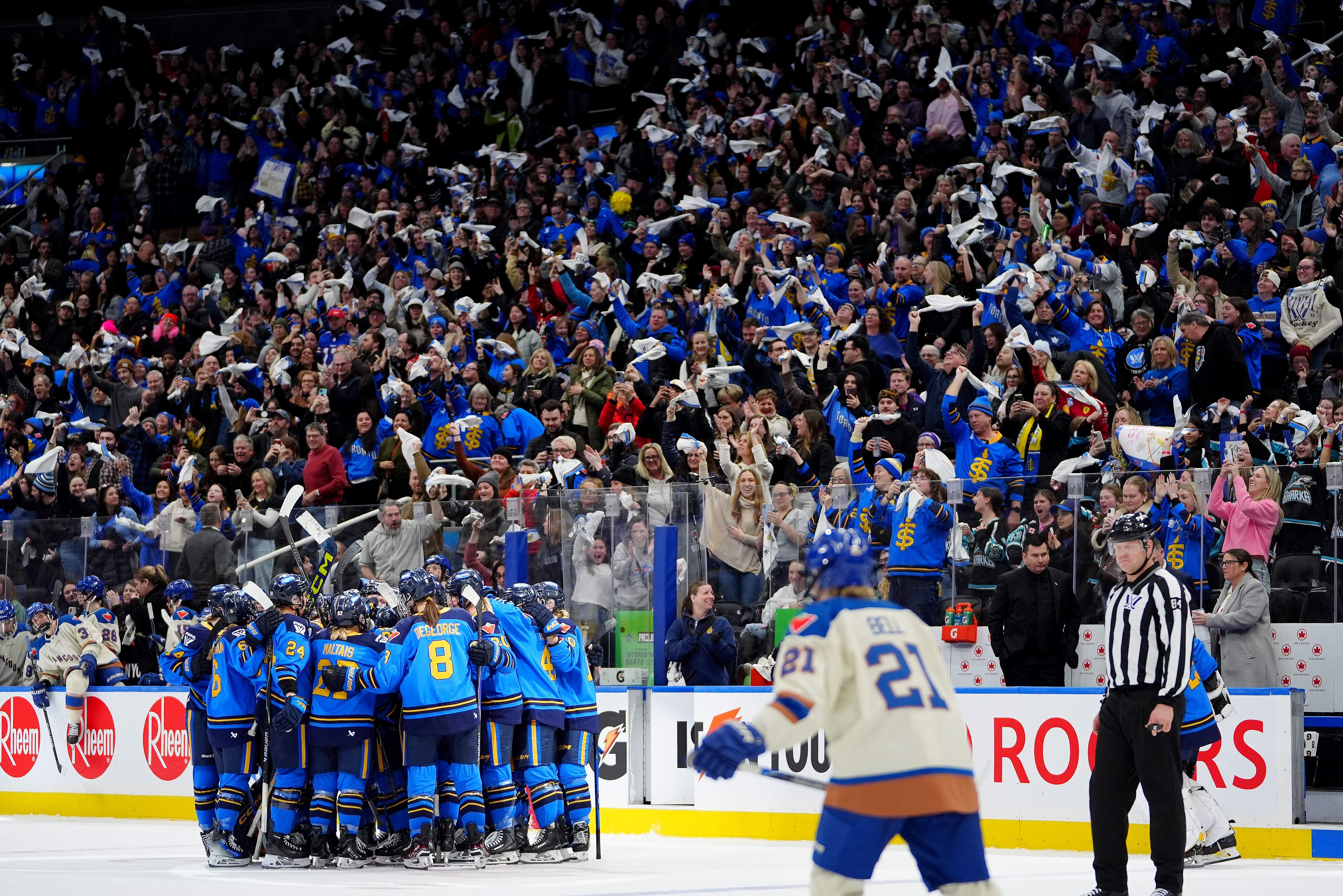
The old cycle of women’s hockey was predictable and, frankly, exhausting. Fans would get hyped for the Winter Olympics every four years, watch a single gold medal game between Canada and the U.S., and then the sport would vanish into the ether until the next cycle. That cycle is officially dead.
If you’re looking at the numbers coming out of the 2026 Milano-Cortina Games, the Professional Women’s Hockey League (PWHL) isn't just riding a "halo effect." It’s sustaining a legitimate commercial takeover. The league recently reported that website traffic during the Olympic break was six times higher than typical periods. Even more telling? Over 70% of those visitors were brand new. People didn't just watch the Olympics; they went hunting for where these players go next.
The Seattle surge and the new U.S. record
While the "Original Six" markets have been the bedrock, the expansion teams are the ones currently rewriting the record books. The Seattle Torrent just dropped a hammer on the U.S. attendance record, packing 17,335 fans into Climate Pledge Arena for their first game back after the break.
This isn't just about curiosity in a new market. It’s about a shifted expectation of what a "big game" looks like. We’re moving past the era of small community rinks. When you see a sellout in Seattle or the 14,006 fans that showed up for a weekday game in Vancouver, you're seeing a business model that has finally scaled to match the talent on the ice.
Why the Olympic glow isn't fading this time
In the past, the "post-Olympic slump" happened because there was nowhere for the momentum to land. You’d have the best players in the world going back to part-time jobs or disorganized club structures. In 2026, 61 PWHL athletes went to Italy, brought back 41 medals, and returned to a league that was ready to sell them.
The league saw its two biggest ticket sale days ever immediately following the gold medal game. Merchandise sales during February jumped by 101%. Fans aren't just watching; they’re buying into the individual brands of players like Sarah Nurse, Hilary Knight, and Ann-Renée Desbiens.
The data suggests this is a permanent shift in consumer behavior. On YouTube, video views increased by 200% over the Olympic period. People are staying engaged with the league’s digital ecosystem because they’ve finally realized these "Olympic heroes" are actually full-time professional athletes they can watch every week.
Expansion is no longer a "maybe"
With the league hitting its third season, the conversation has shifted from "Can this work?" to "How fast can we grow?" The PWHL is already looking at adding up to four more teams for the 2026-27 season.
Markets like Quebec City, Detroit, and Denver are the obvious frontrunners. Quebec City already proved its worth by drawing over 18,000 fans to a neutral-site game last season. The 2026 Draft class is also expected to be the deepest in history, with a massive influx of NCAA and European talent ready to fill those new roster spots.
The league is being smart about this. They aren't just throwing teams into cities and hoping for the best. They’re using the "Takeover Tour" to test the waters, checking everything from arena availability to youth hockey footprints before they commit.
What the numbers actually mean for the sport
- Attendance is up 17% season-over-season.
- The league hit 500,000 fans total this season 12 games faster than last year.
- January 2026 saw over 229,000 fans attend games, a new monthly high.
- The "Takeover Tour" stop in Denver drew 11,612, proving the appetite exists in the Mountain Time Zone.
The Madison Square Garden milestone
Looking ahead to April, the league is hitting the "World’s Most Famous Arena." The New York Sirens have already sold out Madison Square Garden for their April 4th matchup against Seattle. On the same swing, the Boston Fleet sold out TD Garden.
These aren't just games; they’re proofs of concept. If you can sell out an NHL arena in New York and Boston within the same week, the "niche sport" label is officially retired. The PWHL has moved past being a social cause and is now a high-performing entertainment product.
If you want to catch the wave, look at the remaining schedule for the "Takeover Tour" games in non-primary markets. Those tickets are moving faster than the primary home games. Grab a jersey now, because based on the 101% jump in merch sales, the home sweaters for the Sirens and the Sceptres won't be staying on the shelves long. Check the league's official site for the remaining April "Big House" tickets before the playoff race makes them impossible to find.