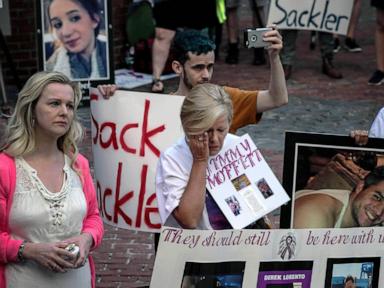
The headlines are predictable. They scream about "justice served" and "settlement money finally flowing." They paint a picture of a villainous family, the Sacklers, being stripped of their wealth to pay for the sins of OxyContin. It’s a tidy narrative for a messy world. It’s also a complete fantasy that ensures the next epidemic is already in the pipeline.
The consensus view—that Purdue Pharma’s sentencing and the subsequent $6 billion payout is a victory for public health—is a dangerous distraction. By focusing on the Sacklers as the singular architects of the opioid crisis, we ignore the systemic failures that made their rise inevitable. We are treating a metastatic cancer with a designer band-aid.
The Myth of the Mastermind
Everyone wants a face for their pain. The Sacklers provided a perfect one. But if you think bankrupting one company and forcing a family to pivot their philanthropy fixes the addiction landscape, you haven't been paying attention to how the pharmaceutical machine actually operates.
Purdue didn't invent aggressive marketing. They didn't invent the "pain as the fifth vital sign" metric that forced doctors to prioritize subjective comfort over objective safety. They simply optimized a broken system better than anyone else. The industry's reliance on "educational" grants to doctors and the revolving door between regulatory agencies and Big Pharma remained intact while the cameras were focused on the Purdue courtroom.
Imagine a scenario where we execute every drug kingpin in a city but leave the poverty, the demand, and the corrupt police force untouched. The market doesn't disappear; it just changes hands. That is exactly what is happening here. While we argue over how to split the Purdue settlement, the vacuum they left is being filled by synthetic fentanyl and a new generation of "non-addictive" painkillers that use the exact same lobbying playbooks Purdue pioneered.
The Settlement Trap
The $6 billion settlement is being hailed as a "historic" win. Let’s look at the math. Spread over 18 years, that money is a rounding error compared to the actual economic cost of the crisis. The Society of Actuaries estimated the cost of the opioid epidemic at $179 billion in 2018 alone.
By accepting this settlement, we aren't funding a cure. We are funding a bureaucratic slush fund. History shows that when massive settlements hit state coffers—think of the 1998 Big Tobacco Master Settlement Agreement—the money rarely goes where it was promised. Governors used tobacco money to pave roads, plug budget deficits, and fund pet projects that had zero to do with smoking cessation.
When you hear that the money is "flowing," you should be asking who is holding the bucket. If the funds are funneled into the same healthcare systems that ignored the crisis for twenty years, we are effectively rewarding the arsonists for helping to hold the hose.
The Regulatory Hall of Mirrors
The FDA is the ghost in this room. The competitor articles focus on the criminal intent of Purdue executives, but they rarely mention the regulatory failure that allowed OxyContin to be labeled as "less prone to abuse" in the first place.
The FDA’s approval of that label in 1996 was the original sin. It gave a sales force of thousands the ultimate shield. It wasn't a secret. It wasn't a deep-state conspiracy. It was a failure of the very institution designed to protect us. Yet, the current settlement does nothing to restructure the FDA or how it interacts with pharmaceutical lobbyists.
We are punishing the player while leaving the rules of the game exactly as they were. If the "sentencing" of Purdue doesn't include a total overhaul of the Prescription Drug User Fee Act (PDUFA)—the law that allows pharmaceutical companies to pay the FDA to review their drugs—then we are just waiting for the next OxyContin.
The Victimhood Industrial Complex
There is a hard truth that no one wants to admit: the focus on Purdue has infantilized the medical profession. The narrative suggests that thousands of highly educated doctors were simply "tricked" by some clever brochures.
This ignores the reality of the American healthcare system. Doctors are overworked, pressured by insurance companies to see more patients in less time, and incentivized to provide "quick fixes." A pill is faster than physical therapy. A pill is cheaper than a psychiatric evaluation.
By putting the entirety of the blame on the Sacklers, we absolve the doctors who ignored the red flags of their own patients. we absolve the distributors who saw massive spikes in orders to tiny rural pharmacies and said nothing. We even absolve the insurance companies that made generic opioids cheaper than non-addictive alternatives.
The Real Cost of "Justice"
True justice would look like a total decoupling of profit from medicine. But that's too radical for a courtroom. Instead, we get a theatrical sentencing and a payment plan.
The Sacklers get to keep the vast majority of their wealth. They get a "non-consensual" release from future civil liability—a legal maneuver that basically lets them buy a permanent "Get Out of Jail Free" card. This isn't accountability; it's a corporate restructuring of a moral debt.
If you are a state attorney general, this settlement is a win for your re-election campaign. If you are a consultant or a lawyer, this is a goldmine. But if you are a family in West Virginia or Ohio, this money won't bring anyone back, and it won't stop the next kid from finding a pill in a cabinet.
The focus on "blood money" assumes that the problem is a lack of cash. The problem is a lack of soul in the American medical-industrial complex. We have built a system that views human suffering as a market opportunity. Until we dismantle that incentive structure, the ghost of Purdue Pharma will continue to haunt every pharmacy in the country.
Stop waiting for the settlement to "flow." Start asking why the system that created the Sacklers is still the only one we have.
We didn't win. We just settled.