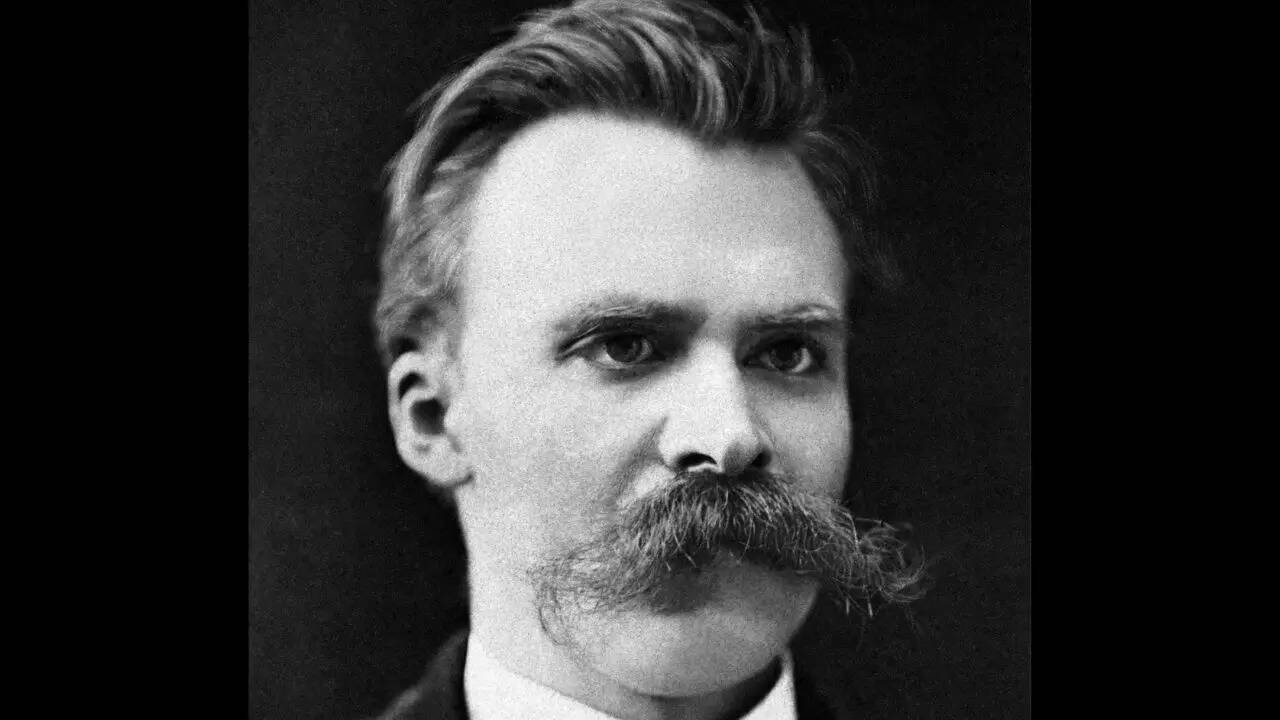
Friedrich Nietzsche’s rejection of a deity requiring constant adulation is not merely a theological grievance; it is a structural critique of power dynamics and psychological consistency. When Nietzsche posits, “I cannot believe in a God who wants to be praised all the time,” he identifies a fundamental friction between the concept of an omnipotent, self-sufficient entity and the human-centric trait of vanity. From a strategy-consulting perspective, the requirement for constant praise functions as a high-maintenance feedback loop that signals insecurity rather than sovereignty. If a system is truly optimized and its architect truly supreme, the need for external validation from subordinate components becomes a logical redundancy.
The Cognitive Dissonance of Omnipotence and Validation
The internal logic of traditional theism suggests a being of infinite scale. However, the requirement for perpetual worship introduces a "Validation Paradox." In any hierarchical structure, the need for continuous reporting and affirmation from the bottom up usually indicates a lack of systemic stability. In related updates, we also covered: Usha Vance and the Reality of Motherhood in the Public Eye.
- The Resource Allocation Drain: Constant praise requires the subordinate (the human) to divert cognitive and emotional resources away from operational tasks (living, creating, evolving) toward a maintenance function (worship).
- The Sovereignty Gap: Sovereignty implies a state of being "complete in itself." A deity that desires or demands praise is, by definition, influenced by external inputs. This creates a dependency where the deity's emotional or status-based state is modulated by the actions of finite beings.
Nietzsche’s critique targets this specific anthropomorphism. He views the "God who wants praise" as a projection of human ego—specifically the ego of the "slave morality" which seeks to bind the powerful to a system of constant recognition and subservience.
The Mechanism of Slave Morality in Religious Structures
To understand Nietzsche’s position, one must map the cause-and-effect relationship between human psychological needs and the construction of divine attributes. Nietzsche argues that the concept of a God demanding praise is a tool developed within the framework of "Slave Morality." Cosmopolitan has provided coverage on this important topic in great detail.
- Inverse Power Projection: Those who feel powerless in the material world project a version of power that mirror their own desires. Since the powerless crave recognition, they assume the ultimate power must also crave it.
- The Transactional Trap: By framing God as an entity that "wants" something, the believer gains leverage. If God wants praise, the human has something to offer. This creates a transactional relationship where the human can "trade" adulation for favor, effectively attempting to manage the unmanageable through ritualized flattery.
- The Suppression of the Ubermensch: Constant focus on the greatness of an external entity serves as a psychological dampener on individual agency. If the highest virtue is the recognition of another’s perfection, the drive to cultivate one's own "Will to Power" is stifled.
The Cost Function of Perpetual Adulation
In an analytical framework, we can treat the demand for praise as a cost function applied to the human experience. Nietzsche’s "death of God" is partially a response to the realization that this cost has become unsustainable for the modern spirit.
- Opportunity Cost of Devotion: Every hour spent in the cycle of praise is an hour not spent on self-overcoming. For Nietzsche, the goal of humanity is the Ubermensch (Overman), a being that creates its own values. A system that mandates externalized worship acts as a barrier to this evolution.
- Psychological Stunting: The requirement for "constant" praise suggests a static relationship. Growth requires tension, questioning, and eventual mastery. A relationship defined by uncritical adulation prevents the "spiritual metabolism" necessary for higher development.
The Disconnect Between Aesthetics and Divinity
Nietzsche often approached philosophy through the lens of aesthetics and "the dance." A God who demands praise is, to Nietzsche, aesthetically unappealing—he is "clunky." He lacks the lightness, the irony, and the creative play that Nietzsche associated with a life-affirming existence.
The "God who wants to be praised" is a God of the heavy, the "Spirit of Gravity." This deity is a burden to be carried, a set of rules to be followed, and a judge to be appeased. Nietzsche’s counter-proposal is not necessarily a world without the sacred, but a world where the sacred is found in the act of creation rather than the act of submission.
Structural Flaws in the Petitioner-Deity Model
The traditional model of worship functions on a feedback loop that Nietzsche found intellectually dishonest. If God is the creator of the human heart, and the human heart produces praise, God is essentially "praising Himself" through a proxy.
- The Redundancy of Proxy Praise: If the outcome (praise) is predetermined by the design of the creature, the praise lacks objective value. It is a closed system with zero net gain in information or value.
- The Erosion of Merit: In a system where the "highest good" is the act of praising, actual competence, courage, and intellectual rigor become secondary. This leads to a "devaluation of all values," where the sycophant is elevated above the creator.
Nietzsche’s rejection is a demand for a higher caliber of divinity—one that would be compatible with the dignity of a self-actualized human being. He does not find the idea of God impossible because of a lack of evidence, but because of a lack of style and logical consistency in the gods humans have invented.
The Will to Power as a Replacement Metric
If the metric of "Worship Efficiency" is discarded, what replaces it? Nietzsche proposes the Will to Power. This is not the desire to rule over others, but the drive toward self-mastery and the imposition of one's own "internal order" upon the chaos of the world.
- From Passive Reflection to Active Creation: Praise is passive; it reflects what is already there. Creation is active; it brings forth what was not. Nietzsche argues that a "worthy" deity would prefer a creator over a reflector.
- The Ethics of Self-Overcoming: Instead of seeking favor through adulation, the individual should seek to "surpass" their current state. This is the only "worship" that Nietzsche would find logically defensible—the honoring of the potential for greatness within the living.
The Strategic Pivot: Embracing Radical Autonomy
The takeaway from Nietzsche’s critique is a mandate for radical autonomy. The "God who wants praise" is the ultimate middle-manager—obsessed with metrics of loyalty rather than the quality of the output. To follow Nietzsche’s logic to its conclusion, one must audit their own life for similar "praise-seeking" structures.
Identify where you are performing "worship" in your professional or personal life—actions taken solely to appease a perceived authority or to maintain a legacy system that provides no functional return. These are the "idols" that must be smashed.
The transition from a praise-based existence to a value-creation existence requires three tactical shifts:
- Elimination of External Validation Loops: Stop optimizing for "likes," "approval," or "recognition" from hierarchies that do not contribute to your actual growth.
- Reclamation of Cognitive Surplus: Redirect the energy previously spent on "appeasement" toward the "Grand Task" of self-definition.
- Adoption of the Creator Mindset: Evaluate your actions not by how well they align with an existing "holy" standard, but by how much "new value" they inject into your environment.
The move is to cease being a "believer" in systems that demand your smallness to validate their greatness. Instead, become the architect of a system where the "highest" is not something to be praised, but something to be performed. Construct a reality where your work is the only testimony required, rendering the need for verbalized praise obsolete. This is the shift from the "Spirit of Gravity" to the "Dance"—the ultimate Nietzschean optimization.