The velvet rope didn't stand a chance against a pair of steady hands and a heart full of larceny.
For decades, the "Roaring Lion" sat in the Reading Lounge of Ottawa’s Fairmont Château Laurier, a silent witness to the hushed deals of prime ministers and the clinking of crystal. It was more than a photograph. It was the definitive soul of Winston Churchill, captured by Yousuf Karsh in 1941 after he famously plucked the cigar from the British leader’s mouth. Churchill’s scowl in that frame helped win a war; it was the face of defiance.
Then, one day in 2022, a staff member noticed something was off. The frame was slightly crooked. The lion wasn’t roaring; he was merely a photocopy.
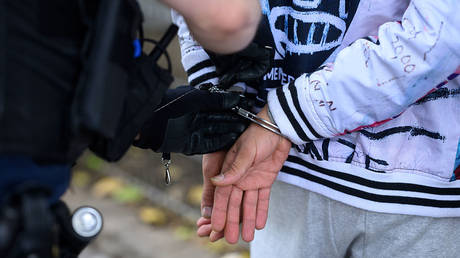
The thief, Jeffrey James Wood, had traded a piece of global history for a payday. He was caught, eventually, and sentenced to two years in a federal penitentiary. But now, the Supreme Court of Canada has agreed to step into the fray. They aren't debating whether he did it—he did—but rather how much time a man should owe society for stealing a symbol. It is a legal battle that asks a terrifying question: How do you put a price on the intangible?
The Mechanics of a Vanishing Act
Stealing a masterpiece isn't like the movies. There were no laser grids or high-tech rappelling gear. Instead, it was a quiet, methodical replacement. Wood took the original and left a cheap imitation in its place. For months, perhaps years, guests walked past a ghost, admiring a replica while the real Churchill sat in the dark, waiting to be sold to an unsuspecting collector in Italy.
When the law finally caught up to Wood, the court handed down a sentence that felt, to some, like a hammer. Two years. To a person who has never seen the inside of a cell, two years is an eternity of grey walls and heavy silence. To a prosecutor, it is the bare minimum for a crime against culture.
The appeal rests on a technical but deeply human argument. Wood’s legal team suggests the sentence is "demonstrably unfit." They are poking at the soft underbelly of the Canadian justice system, asking if the punishment actually fits the person, or if he is being sacrificed to appease the hurt feelings of a nation that lost its favorite portrait.
Consider a hypothetical shoplifter. If a man steals a loaf of bread, we weigh the hunger against the law. If a man steals a $100,000 photograph, we weigh the greed against the dollar sign. But what happens when the object isn't just worth money? What happens when the object is a piece of the collective "us"?
The Weight of Wood and Ink
The legal system loves math. It wants to add up the value of the paper, the chemicals used in the darkroom, and the market demand for Karsh’s signature. But the Supreme Court is now tasked with looking beyond the ledger.
The "Roaring Lion" wasn't just a physical asset belonging to a hotel. It was a landmark. For the people of Ottawa, and for Canadians who viewed the Château Laurier as the nation’s "third chamber" of Parliament, the theft felt like a personal violation. It was as if someone had reached into a family photo album and replaced a grandfather’s portrait with a stranger’s face.
The invisible stakes here involve the "sentencing principle of proportionality." It’s a dry term for a simple concept: the punishment must reflect the gravity of the offense and the degree of responsibility of the offender.
If the Supreme Court lowers the sentence, they risk sending a message that cultural heritage is just "stuff." They risk saying that if you steal something old and beautiful, the law will treat it like you boosted a flat-screen TV from a big-box store. But if they uphold the two-year term, they must justify why this specific thief deserves to lose two years of his breath and blood for a piece of silver gelatin on paper.
A Shadow in the Gallery
Justice is often described as a scale, but in cases of art theft, it feels more like a pendulum. It swings between the cold reality of the criminal’s life and the hot indignation of the public.
Jeffrey James Wood is not a shadow; he is a man. He has a history, a family, and a future that is currently paused. The court must decide if his "moral blameworthiness" is heightened because he chose a target of such immense historical weight. Did he know he was stealing the defiance of the 1940s? Or did he just see a high-value item with lax security?
There is a specific kind of grief that comes with the loss of art. It is a quiet, hollow feeling. You go to a place to see a thing that makes you feel connected to the past, and you find a void. The thief didn't just take a photo; he took the opportunity for thousands of people to stand in the presence of greatness. He stole time from every future visitor.
But the law is wary of emotions. The Supreme Court of Canada prides itself on being the "sober second thought." They will look at the precedents. They will look at other thefts—diamonds, cars, cash—and try to find a thread of logic that connects a jail cell to a stolen scowl.
The Return of the Lion
The original portrait has been recovered. It traveled across oceans, sat in a foreign climate, and was finally handed back to Canadian authorities in Rome. It is scarred by its journey, much like the legal system is scarred by the debate it has sparked.
We often think of the Supreme Court as a place where grand constitutional theories are debated, but at its heart, it is a place where we decide what we value. By hearing this appeal, the justices are stepping into the Reading Lounge themselves. They are standing before the empty space on the wall and asking what that void cost us.
The thief sits in his cell, waiting to hear if his life is worth more or less than the image of a man who refused to back down. The lion has returned, but the roar is different now. It’s muffled by the weight of the law, the complexity of mercy, and the realization that some things, once taken, can never be truly replaced—no matter how long the sentence.
The sun sets over the Ottawa River, casting long shadows across the copper roofs of the Château Laurier. Inside, the walls are heavy with history, but they are also heavy with the knowledge that even our most guarded treasures are fragile. We are a people who build museums to remember, but we live in a world that often forgets the human cost of a crime until the cell door clicks shut.
Churchill’s eyes, fixed in that 1941 moment, continue to stare. He isn't looking at the thief. He isn't looking at the judges. He is looking through us, waiting to see if we have the courage to define what justice looks like when the victim is a memory.