The desert does not keep secrets; it only buries them in shifting heat.
In the coastal cities of the United Arab Emirates and the sprawling industrial hubs of Saudi Arabia, the horizon usually offers a predictable, hazy blue. But for the engineers monitoring radar screens in darkened rooms, that horizon is a canvas of potential kinetic energy. They are looking for a specific signature—the low, buzzing hum of a "suicide" drone or the high-arcing trajectory of a ballistic missile. Meanwhile, you can explore related stories here: The Calculated Silence Behind the June Strikes on Iran.
When the news broke that the U.S. State Department had cleared a massive $16 billion wave of military sales to its Gulf partners, the headlines focused on the staggering number. Sixteen billion dollars. It is a figure so large it becomes abstract, a mountain of currency that feels disconnected from the ground. Yet, this isn't a story about bank transfers or ledger entries.
It is a story about the cost of sleep. To understand the full picture, check out the recent report by BBC News.
The Invisible Shield
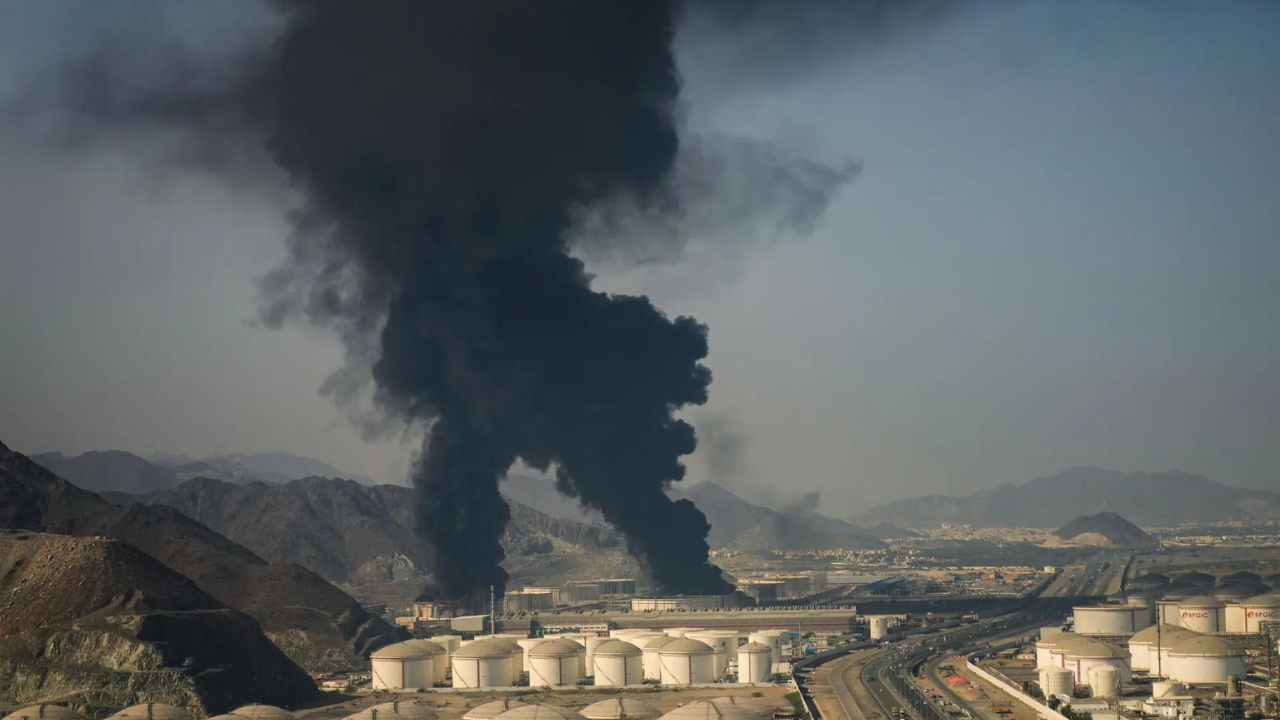
Consider a hypothetical logistics manager in Dhahran named Ahmed. He doesn't think about international arms treaties when he kisses his daughter goodbye in the morning. He thinks about the reliability of the power grid and the safety of the desalination plants that keep his city hydrated. But in 2019, when the Abqaiq–Khurais attack sent plumes of black smoke into the sky, the vulnerability of the "miracle in the desert" became a physical weight.
Security is a ghost. You only notice it when it leaves the room.
The $16 billion package is, in essence, an attempt to invite that ghost back. The bulk of this funding is directed toward the Integrated Air and Missile Defense (IAMD) systems. We are talking about the Patriot missile segments, the THAAD (Terminal High Altitude Area Defense) batteries, and the sophisticated radar arrays that act as the eyes of a nation.
These systems are the most complex machines ever built by human hands. A THAAD interceptor does not carry an explosive warhead in the traditional sense. It is a "hit-to-kill" vehicle. Imagine trying to hit a bullet with another bullet in the middle of a hurricane, while both are traveling at several times the speed of sound. That is the technical reality of the Gulf’s new insurance policy.
The Calculus of Deterrence
Why now? The timing isn't accidental. The regional shadow war with Iran has moved from the darkness of cyberattacks and proxy skirmishes into a more overt, volatile phase. For Saudi Arabia and the UAE, the threat is no longer theoretical. It comes in the form of Houthi-launched projectiles and Iranian-made Shahed drones—the same low-cost, high-impact weapons currently reshaping battlefields in Eastern Europe.
The U.S. government is playing a delicate hand. By green-lighting $15.5 billion for Saudi Arabia’s tactical missiles and over $1 billion in related equipment for the UAE, Washington is signaling a pivot. It is an admission that the "pivot to Asia" cannot happen if the Middle East is on fire.
But there is a deeper tension here. Critics argue that flooding a volatile region with more high-tech weaponry is like trying to douse a fire with gasoline. They point to the humanitarian disaster in Yemen and the risk of an arms race that never finds a finish line.
The counter-argument, whispered in the halls of the Pentagon and the palaces of Riyadh, is grimmer. They argue that weakness is the greatest provocateur. In their view, a Gulf that cannot defend its own skies is a Gulf that invites a catastrophic miscalculation. If a single missile hits a major residential tower in Dubai or a primary oil node, the global economy doesn't just stumble. It collapses.
The Weight of the Hardware
To understand the scale, you have to look at the specific "orders" being filled. The Saudi portion includes 300 Patriot MIM-104E Guidance Enhanced Missiles (GEM-T).
These aren't just tubes of metal. They are packed with sophisticated seekers that can distinguish between a flock of birds, a decoys, and a genuine threat. Each one costs millions. To a taxpayer, that sounds like an indulgence. To a commander watching a radar blip head toward a civilian airport, that missile is the only thing that matters in the world.
The UAE’s share focuses heavily on the maintenance and integration of their existing systems. This is the "boring" part of the $16 billion—the logistics, the spare parts, the software patches. Yet, this is where the real power lies. A missile battery is useless if it cannot talk to a radar station three hundred miles away. The goal is a "nested" defense, where different systems pass data back and forth in milliseconds, creating a digital dome over the peninsula.
The Human Toll of Strategy
We often talk about these deals as if they are between "nations," but they are between people. There are American technicians who will relocate to the desert to train local crews. There are young Saudi officers who will spend their nights staring at green-and-black displays, knowing that a three-second delay in their reaction time could change the course of their country's history.
There is a profound psychological toll to living under a "shield." It creates a strange, brittle peace. You go to the mall, you watch a movie, you sit in traffic—all while knowing that ten thousand feet above you, a silent, invisible struggle for electronic dominance is happening every second.
The irony of the $16 billion is that success is defined by nothing happening. If these weapons are never fired, the money was well spent. If they are used, it means the primary goal—deterrence—has already failed. It is a massive, expensive bet on silence.
The Shifting Sand
For decades, the deal was simple: the U.S. provided security, and the Gulf provided energy stability. That old world is dying. The Gulf nations are no longer content being "protected" outposts; they are becoming regional powers with their own agendas, often at odds with Washington’s preferences.
This arms deal is a tether. It binds the technical infrastructure of the Gulf to American software and American expertise for the next twenty years. You don't just "switch" missile systems like you switch phone carriers. Once you commit to the Patriot or the THAAD ecosystem, you are locked into a deep, foundational partnership.
It is a marriage of necessity, signed in a time of radical uncertainty.
As the sun sets over the Persian Gulf, the lights of the oil platforms begin to flicker on, mirroring the stars. On the ground, life continues in its frantic, modern pace. High above, the sensors remain active. The satellites pass overhead. The missiles sit in their canisters, cold and ready.
The $16 billion has been spent. The papers have been signed. But as any traveler in the dunes will tell you, the wind can change direction without warning, and even the strongest shield is eventually tested by the sand.
Somewhere in a darkened room, a cursor blinks on a screen, waiting for a shape that never comes.