The asphalt on a Louisiana highway in May doesn’t just hold heat; it radiates it in shimmering waves that distort the horizon. It is a heavy, humid environment where the air feels like a damp wool blanket. On such a night in 2019, Ronald Greene was driving through this thick Southern air. He was a son, a brother, and a man whose life was about to be extinguished in a sequence of events that would eventually be valued by the state at exactly $4.8 million.
Numbers are cold. They are clinical. A settlement figure like $4.8 million is designed to close a ledger, to balance a scale that has been tipped too far into the dark. But a settlement is not a confession, and it is certainly not a resurrection. To understand why this specific number matters, one has to look past the bank transfer and into the tall grass where the body cameras were rolling. Also making waves in this space: Structural Mechanics of the Starmer Legislative Agenda and the Survival of Executive Authority.
The Silence of the Body Cam
For two years, the official story was a convenient fiction. The narrative fed to Greene’s family was one of a tragic accident—a car hitting a tree, a sudden end, a routine misfortune. It was a story told in the dry, detached language of police reports.
Then the footage leaked. More information on this are detailed by Associated Press.
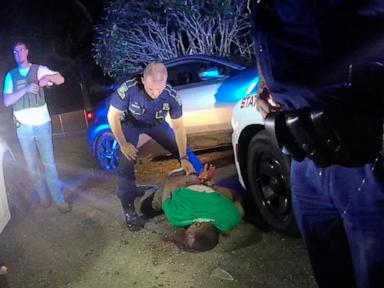
The video didn’t show a car crash. It showed a struggle. It showed Ronald Greene on the ground, apologizing, terrified, while he was pepper-sprayed, Tasered, and dragged. The contrast between the official report and the digital reality was more than just a discrepancy; it was a chasm. When we talk about the "human element" in legal settlements, we are often talking about the cost of maintaining a secret until it becomes impossible to hold.
Imagine the weight of that secret on a community. Imagine a mother being told her son died in a wreck, only to later see him prone on the dirt, pleading for his life. This is where the abstract concept of "wrongful death" becomes a visceral, chest-tightening reality. The $4.8 million is not just for the loss of a man; it is a late, expensive admission that the first story was a lie.
The Invisible Stakes of Accountability
When a state settles a lawsuit of this magnitude, it isn't just paying for a mistake. It is paying to mitigate a risk. The risk in the Greene case wasn't just a lost trial; it was the total collapse of public trust in the institutions meant to provide safety.
Consider the ripple effect of a single traffic stop gone wrong. It changes how every person in that parish looks at a patrol car in their rearview mirror. It changes the dinner table conversations in homes across the country. The "invisible stakes" are the threads of the social contract that keep a society functioning. Every time a life is taken under questionable circumstances and covered by a shifting narrative, those threads fray.
The settlement was reached between Greene’s family and the state’s risk management office. In the world of high-stakes litigation, "risk management" is a fascinating euphemism. It suggests that human life and state liability are variables in an equation. If the variable of public outcry becomes too large, the cost of the settlement must rise to meet it.
The Architecture of a Settlement
Why $4.8 million?
In legal terms, this figure is often reached by calculating "damages." They look at lost wages—what Ronald Greene might have earned had he lived to a ripe old age. They look at the "loss of consortium"—the value of the relationship between a man and his family. They look at "pain and suffering"—a phrase that tries to put a price tag on the minutes of terror Greene experienced before he died.
It is a grisly bit of accounting.
But there is a deeper layer to this specific settlement. It is one of the largest in Louisiana history for a police-involved death. That signifies something beyond mere compensation. It is a signal of the severity of the systemic failure. When the state writes a check for nearly five million dollars, they are acknowledging that the standard defense—"we followed protocol"—has failed.
The money comes from taxpayers. It comes from the same people who expect their roads to be safe and their laws to be upheld. In a sense, the public is paying for the failure of its own protectors. It is a circular irony that defines the modern American legal landscape.
Beyond the Ledger
The legal battle lasted five years. Five years of depositions, hearings, and the slow, grinding machinery of the court system. During that time, the officers involved faced various levels of scrutiny. Some were fired. One died in a car crash before he could face the full weight of the law. Others faced grand jury indictments.
The settlement does not end the criminal proceedings. It doesn’t grant immunity. But for the family, it provides a different kind of ending. It provides the resources to continue the fight and the validation that their grief was justified.
But can money ever truly be "just"?
If you sit in a quiet room and try to imagine the exchange rate for a human soul, the math falls apart. You can buy a house for $4.8 million. You can buy a fleet of cars. You can fund a small school. But you cannot buy back the sound of a son’s voice on the phone. You cannot purchase the presence of a man at a holiday table.
The settlement is a shadow of justice, not the thing itself. It is a pragmatic compromise in a world where perfect restoration is impossible. It is the state saying, "We cannot give him back, so we will give you this."
The Long Road Home
The road where Ronald Greene died is still there. The trees still sway in the humid breeze. The state of Louisiana will continue to patrol its highways, and families will continue to wait for their loved ones to come home.
The $4.8 million settlement will be cited in future cases. Lawyers will use it as a benchmark, a data point in a grim catalog of precedents. But for those who knew the man behind the headlines, the story isn't about the millions. It’s about the minutes. The minutes that were taken away, and the years of silence that followed.
We are left with a question that no settlement can answer: How much is the truth worth when it arrives five years late?
As the ink dries on the settlement papers, the ghost of that May night still lingers over the asphalt. The money has been allocated, the headlines will fade, and the ledger will be closed. But the weight of the loss remains, unquantifiable and heavy as the Louisiana air.


