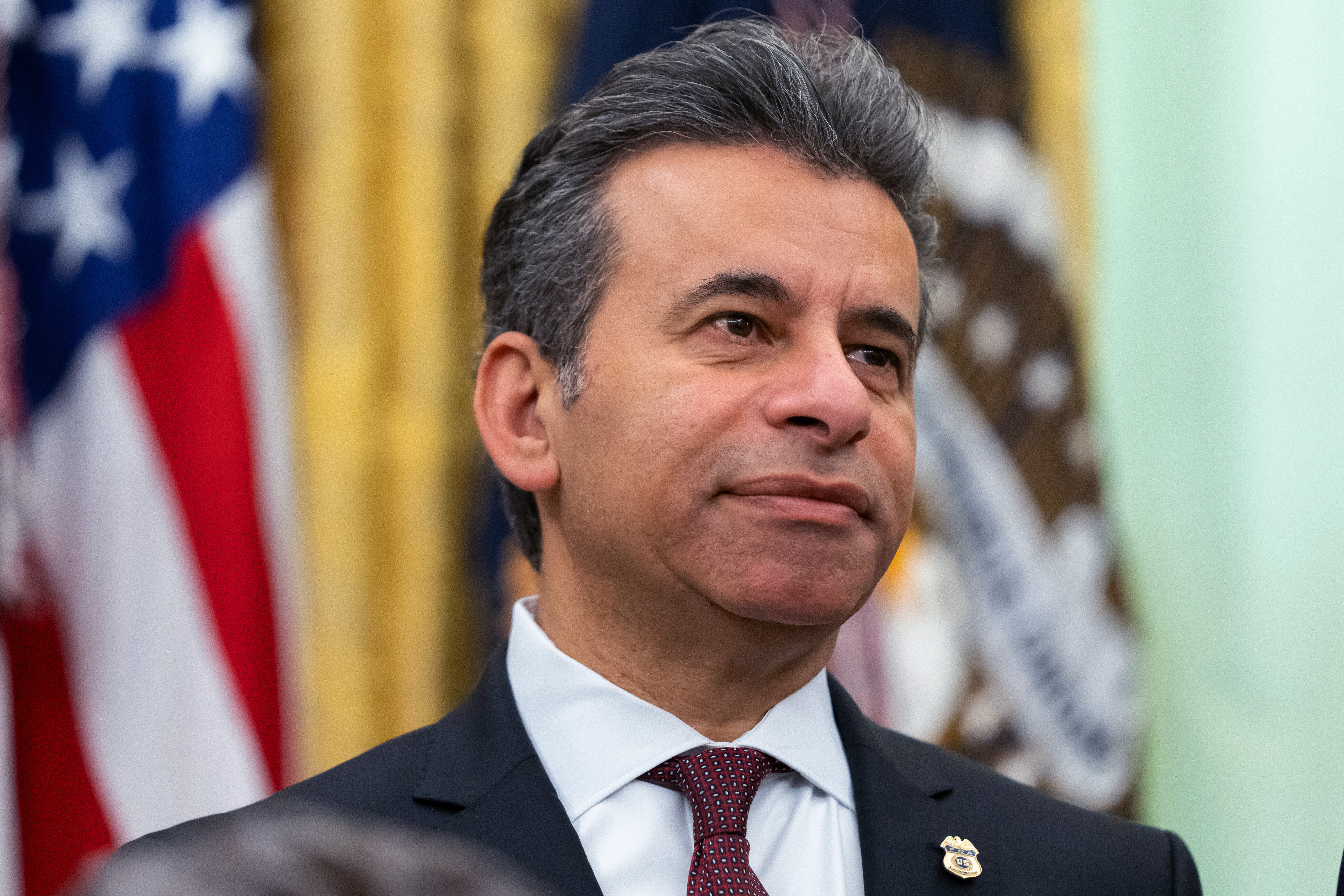
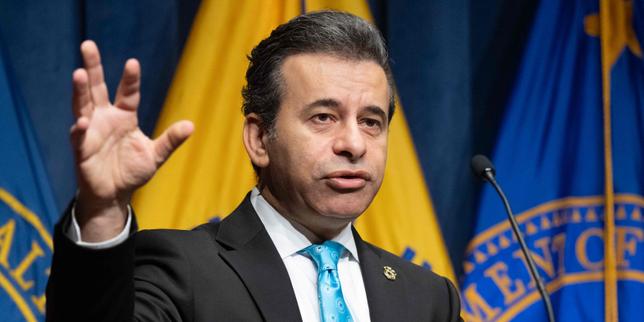
Dr. Marty Makary has resigned his post as Commissioner of the Food and Drug Administration. The departure comes after a brief but volatile tenure marked by intense friction with both the White House and major pharmaceutical stakeholders. While the official narrative points to personal reasons, the reality is a story of a reformer hitting a wall of institutional inertia and political expediency. Makary attempted to overhaul the agency’s transparency standards and accelerated approval pathways, but those very initiatives triggered a defensive reaction from the industries he was tasked with regulating.
His exit leaves the FDA in a state of leadership flux at a time when public trust in health institutions is already at a historic low.
The Collision Between Reform and Regulation
Makary did not enter the FDA to maintain the status quo. He arrived with a reputation as a surgeon and researcher who frequently criticized the "black box" nature of medical data. His primary goal was to modernize how the agency evaluates clinical evidence, moving away from a reliance on surrogate endpoints toward more rigorous, real-world data. This sounded like progress in a vacuum. In the halls of Washington and the boardrooms of New Jersey, it sounded like a threat to the bottom line.
The friction began almost immediately. Makary pushed for a policy that would require drug manufacturers to disclose more raw data from failed clinical trials. The industry argued this would compromise trade secrets and discourage innovation. Makary argued that public safety demanded it. When the commissioner refused to back down, the industry’s lobbying arm turned its attention to the White House.
The executive branch thrives on stability. They wanted a commissioner who would keep the gears grinding without making headlines or upsetting the economic balance of the healthcare sector. Makary was doing both. The tension escalated when the White House began bypassing the commissioner’s office to communicate directly with deputy directors on high-profile drug approvals, effectively neutralizing Makary’s authority.
The Transparency Trap
One of the most significant points of contention involved the FDA’s accelerated approval program. This pathway allows drugs for serious conditions to reach the market based on a "surrogate marker," such as a blood test result, rather than a proven clinical benefit like living longer. Makary wanted to tighten the requirements for the follow-up studies that companies are supposed to conduct after their drugs hit the shelves.
Many companies have been allowed to keep products on the market for years despite failing to prove they actually work. Makary sought to implement a "pull-the-plug" mechanism that would automatically trigger a withdrawal if confirmatory trials were not completed on a strict timeline.
This was a bridge too far for the pharmaceutical lobby. They viewed the proposal as an existential threat to the predictability of their revenue streams. The backlash was swift. Within weeks, anonymous reports began surfacing in major outlets questioning Makary’s management style and his ability to work with career staff at the agency. This is a classic Washington playbook move—when you cannot defeat the policy, you dismantle the person.
A Cultural Divide in Silver Spring
The FDA is a massive bureaucracy staffed by thousands of career scientists, many of whom have spent decades at the agency. They represent a deep well of institutional knowledge, but they also represent a specific way of doing things. Makary was an outsider. He viewed the agency as too cozy with the companies it regulated, a phenomenon often described as regulatory capture.
He tried to disrupt the "revolving door" culture where FDA officials leave the agency for high-paying jobs at the very companies they once supervised. By proposing stricter post-employment restrictions, he alienated a significant portion of his own senior leadership. The internal morale began to dip as career staffers felt their expertise was being questioned by a political appointee who didn't understand the nuance of the regulatory process.
This internal rebellion provided the White House with the cover it needed. If the commissioner couldn't lead his own people, the argument went, how could he lead the nation's public health strategy?
The White House Calculation
Every administration wants a win. In the realm of health policy, a "win" usually looks like a new treatment for a rare disease or a faster rollout of a vaccine. Makary’s focus on data integrity and long-term safety was perceived as a bottleneck.
During a series of closed-door meetings, advisors reportedly pressed Makary to "streamline" the approval of several high-profile biologics. Makary resisted, citing insufficient safety data. This refusal created a direct conflict with the administration’s desire for quick legislative and policy victories heading into an election cycle. The White House does not like being told "no" by its own appointees, especially when that "no" carries significant political costs.
The breaking point appears to have been a disagreement over the budget. Makary requested a massive increase in funding for the Office of Criminal Investigations to track down counterfeit drugs and investigate data manipulation. The administration, however, wanted to divert those funds into "innovation hubs" that would partner directly with private companies. Makary saw this as a direct conflict of interest. The administration saw it as a modern approach to governance.
The Industry Influence
It is impossible to discuss the FDA without discussing the funding model. Since the passage of the Prescription Drug User Fee Act (PDUFA) in 1992, the FDA has relied heavily on fees paid by the pharmaceutical companies it regulates. This creates an inherent tension. The agency is essentially funded by the entities it is supposed to police.
Makary was vocal about his discomfort with this arrangement. He suggested a shift back to a fully taxpayer-funded model to ensure total independence. This was a non-starter. Neither Congress nor the executive branch had the appetite to find billions of dollars in the general fund to replace industry fees. By attacking the funding mechanism, Makary effectively signed his own professional death warrant in D.C.
The industry doesn't just provide funding; it provides the narrative. Through patient advocacy groups—many of which receive significant corporate funding—the industry can mobilize public opinion against any regulator who appears to be "slowing down" access to life-saving medication. Makary was painted as a bureaucrat standing between sick patients and their only hope. It is a powerful, albeit often misleading, emotional lever.
The Vacuum of Leadership
With Makary gone, the FDA enters a period of uncertainty. An interim commissioner will likely play it safe, focusing on clearing the backlog of applications rather than pushing for systemic change. This is exactly what the industry wants: a return to predictable, incrementalism.
The real losers in this transition are not the politicians or the lobbyists, but the patients who rely on the FDA’s seal of approval to mean something. If the agency continues to prioritize speed over certainty, the value of that seal diminishes. We are left with a system where the "best available evidence" is increasingly defined by the people selling the product.
Makary’s resignation is a reminder that in Washington, being right is often less important than being a team player. He chose the former and found himself without a team. The structural issues he identified—the surrogate marker trap, the revolving door, and the user-fee dependence—remain entirely unaddressed.
The Fallout for Clinical Standards
The departure signals a likely retreat from the rigorous data standards Makary championed. We can expect a pivot back toward "flexibility" in clinical trial designs. While this may result in more drugs reaching the market faster, it also increases the risk of post-market withdrawals and unforeseen side effects.
The precedent has been set. Any future commissioner who attempts to challenge the financial and political foundations of the drug approval process will look at Makary’s short term as a cautionary tale. The message is clear: the agency is designed to facilitate the market, not just gatekeep it.
We now face a future where the FDA’s primary function is to manage risk for corporations rather than eliminate risk for the public. The shift is subtle but profound. It changes the fundamental question asked during the review process from "Is this drug effective?" to "Is this drug defensible?"
The Economic Reality of Drug Oversight
The stock prices of several major pharmaceutical firms saw a modest uptick following the news of the resignation. Investors recognize that a less combative FDA is a more profitable FDA. The "Makary Discount" that had been applied to certain biotech valuations has evaporated.
This market reaction confirms the industry’s view of the commissioner as an obstacle to be cleared. When the regulator is viewed as a liability to shareholders, the pressure to remove that regulator becomes an economic imperative. The lobbying efforts were not just about policy; they were about protecting the capital expenditures already committed to drug pipelines that Makary’s new standards might have derailed.
The agency will now likely focus on "harmonization" with international regulators, a term that often serves as a euphemism for adopting the lowest common denominator of safety testing to ensure global market access.
The path forward for the FDA will likely involve a return to a more "collaborative" relationship with industry. This collaboration often results in shorter review times and higher approval rates, but it leaves the fundamental questions of long-term efficacy unanswered. The tension that defined Makary's time—the conflict between the demands of the public and the demands of the political-industrial complex—will not disappear. It will simply be pushed back into the shadows, where it can be managed without the inconvenience of a commissioner who insists on showing the public how the sausage is made.
The resignation of a commissioner is rarely just about the individual. It is about the limits of reform within a system that is designed to protect its own survival. Makary tried to change the FDA from the inside and learned that the institution has a very effective immune response to anyone it perceives as a foreign body.
The agency remains. The problems remain. The only thing that has changed is that the voice pointing them out is no longer in the room.