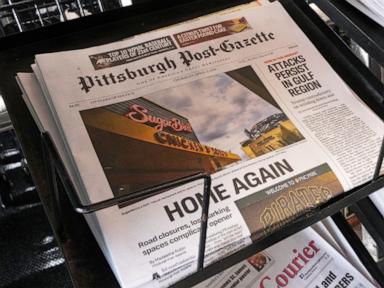
The death of a city's primary newspaper usually signals the beginning of a long, dark silence for local accountability. When the Pittsburgh Post-Gazette essentially stopped printing a daily physical paper and became mired in a years-long labor strike, many assumed the Steel City would join the growing list of American news deserts. They were wrong. Pittsburgh didn't just survive the decline of its dominant legacy outlet; it built something far more interesting and resilient in the wreckage.
If you’re looking for the typical "death of local news" sob story, you won't find it here. Pittsburgh is currently a living laboratory for what happens when a community stops waiting for a billionaire owner to save them and starts building their own microphones. This isn't about nostalgia for the smell of ink. It's about how a city of roughly 300,000 people—and a metro area of millions—is proving that a fragmented, digital-first, and non-profit-heavy ecosystem can actually outshine a monolithic daily.
The Post Gazette Collapse and the Void It Left
For over two centuries, the Pittsburgh Post-Gazette was the paper of record. It won Pulitzers. It set the agenda. But the last decade felt like a slow-motion car crash. Between the shift to digital and a notoriously toxic relationship between the Block family—who own the paper—and the newsroom unions, the product suffered. When the strike hit in late 2022, the "death" wasn't just about a lack of home delivery. It was a total breakdown of the social contract between a city and its primary source of information.
Usually, when a big paper dies, the "ghost newspaper" phenomenon takes over. You get a skeletal staff writing clickbait or re-sharing national wire stories while local city council meetings go uncovered. Developers start salivating because nobody is watching the zoning boards. Corruption tends to spike when the reporters leave the room.
But Pittsburgh had a head start. Because the decline of the PG was so public and so prolonged, the alternatives had time to plant seeds. Instead of a single giant oak tree falling and leaving a hole in the forest, a dozen smaller, hardier plants were already growing in the sunlight.
The Non-Profit Powerhouse Taking Center Stage
The most significant shift in the Pittsburgh media scene is the move toward non-profit, member-supported journalism. Public Radio station WESA and its sister station, WYEP, didn't just stick to the national NPR feed. They went aggressive. They hired away veteran talent from the struggling newspapers. They expanded their digital footprint.
Then you have PublicSource. If you want to see the future of investigative journalism, look at them. They don't care about daily box scores or what the Mayor had for lunch. They care about why the water is contaminated or how the university system is shifting the local economy. By focusing on deep-dive "long-form" reporting, they filled the intellectual gap left by the shrinking legacy newsrooms.
The beauty of this model is the lack of a paywall. In a city with significant economic divides, putting the most important civic information behind a subscription gate is a disservice. PublicSource and WESA operate on the "PBS model"—it's free for everyone, but those who can afford it pony up to keep the lights on. It's working because Pittsburghers have a fierce sense of civic pride. They don't want to be a city that doesn't know its own business.
Why Technical Niche Reporting is Winning
We often hear that "general interest" is dead. People don't want a paper that tries to be everything to everyone. Pittsburgh’s turnaround proves that hyper-focus is a survival trait.
Take a look at Technical.ly Pittsburgh. They aren't trying to cover crime or sports. They cover the "Eds and Meds" economy that replaced the steel mills. As Carnegie Mellon and Pitt drive the AI and robotics boom, a specific type of reader needs to know who is getting funded and which startups are hiring. By owning that niche, they’ve created a community that the old-school dailies couldn't possibly serve with a general business column.
City Cast Pittsburgh is another example. It's a daily podcast and newsletter that feels like a conversation with a smart friend who actually knows what's happening at the new development in East Liberty. It’s punchy. It’s fast. It recognizes that most people under the age of 50 aren't going to sit down with a broadsheet, but they will listen to a 15-minute update during their morning commute or their workout.
The Persistence of the Weekly and the Neighborhood Beat
It’s easy to get distracted by the shiny new digital toys, but the "surprising turnaround" also involves the old guard refusing to blink. The Pittsburgh City Paper, once just an "alternative weekly" known for concert listings and edgy columns, has stepped up its local reporting game. When the Post-Gazette's coverage faltered, the City Paper became a vital source for political news and cultural criticism that actually feels rooted in the city's current identity.
There's also the New Pittsburgh Courier, one of the most historic Black newspapers in the country. In a city that has struggled with extreme racial disparities in healthcare and housing, the Courier’s voice isn't just a "nice to have." It's a fundamental part of the city's survival. Their continued presence ensures that the "turnaround" of Pittsburgh media isn't just a win for the affluent white neighborhoods, but a broader civic recovery.
The Real Lessons for Other Cities
What can a city like Cleveland, St. Louis, or Baltimore learn from this?
First, stop trying to save the failing daily. If the ownership is hostile or the debt is too high, let it go. The talent is what matters, not the masthead. Pittsburgh's best reporters didn't stop being reporters when the PG hit the skids; they just moved to WESA, PublicSource, or started Substacks.
Second, the "media" isn't one thing anymore. It's an ecosystem. A healthy city needs:
- A heavy-hitting investigative non-profit.
- A reliable public radio station with a massive digital presence.
- A "vibes" based daily newsletter/podcast for the casual resident.
- Niche outlets for the tech, arts, and sports communities.
Pittsburgh has all of these now. Is it perfect? No. The total number of working journalists in the city is still lower than it was in 1995. The "surprising turnaround" doesn't mean the industry is suddenly easy. It means it's finally sustainable and decoupled from the whims of a single family or a dying advertising model.
How You Can Navigate the New Pittsburgh Media
If you live in Pittsburgh or a city facing similar media shifts, your habits need to change. You can't just wait for a paper to show up on your porch. You have to curate your own intake to stay informed.
Start by signing up for the PublicSource and City Cast Pittsburgh newsletters. They give you the "why" and the "what" without the filler. Support WESA with a monthly donation—even five bucks makes a difference in their ability to send a reporter to a school board meeting. If you're into the tech scene, get on the Technical.ly list.
The turnaround happened because the audience stayed engaged. The silence didn't win because Pittsburghers decided they liked knowing what was going on in their own backyard too much to let the lights go out. Information is like a utility—you don't realize how much you need it until the water stops running. Pittsburgh just figured out how to build a better plumbing system.