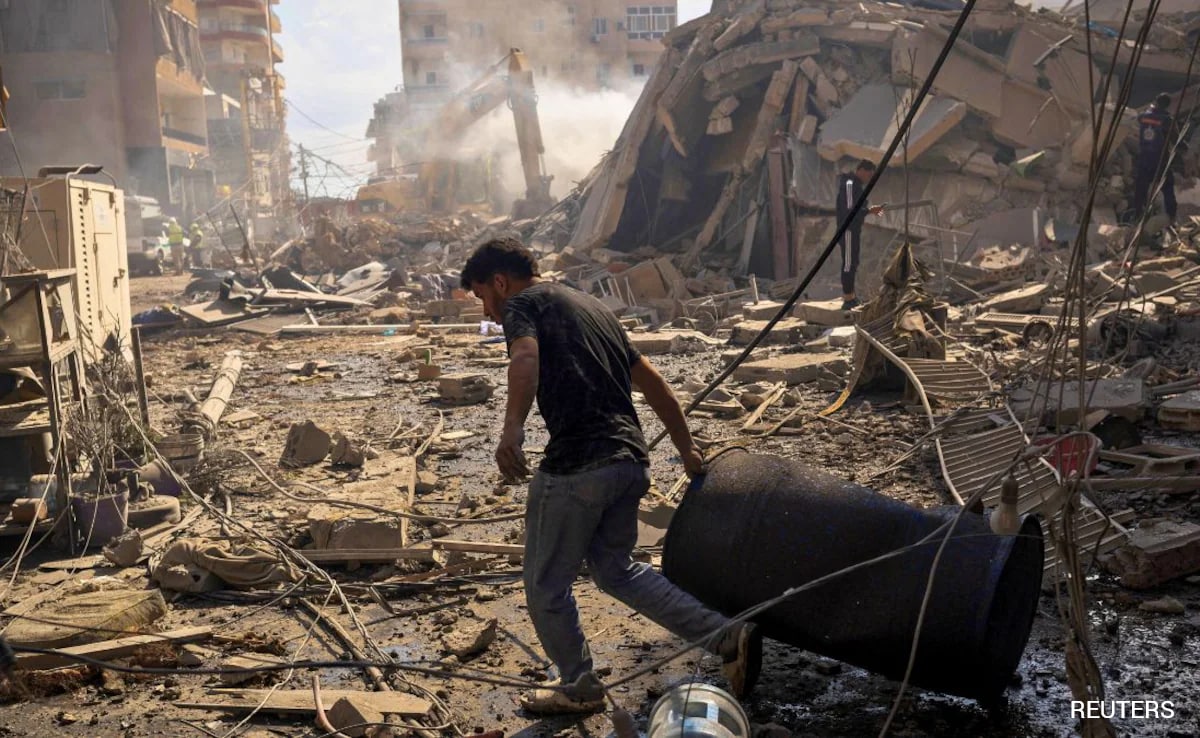
The headlines are predictable. They bleed with the same tired script of "escalation" and "threatened peace talks." Every time an Israeli jet crosses the Blue Line to dismantle a command node in Lebanon, a chorus of pundits begins wailing about the fragile state of regional stability. They act as if stability existed five minutes before the strike. They treat "peace talks" as a physical object that can be broken, rather than the ghost it actually is.
The consensus view is that military action in Lebanon is a stumbling block to a deal with Iran or a ceasefire in Gaza. This is fundamentally backwards. In the brutal logic of the Levant, kinetic action isn't the obstacle to diplomacy. It is the only thing that makes diplomacy possible.
The Myth of the Fragile Table
The biggest lie in modern foreign policy is the idea that "both sides want a way out." Western analysts love this because it fits a corporate conflict-resolution model. If we just get everyone in a room with enough air conditioning and some artisanal water, we can find the win-win.
I have watched three decades of these "breakthroughs" evaporate before the ink is dry. Why? Because the actors involved—specifically the IRGC and its proxies—don't view a "deal" as an end state. They view it as a tactical pause to re-arm.
When you see a headline about 20 casualties in Lebanon, the media focuses on the body count. They miss the structural reality. Israel isn't just "striking targets." It is re-establishing a balance of power that was allowed to rot for eighteen years. Since 2006, the "peace" everyone is so desperate to protect was actually a period of massive, unchecked Hezbollah militarization under the useless gaze of UNIFIL.
If you want a deal with Iran, you don't get it by begging. You get it by making their regional investments—their "Forward Defense" in Lebanon—too expensive to maintain.
Escalation is a Diagnostic Tool
Critics argue that these strikes "provoke" a wider war. This is a fundamental misunderstanding of how the Middle East operates. Strength doesn't provoke; perceived weakness provokes.
Imagine a scenario where a homeowner sees a small fire in the kitchen and decides not to use an extinguisher because the sound of the spray might wake the neighbors. That is the current logic of the "restraint" crowd. They would rather let the house burn quietly than risk a loud, messy intervention.
The strikes in Lebanon serve a diagnostic purpose. They test the actual appetite for a multi-front war. If the "Axis of Resistance" were as ready and willing to ignite a regional conflagration as the doomsayers claim, they would have done it on October 8th. The fact that they haven't proves that their primary goal is survival, not martyrdom.
By pushing the envelope, Israel is stripping away the bluff. It is revealing that the "mighty" deterrent of 150,000 rockets is a political tool, not an inevitable apocalypse. When you stop fearing the shadow, the monster loses its power.
Why Washington is Wrong About Leverage
The Biden administration and its successors often treat leverage like a bank account. They think if they give Iran a few billion in unfrozen assets or offer a seat at the table, they are "buying" stability.
They are actually buying more rockets.
True leverage is the ability to destroy what your opponent values most. Iran values its influence in the Levant. It values the survival of the Assad regime. It values Hezbollah as its Mediterranean pier. Every time a precision strike takes out a high-value commander or a missile manufacturing site in the Bekaa Valley, Iran’s leverage at the negotiating table drops.
The "peace talks" aren't being "threatened" by these strikes. They are being forced into reality. An Iran that feels secure is an Iran that won't negotiate in good faith. An Iran that sees its crown jewel in Lebanon being methodically dismantled is an Iran that might actually consider a compromise to save what's left.
The UNIFIL Farce and the Failure of International Law
Let’s talk about the elephant in the room: Resolution 1701. The international community points to this document as the gold standard for Lebanon. It’s a joke.
I’ve stood on that border. I’ve seen the "civilian" outposts that are clearly military observation points. I’ve seen the trucks moving weapons under the nose of peacekeepers who are legally prevented from doing anything but filing reports that no one reads.
The "status quo" that these airstrikes are disrupting was a lie. It was a period of aggressive, illegal fortification. To argue that Israel should stop its strikes to "return to the status quo" is to argue for the continued violation of international law.
We need to stop pretending that words on a page in New York translate to security on the ground in Metula. Security is provided by iron, not ink.
The Gaza Linkage Fallacy
The competitor’s article likely suggests that these strikes make a Gaza ceasefire harder to reach. This is the "linkage" trap. Sinwar and Nasrallah want you to believe their fates are intertwined because it gives them collective bargaining power.
By striking Lebanon independently, Israel is de-linking the theaters. It is telling Hezbollah: "Your involvement in Gaza will cost you Lebanon." This is the only way to break the siege-mentality of the region. If the various proxies believe they can act with impunity as a unified front, the war will never end.
You don't stop a gang by negotiating with every member individually while they all hold a gun to your head. You take the biggest guy in the room and you break his jaw. The others will find their way to the exit soon enough.
The High Cost of the "Clean" Peace
Is there a risk? Of course. Civilians die. Mistakes are made. The cost of kinetic diplomacy is high and often tragic.
But the cost of a "clean" peace—the kind favored by the UN and the State Department—is much higher. A clean peace allows the tension to build behind a dam of false security until the dam finally bursts. We saw what happens when the dam bursts on October 7th.
The current strikes are a controlled release. They are painful, they are loud, and they are messy. But they prevent the total collapse of the system.
Stop looking for the "peace process" in the halls of Geneva. It’s happening in the skies over Nabatieh. It’s happening in the communications rooms where IRGC officers realize their encrypted lines aren't so secure. It’s happening when the leaders of these organizations realize that the cost of "resistance" has finally exceeded the benefit of survival.
If you want the shooting to stop, you have to make the other side realize they can't win. You don't do that with a summit. You do it with a sortie.
The table isn't being broken. It’s being cleared of the debris so that, for once, a real conversation can happen. Until then, keep the engines running. Peace is a byproduct of victory, not a substitute for it.
The era of managed decline is over. The era of the enforced border has begun. Adapt or get out of the way.



